



In Russia, there has been a systematic weakening of Sergei Kiriyenko’s position following a series of foreign policy failures that undermined his key bureaucratic advantage — his reputation as an effective manager of political processes.
Electoral defeats abroad, primarily in Moldova and Hungary, coincided with the internal seizure of critical management tools by the security services. As a result, a configuration emerged in which Kiriyenko formally retains responsibility for political stability and electoral outcomes, but is rapidly losing control over the environment in which these results are achieved. This creates conditions for a harsh intra-elite conflict and a redistribution of powers in favor of the security apparatus.
Sergei Kiriyenko has long been a key operator of Russia’s political system. His strength was not based on public politics, but on the ability to deliver controlled outcomes through technology: managed elections, administrative hierarchies, digital platforms, information networks, and work with regional elites. Therefore, his bureaucratic position depended directly on the effectiveness of this model.
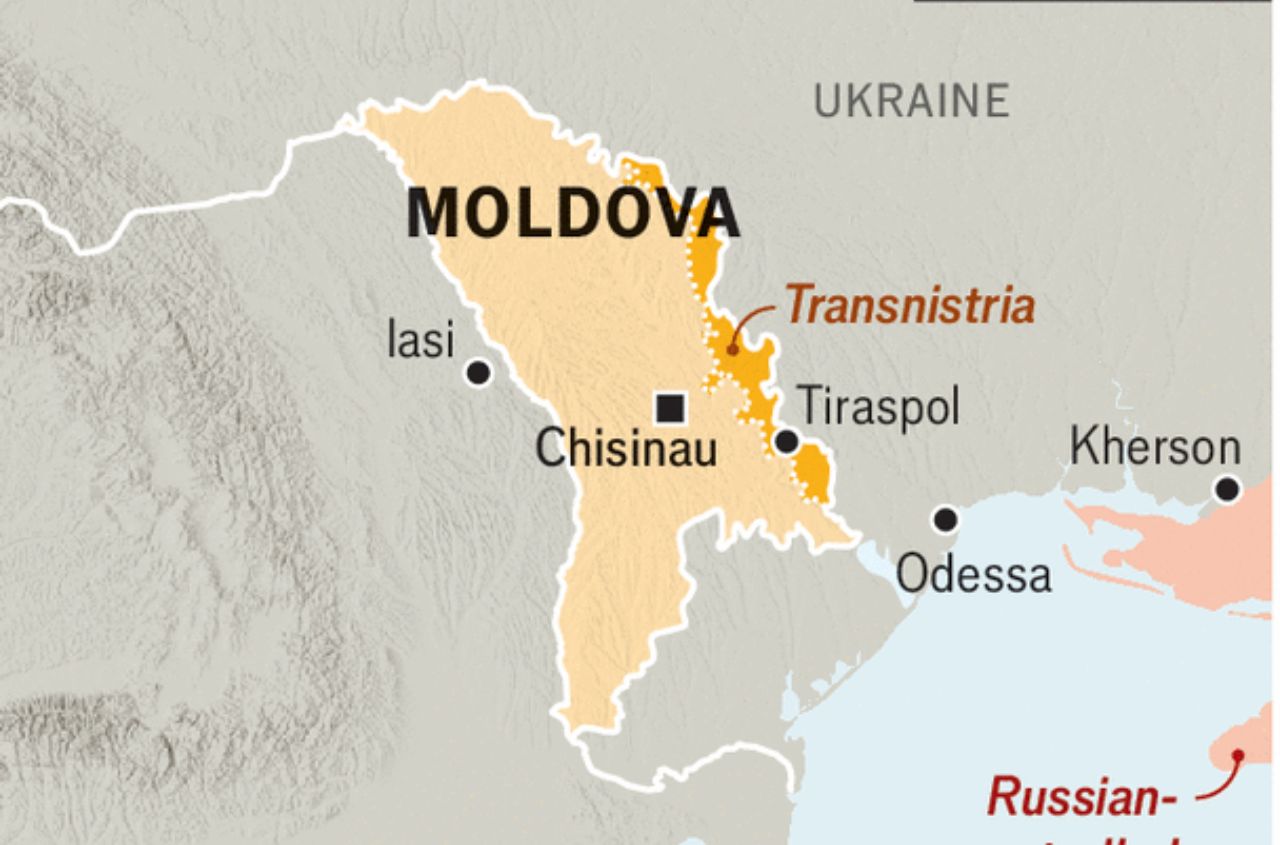
The breakdown began externally. Moldova was the first signal: large resources invested in political influence did not produce a strategic result. But Hungary became the turning point. The defeat of Viktor Orbán meant the Kremlin lost a key ally inside the EU, one capable of blocking sanctions and influencing policy toward Ukraine. What mattered was not only Orbán’s loss, but also that this defeat was publicly linked to Russian interference attempts, which in expert circles are attributed specifically to Kiriyenko’s political bloc.
Thus, a critical situation for an authoritarian system emerged: the manager responsible for delivering results began to be associated with a series of failures. In Kremlin logic, this means the loss of immunity. After Moldova and Hungary, Kiriyenko is no longer “irreplaceable,” and his opponents gain an argument that his model no longer works either externally or internally.
This moment was immediately used by the security apparatus. The FSB, primarily through its Second Service under Alexei Sedov, began systematically taking control of the digital environment. What had previously been an instrument of political management — Telegram, information networks, semi-controlled communication channels — began to be replaced by a rigid model of full control. Telegram blocking, VPN attacks, pressure on payment systems, and the promotion of MAX became tools to push the political bloc out of a key sphere of influence.
A fundamental clash of models emerged. Kiriyenko operates through managed complexity, where the environment is not fully controlled but remains predictable. The FSB operates through total transparency and coercion. For Kiriyenko, Telegram is a management tool; for Sedov, it is a threat that must be eliminated. As a result, the security services are dismantling the very infrastructure on which the political management system depended.
This situation can be described as “responsibility without control.” Kiriyenko is responsible for elections, stability, and narratives, but the tools ensuring this are shifting to the FSB. At the same time, the FSB does not assume political responsibility for the consequences of its actions. A gap emerges between those who formally manage the process and those who actually control the environment.
Against this background, the conflict expands to other centers of power. Additional actors begin to take advantage of Kiriyenko’s weakening. Dmitry Medvedev, who is strengthening his role in harsh ideological rhetoric, could potentially gain positions in the parliamentary structure. Vyacheslav Volodin, historically representing a more public political model, is seen as a candidate for reshaping the Federation Council and strengthening regional lobbying. Valentina Matviyenko may be pushed out, signaling a shift in the balance within the upper chamber.
These shifts are not accidental. They indicate a search for a new system configuration in which Kiriyenko’s technocratic bloc is no longer the sole center of control. At the same time, the security services are expanding influence not only through the Federal Security Service but also through related structures — the Prosecutor General’s Office, the judiciary, and links with the military and intelligence services. In this configuration, Kiriyenko is caught between multiple pressure centers.
The digital domain plays a special role. The MAX project, intended to become a new control instrument and simultaneously strengthen Kiriyenko’s position through ties with VK and his own son, turned into a problem. Instead of a controlled transition, chaos emerged: communication failures, public dissatisfaction, business panic, and criticism even from loyalists. This undermines not only effectiveness but also trust in the political bloc.
As a result, a new systemic logic is forming. The FSB, using security and wartime arguments, is gradually absorbing management tools. The political bloc is losing autonomy. Parliament may partially regain influence as a separate center of power through Volodin and a potential alliance with Medvedev. Regional elites are seeking new channels of interaction outside Kiriyenko. Technocrats and business actors are increasingly expressing dissatisfaction.
All this is happening against the backdrop of a key factor — the weakening of Putin’s role as arbiter. Where he previously balanced between groups, he now increasingly authorizes decisions by the security services without assessing their consequences. This intensifies conflict because the mechanism of restraint is disappearing.
External failures, especially in Moldova and Hungary, became a critical factor in weakening Sergei Kiriyenko, as they destroyed his main bureaucratic asset — his reputation as an effective political manager. The Federal Security Service, using these failures, has moved to a systematic takeover of the digital environment, depriving Kiriyenko of key management tools.
The conflict between Kiriyenko and the security apparatus is not personal but structural — a struggle between a technocratic governance model and a security-based model of total control.
The current situation is not a point of collapse, but a point of redistribution of power, in which Kiriyenko is no longer a dominant center but only one of several competing actors. The most likely scenario is further strengthening of the Federal Security Service and a gradual narrowing of Kiriyenko’s influence without his immediate removal, but with the loss of monopoly over political management and his potential designation as a scapegoat for Putin’s declining ratings.