


Ukraine is rapidly building a defense technology market based on artificial intelligence (AI). More than 200 companies are involved in producing AI-enabled drones, over 300 developments are registered on the Brave1 platform, and more than 70 AI and computer vision systems are already actively used on the frontline.
In order to defeat the enemy in every technological cycle, the Ministry of Defense is building a fundamental ecosystem of military technology competence centers focused on key areas of warfare—Middle Strike, Deep Strike, ground robotic systems (UGVs), artillery, and others.
The first such center is the Defense AI Center “A1,” which is designed to develop battlefield solutions and optimize internal processes within the army and the defense-industrial complex.
These solutions will transform Ukraine’s Defense Forces into a data-driven next-generation army, where data, forecasting, modeling, and autonomous systems provide a technological advantage and accelerate the innovation cycle from idea to battlefield deployment.
“Today, technological superiority is a critical condition in warfare. We must be faster than the enemy at every stage. The President of Ukraine has set the task of defeating the enemy in three domains: in the air, on land, and in the economy. Artificial intelligence will become the driver of technological solutions that help achieve this goal. AI gives us two fundamental advantages: instant analysis of massive data sets and real-time decision-making,” said Defense Minister Mykhailo Fedorov to Channel 24.
It is planned that artificial intelligence will predict enemy actions and help shape scenarios that allow Ukraine to outpace the adversary in both speed and precision of strikes.
AI is already operating on the front line
Artificial intelligence is already performing specific tactical and strategic combat tasks, including:
- autonomous drone targeting (including operation without GPS in conditions of enemy electronic warfare systems);
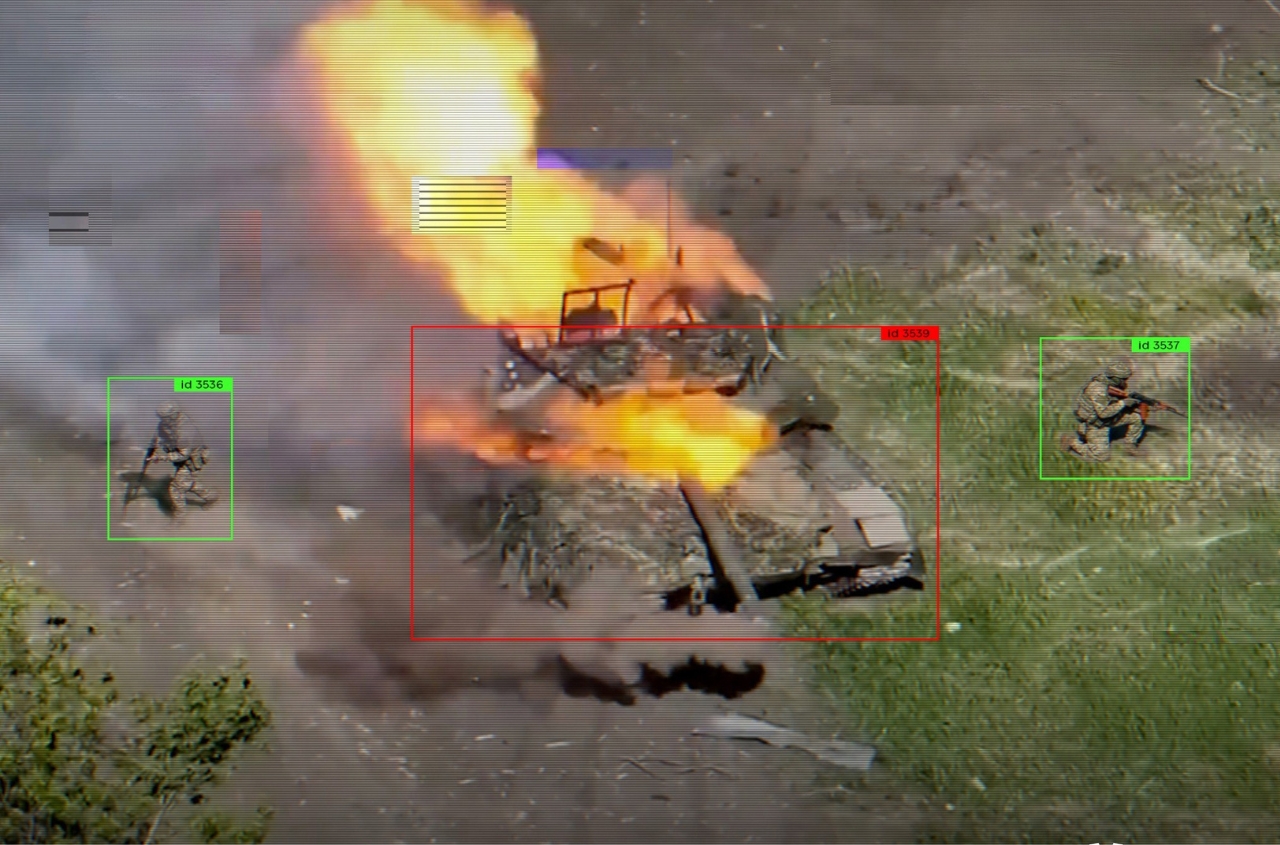
- detection of camouflaged equipment and personnel using computer vision;
- control of autonomous firing points (static turrets and AI-powered ground robotic systems);
- data analysis and prediction of enemy actions within the DELTA system.
AI enables interceptor drones to independently locate and strike targets, while ground robotic systems can perform a wide range of tasks—from fire support to interception and destruction of aerial targets, including Shahed-type drones.
The goal is to equip 100% of frontline drones with machine vision and artificial intelligence.
AI is trained on critical scenarios
The Brave1 Dataroom platform has become the development environment for AI-based drone detection and interception technologies using computer vision. The priority is countering Shahed drones and other types of enemy UAVs.
Developers are provided with access to datasets containing different types of targets collected under various weather conditions, times of day, and using different sensors. This allows models to be trained on scenarios as close as possible to real combat conditions.
The Dataroom was created to prepare AI-based solutions for battlefield conditions, taking into account all critical scenarios.
AI development with partners
Ukraine has launched a unique win-win partnership model. Through the Avengers Labs platform, foreign companies can train their AI models on millions of annotated frames from real combat flights without direct access to sensitive data. These datasets are already being used to train neural networks that automatically detect ground and aerial targets in the DELTA system.
The Test in Ukraine platform has also been launched, where partners can test technologies in real combat conditions and receive feedback from the military. One example is cooperation with the U.S. company Shield AI on integrating the Hivemind system into Ukrainian drones.
In addition, the first agreement with Germany has been signed on the exchange of defense data and joint projects for analyzing weapons use and developments in defense technologies.