

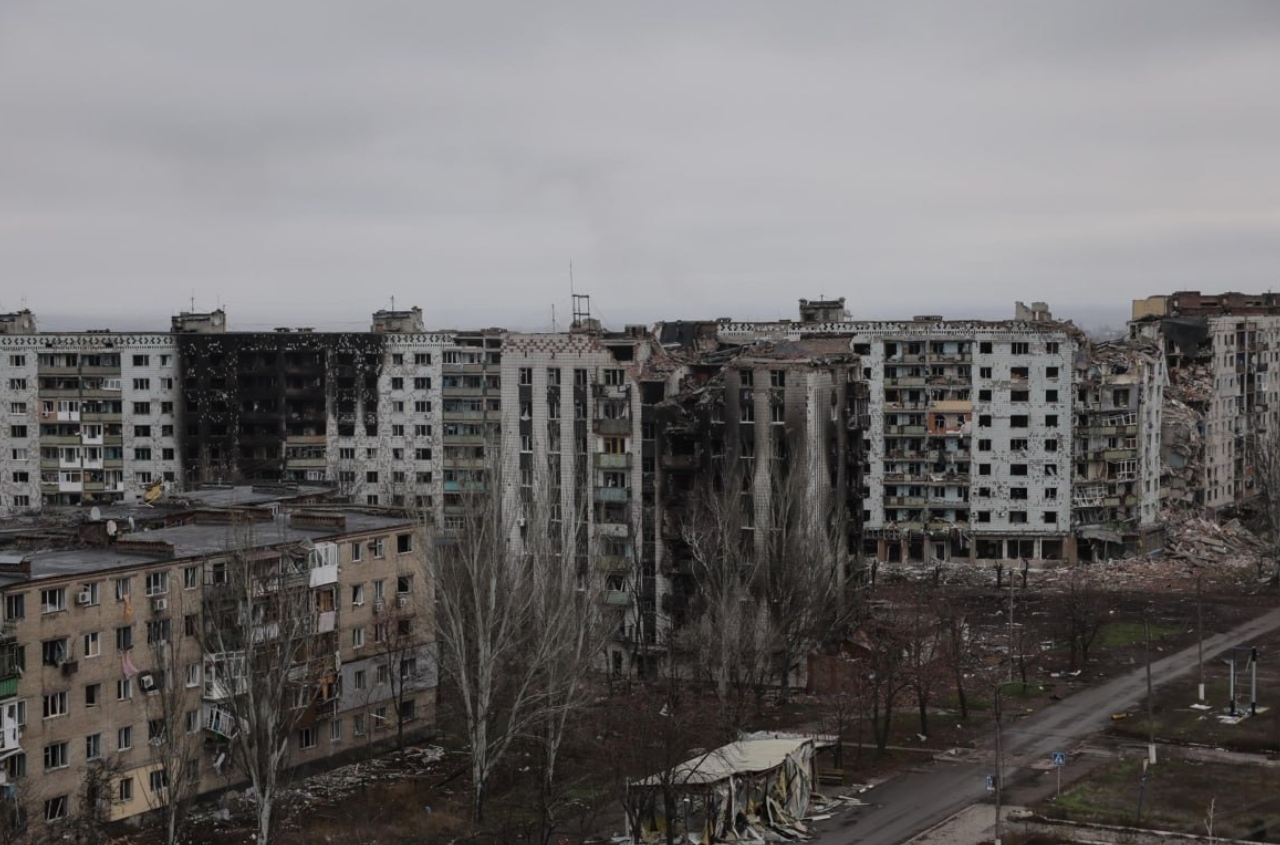

In operational terms, starting from April, every extra day spent by the Russian command on the assault of Kostiantynivka “works against them.” The longer they get bogged down in the Kostiantynivka and Druzhkivka area, the higher the likelihood becomes that the time required for them to eventually crawl toward the southern and southeastern approaches to Kramatorsk will grow sharply and exponentially—possibly even to infinity. In other words, achieving one of the key preliminary conditions for launching the Sloviansk–Kramatorsk offensive operation (essentially one of the main planned stages of the entire Russian summer–autumn campaign of 2026) will become extremely difficult for the Russian command.
By the way, this is also very true for the Lyman direction. As long as the Lyman bridgehead held by Ukrainian forces remains in place, the greater the likelihood that Russia’s 3rd Combined Arms Army will have to assault Ukrainian fortified areas in front of Sloviansk and Kramatorsk alone this summer, primarily from the east (i.e., essentially “head-on”).
Right now, numerous Russian “experts” may enthusiastically speculate about what would have happened if Russian forces had managed in the winter–spring period to break through, so to speak, via the “wide arc” toward Druzhkivka (through Chasiv Yar and along the Kasyonyi Torets River), effectively encircling the entire “problematic” Kostiantynivka defensive area of the Ukrainian Armed Forces.
However, war—as well as history in general—does not accept the subjunctive mood. The reckless assaults by Russian naval infantry near Volodymyrivka this winter clearly indicate that such plans did exist within the Russian command. But they remained only a “beautiful concept,” as the marines failed to break through either to Kostiantynivka or, even more so, to Druzhkivka.
As a result, Russia’s 8th Combined Arms Army and 3rd Army Corps now have to break through toward Kostiantynivka via the “short route,” essentially head-on, literally covering its southern and southeastern approaches with the bodies of their assault infantry. This is slow, exhausting, and, above all, extremely bloody and costly.
In other words, in the battles for Kostiantynivka (and beyond it, Druzhkivka), the forces and assets of the Southern Group of Forces—and also a number of reserves from the Central and even Dnipro Groupings—are being “burned out.” These forces, in theory, were meant to be used for a “push toward Kramatorsk” from the south. And if they are sufficiently depleted in these battles (to the point of partial or complete loss of combat capability), then even the operational deployment of a fresh Russian strike grouping in this direction may not save the entire plan for the “Sloviansk–Kramatorsk operational offensive.”
I already wrote, back in 2022, that at times it gives the impression that the Russian command, when planning its operations, does not take into account any potential counteraction from the Ukrainian command and the Ukrainian Armed Forces as a whole.
A sense of inherent “inevitable” superiority, vanity, and an almost “concrete-like” confidence in the superiority of their own intellectual capabilities compared to their Ukrainian counterparts constantly plays cruel tricks on the Russian command in this regard.
Even at the end of winter, any operations officer, even of the lowest rank, could have concluded that Kostiantynivka would have to be stormed in spring at a very high cost. However, the Russian command, with persistence worthy of better use, continued—and continues even now after the battles for Pokrovsk—to “draw arrows” toward Dobropillia, in other words, in the wrong direction.
Apparently, they believe that the Ukrainian Armed Forces will voluntarily withdraw from Kostiantynivka and that it will simply fall into their hands like a ripe fruit. And that the advance of Russian forces toward Kramatorsk from the south will happen as a quick, easy, and pleasant march.
Well then—keep drawing your arrows…