

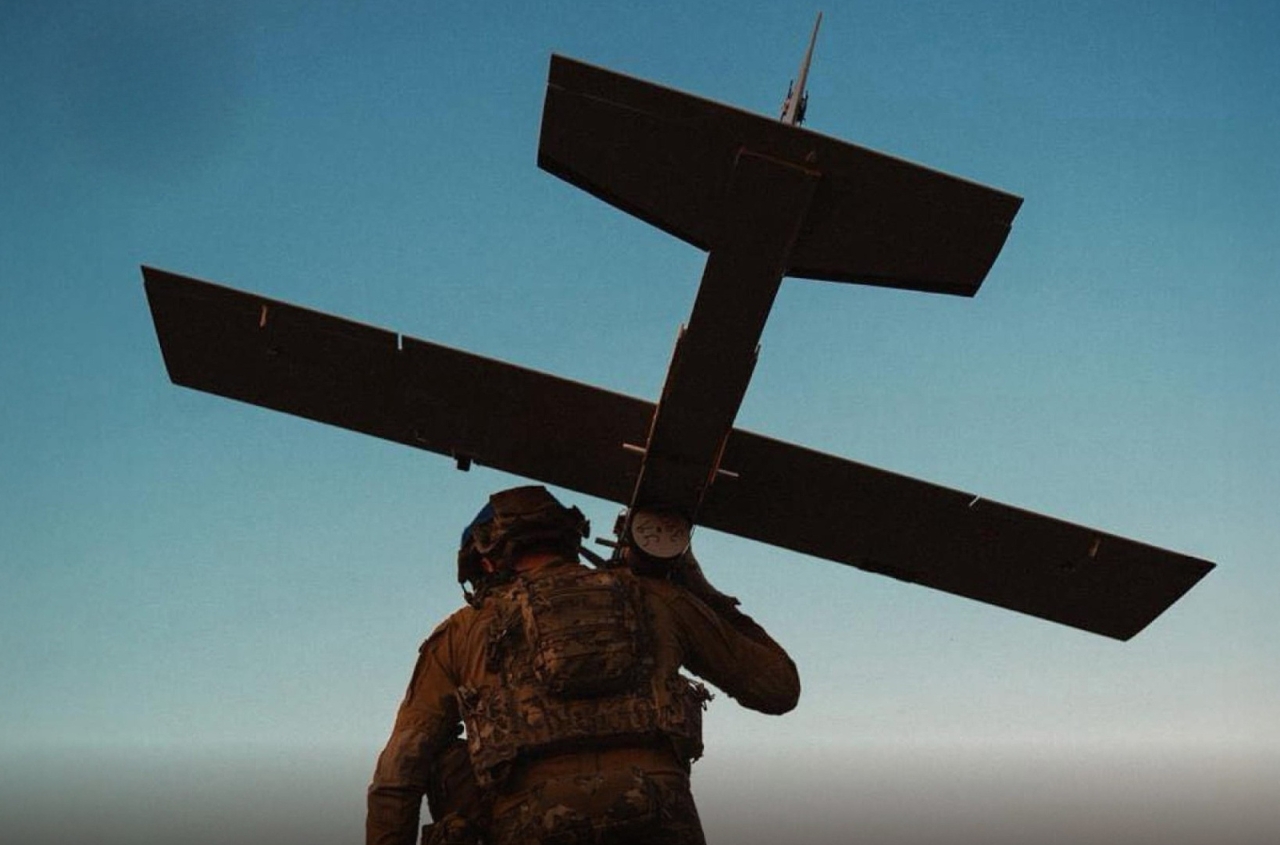

The European Commission has presented an action plan to counter the growing threats posed by unmanned aerial vehicles to EU security, according to the Commission’s press service.
“The Action Plan is designed to support Member States through coordinated actions, complementing national measures and focused on key priorities: enhancing preparedness, boosting detection capacities, coordinating responses and strengthening the EU's defence readiness,” the statement said.
The plan focuses on internal civilian security while complementing the Commission’s work in the field of defense and strengthening civil-military synergies. It also aims to foster a competitive European drone market by unlocking innovation, growth, and job creation in the sector.
Designed to support Member States through coordinated measures that complement national efforts, the plan centers on key priorities: enhancing preparedness, expanding detection capabilities, coordinating response, and strengthening the EU’s defense capacity.
To improve preparedness, the plan proposes a new approach to technological development and rapid industrial scaling. Measures include coordinated civil-military industrial mapping to attract investment and promote innovation and interoperability; enhanced testing capacity through a new EU Counter-Drone Centre of Excellence and the development of a certification scheme for counter-drone systems; and the launch of a Drone and Counter-Drone Industry Forum to foster dialogue with manufacturers and boost production.
In parallel, the Commission will propose a security package to update existing rules on civilian drones and adapt them to new security realities. The package will include coordinated risk assessments to protect supply chains for both drone and counter-drone technologies.
To safeguard critical infrastructure, the Commission will issue clear guidance to operators, launch a pilot project to improve maritime surveillance, and assist Member States in addressing high-altitude threats, such as weather balloons launched from outside the EU.
As detection, tracking, and identification are essential for countering drone threats, the Commission stresses the need for enhanced situational awareness. The plan includes measures to facilitate the development of unified airspace awareness systems that integrate all relevant data to identify legally operated drones. It will also explore, together with Member States, the gradual establishment of a Drone Incident Detection Platform.
The detection of hostile drones will rely on a multi-sensor approach combining several technologies supported by artificial intelligence software. The Commission will back cutting-edge technological developments in drone detection and proposes organizing large-scale annual counter-drone exercises to test cross-border cooperation and civil-military coordination.
In addition, the Commission will continue providing Frontex, the EU Border and Coast Guard Agency, with drones and technologies needed for border surveillance. Frontex will offer practical guidance on multi-layered deployment models and responses to cross-border incidents.
The action plan will complement and support Member States in enhancing Europe’s military readiness through innovation and industrial cooperation, including securing supplies of critical raw materials. The Commission will also strengthen efforts to build a more resilient drone ecosystem by fostering closer ties between governments and industry through the EU-Ukraine Drone Alliance.