


China does not always act openly; many of its instruments of influence are covert in nature.
Moreover, China intends to actively employ asymmetric means in its confrontation with the U.S., deliberately pushing the operational zone of such confrontation away from its own borders.
I remember once writing that the ideal operational zone for China in a confrontation with the U.S. is the Middle East.
Yes, China is also interested in oil from this region and in keeping its prices affordable.
But asymmetric confrontation is also about this: victory does not go to the side that avoids all losses, but to the side that suffers LESS loss than its opponent.
Confrontation in the Middle East means high oil prices and, through a chain of causality, high global inflation and rising prices for basic goods and services.
It also means blocking free flows of liquidity from the region into dollar-denominated instruments and forcing the U.S. to spend resources supporting its key ally, Israel.
China’s cost set includes loss of access to Iranian oil and price shocks. It is not dependent on Middle Eastern liquidity flows.
How can China offset these shocks?
With cheap oil from Russia.
And a spike in inflation actually benefits China—there is a constant threat of deflation in the PRC.
The U.S. situation is different. They are largely independent of physical oil deliveries from the Middle East, but as an open economy, they depend on global oil prices.
An American company will not sell its oil domestically at a 40% discount—but Russia will sell to China at that discount.
A new wave of inflation could severely destabilize the U.S. stock market, as the Federal Reserve would have to switch to a cycle of tight monetary policy and raise benchmark interest rates.
And the U.S. does rely on liquidity flows from the Middle East.
Additionally, any instability in the region forces the U.S. to spend money supporting Israel.
Overall, in any scenario of escalation in the Middle East, the U.S. suffers GREATER losses than China.
Now, let’s turn to the covert forms of this confrontation.
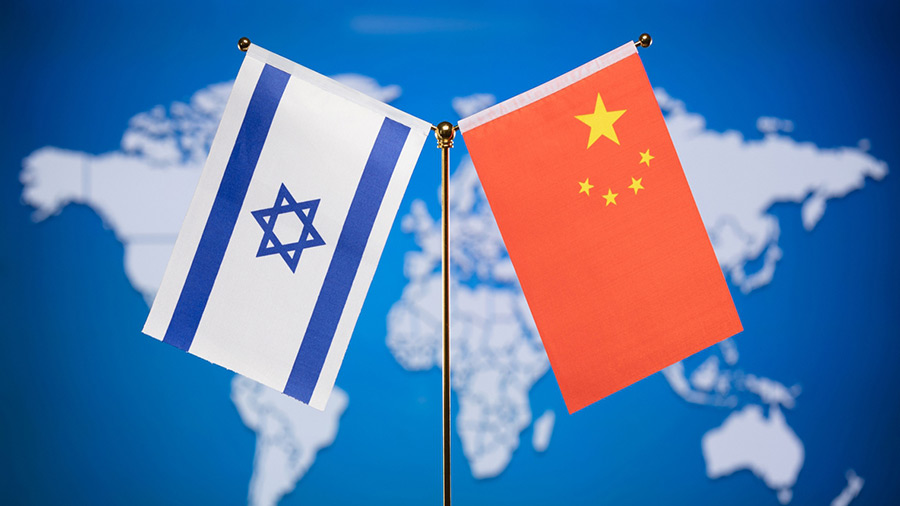
After the Hamas terror attack on October 7 against Israel, China quietly prohibited Chinese companies from investing in Israel.
This became known during a court case in which Kibbutz Hanita in Western Galilee filed a lawsuit in the Tel Aviv District Court against the Chinese fund Ballet Vision.
The fund was supposed to purchase the kibbutz members’ shares in Hanita Lenses, which manufactures intraocular lenses (artificial lenses).
The Chinese fund submitted documents to the court regarding the ban on investment in Israel.
In 2021, the kibbutz sold 74% of Hanita Lenses to Ballet Vision for $35 million.
$25 million went to the kibbutz members, and $10 million to the company itself.
An agreement was made under which the Chinese fund granted the remaining minority shareholders a buyout option for $9.5 million, valid until December 2025.
In December 2025, the kibbutz notified the fund of the exercise of the option.
But the fund refused to pay, citing:
- Operational losses of $15 million and bank debt of $4 million.
- The Chinese government’s ban on investments in Israel after October 7.
According to the fund’s director, Yuxiao, these restrictions force the fund to seek loans from shareholders.
It’s possible the fund is simply looking for a pretext not to pay.
But judging by the case circumstances, it appears to be true.
Why would the fund create problems with a project in which it has already invested $35 million? Just to avoid paying $9.5 million?
Especially since Israeli courts will not accept a false excuse.
So it seems China is betting on deploying asymmetric confrontation with the U.S. in the Middle East.
This also explains China’s policies regarding the creation of a Palestinian state and its relations with Iran.
On the global stage, China is no longer “friends” with Israel.