

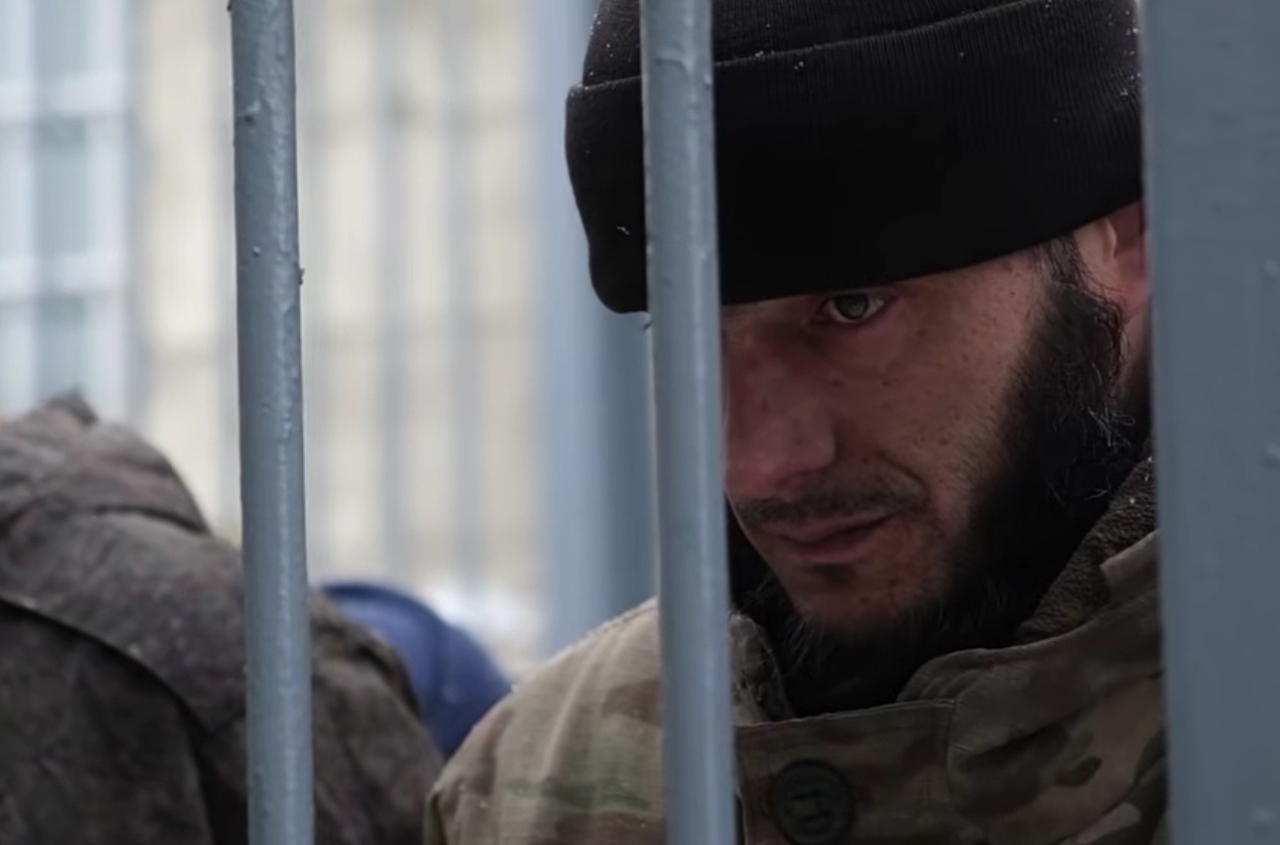
During the “157 for 157” exchange, Russia was handed so-called Kadyrov fighters from the “Akhmat” special unit and former prisoners who had signed contracts and were sent to fight in Ukraine.
This was reported in a Telegram post by the I Want to Live project.
“After several delays and cancellations, Ukraine managed to convince the Russian side, and the prisoner exchange took place. Ukraine returned 157 of its defenders, while 157 prisoners and Kadyrov fighters from ‘Akhmat’ were sent to Russia, five of whom were transferred as part of a sanitary exchange,” the report said.
The post notes that the Russian Ministry of Defense returns only certain categories of prisoners of war, primarily Kadyrov fighters from the “Akhmat” unit.
“It is hard to imagine how many exchanges were disrupted because the Russian side refused to take regular soldiers, demanding Kadyrov fighters instead. This exchange was no exception, and dozens of ‘Akhmat’ militants are heading home. The statistics by nationality for today’s exchange are telling: 80% Russians, 13% Chechens, and only 7% representatives of other nationalities of this ‘multiethnic country,’” the post stated.
The “I Want to Live” project reported that during the “157 for 157” exchange, those sent to Russia were mostly people who had been in captivity for less than a year, and 75% were former prisoners who had signed contracts while in detention.
“Why them? Prisoners are the most powerless category of Russian soldiers. Mobilized soldiers may be allowed home for a week after captivity, but prisoners are immediately returned to units to complete their contracts. It is possible that by March, some of today’s exchanged individuals may surrender again, as summer-exchanged prisoners Dmitry Ivanov and Saktaagay Shagaa did,” the report said.
The post notes that the main criterion of the Russian Ministry of Defense for those to be returned in exchanges remains unchanged: these are soldiers who can be easily sent back to the front, as well as Kadyrov fighters who, after the exchange, will be stationed in rear areas.
“Heavily wounded and sick prisoners, foreigners, POWs from the so-called ‘DNR and LNR’ units, and those held for a long time are of practically no interest to the Russian Ministry of Defense. Russia consistently avoids an ‘everyone for everyone’ exchange, returning only those it considers a combat unit,” the report emphasized.