


Main iamge DeepState map
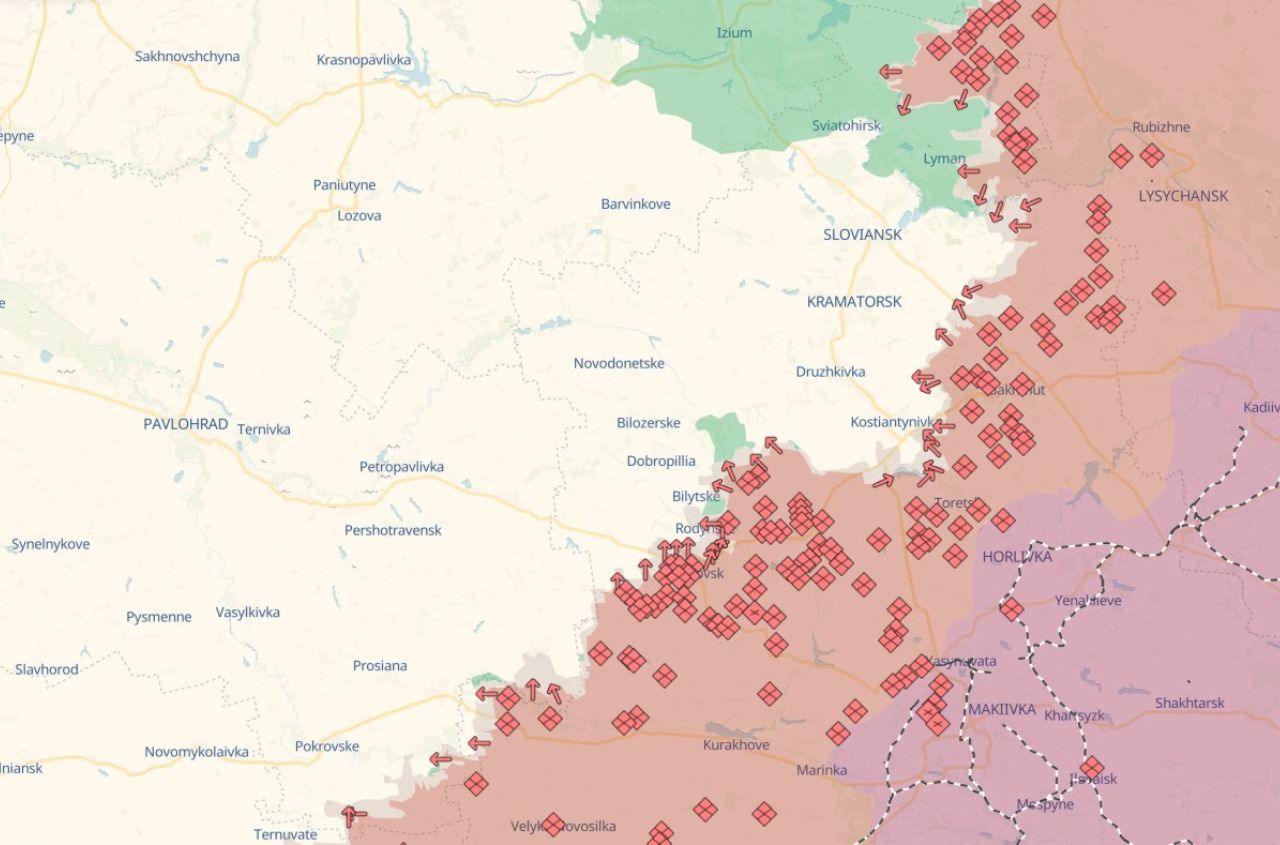
Speculation about a “lull” on the front due to the weather and major preparations for the spring campaign is pure fantasy. There is no lull. Fog, mud, and now snow and frost – none of this has reduced activity. It only makes the main hot spots clearer, highlighting the key directions that will become priorities in spring. According to the General Staff, as of today there were 235 combat engagements in a single day. The hottest directions are Pokrovske, Huliaipole, and Kostiantynivka.
It’s clear that the enemy plans to “resolve” the issue of Pokrovske and reach the borders of Donetsk region there before the main spring campaign begins – which they intend to devote to the remaining Kramatorsk agglomeration in Donetsk region and the entire Zaporizhzhia direction. But they officially announced the capture of Myrnohrad last week, then later removed the news from the feeds. They say it was due to using an incorrect old photo of Herasymov.
Our airborne units continue to hold a small bridgehead on the outskirts of Myrnohrad, harassing the enemy with drones and raids. Although the real situation there is bad, and fighting has already reached Rodynske. They had confidently promised to take Pokrovske before the New Year, and it even seemed like they could succeed, but they got bogged down in urban combat. It looks very likely that the enemy will have to start the decisive battle for “Sloviansk–Kramatorsk–Druzhkivka–Kostiantynivka” without having resolved the Pokrovske issue.
Huliaipole and Orekhovo in Zaporizhzhia region – the intensity there makes sense. After a successful breakthrough, the enemy moved reinforcements there (they always throw everything where they find a crack in the defense) and pressed the defense forces almost every day, approaching Zaporizhzhia. It’s clear that Zaporizhzhia has immediately shifted from a secondary direction to a priority. The regional center, the hydroelectric station, the dam, and the industry – a very big “prize.” Even if they don’t capture it, just reaching direct artillery range is significant.
But fighting against Territorial Defense brigades is very different from fighting the 225th Assault Regiment. Rapidly redeployed assault troops under Oleh Shyriaiev entered combat and did what they do best – breaking the horns of uninvited “deer.” After several days of hard combat, the enemy was stopped, the gray zone was cleared, and four settlements came under our control. In some areas, the Armed Forces of Ukraine advanced up to 10 km. Not everywhere. So talking about a major counteroffensive is definitely premature. But the enemy’s offensive has stalled, their “horns” are broken, and they now have to think about defense.
Continuing to stall under Kostiantynivka and push toward Sloviansk at heavy losses of 500 meters per week will be completely unacceptable for Moscow. Ideally, they would resolve Pokrovske–Myrnohrad and move everything to Kostiantynivka and Druzhkivka. But good luck trying to resolve that issue.
Here are the three hottest and most important directions today: two in Donetsk region, one nearby in Zaporizhzhia. These will remain the enemy’s priorities in spring and summer. If anyone believes that peace will be concluded by June and the enemy will stop at the Luhansk–Donetsk line, I’ll disappoint you. It will not happen. This is the objective reality, which suits the U.S. and Europe; Moscow has no alternative, and we cannot stop everything on our own.
The positive side is that the end of spring will already coincide with a major economic crisis in Russia. And it will get worse. When exactly they will no longer be able to continue the war purely economically – we’ll see. Hopefully, by the end of 2026, the crisis will become critical.