

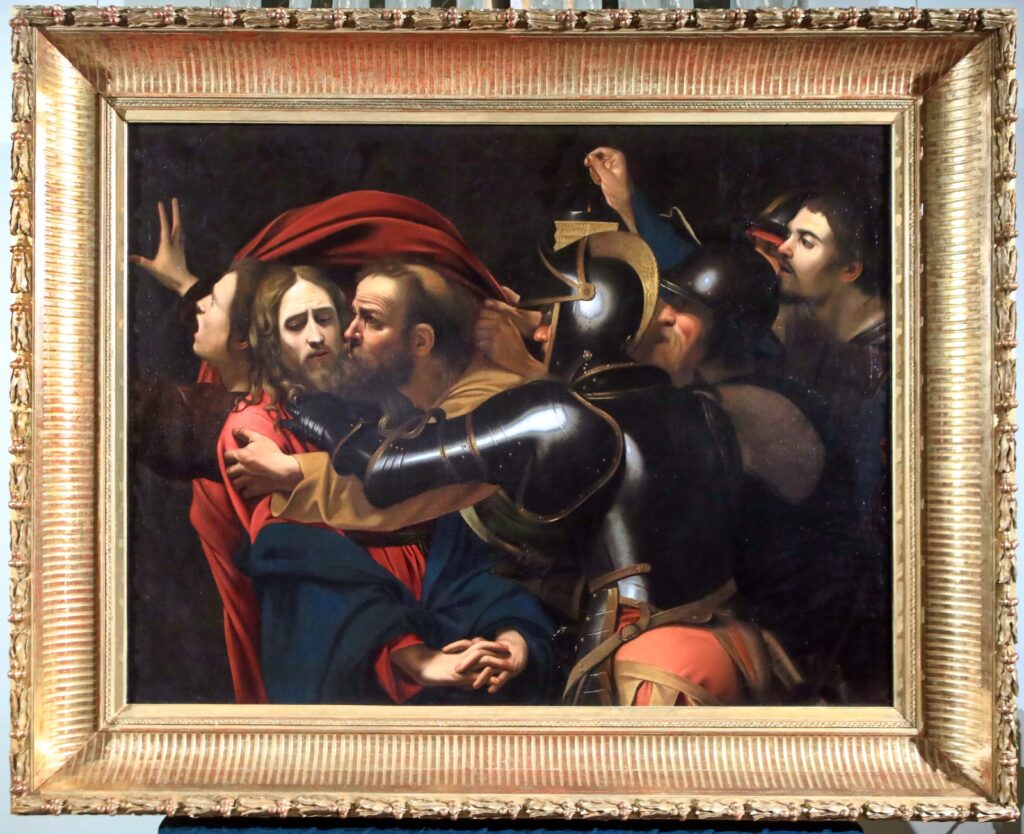

A unique exhibition project, “In the Light of Caravaggio. Rescue. Research. Restoration,” has opened at the National Sanctuary Sophia of Kyiv, telling the story of the restoration of the painting The Taking of Christ or The Kiss of Judas.
“The history of this painting is one of the most high-profile cultural losses for Ukraine. Its theft in 2008 from the Odesa Museum of Western and Eastern Art was one of the greatest crimes against Ukraine’s museum heritage. The central part of the canvas was barbarically cut from its stretcher. Today, it has been professionally restored, demonstrating that Ukraine has the expertise to preserve and restore cultural heritage at the highest level,” emphasized Tetyana Berezhna, Vice Prime Minister for Humanitarian Policy and Minister of Culture of Ukraine.
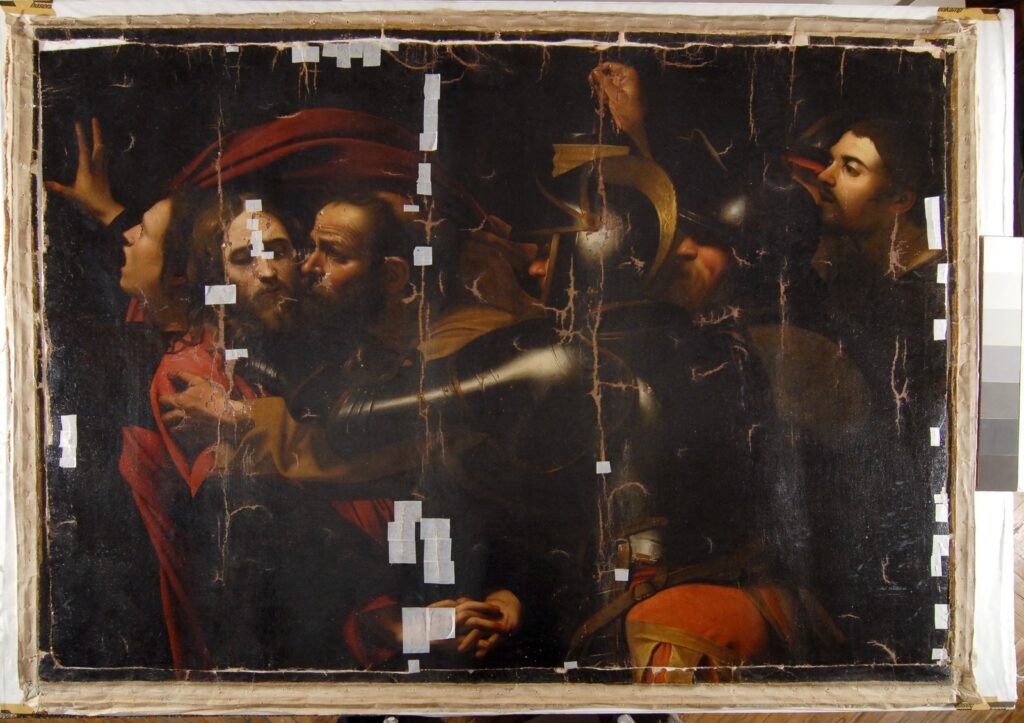
The exhibition tells the story of saving a 17th-century painting associated with the Italian artist Michelangelo Merisi da Caravaggio. The work depicts the biblical scene of Christ’s arrest during Judas’s treacherous kiss, which revealed Him to the Romans. The painting is striking for its dramatic depth and the refined chiaroscuro technique—hallmarks of Caravaggio’s artistry.
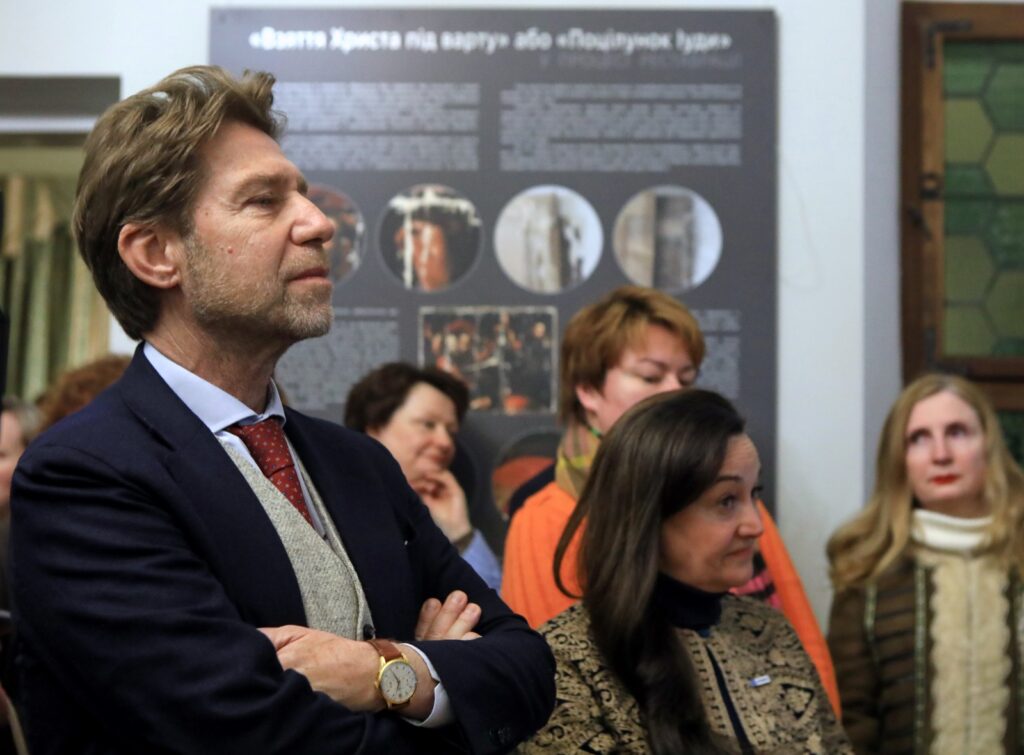
“In a time when culture in Ukraine is under threat and the risks to cultural heritage are growing, such examples are especially important. They show that culture represents development, identity, solidarity, and unity. Access to culture helps us stay together and feel that solidarity. That is why UNESCO was interested in supporting this exhibition, as well as the restoration of the frame, which has now been fully restored after a long time. Today, we see the combination of two elements—the painting, restored by Ukrainian specialists before the war, and the frame, preserved in the Odesa Museum of Western and Eastern Art and now restored. For UNESCO, this exhibition confirms our collaboration with Ukrainian institutions, and we are happy to continue this work together,” said Chiara Dezzì Bardeschi, Head of the UNESCO Representation in Ukraine.
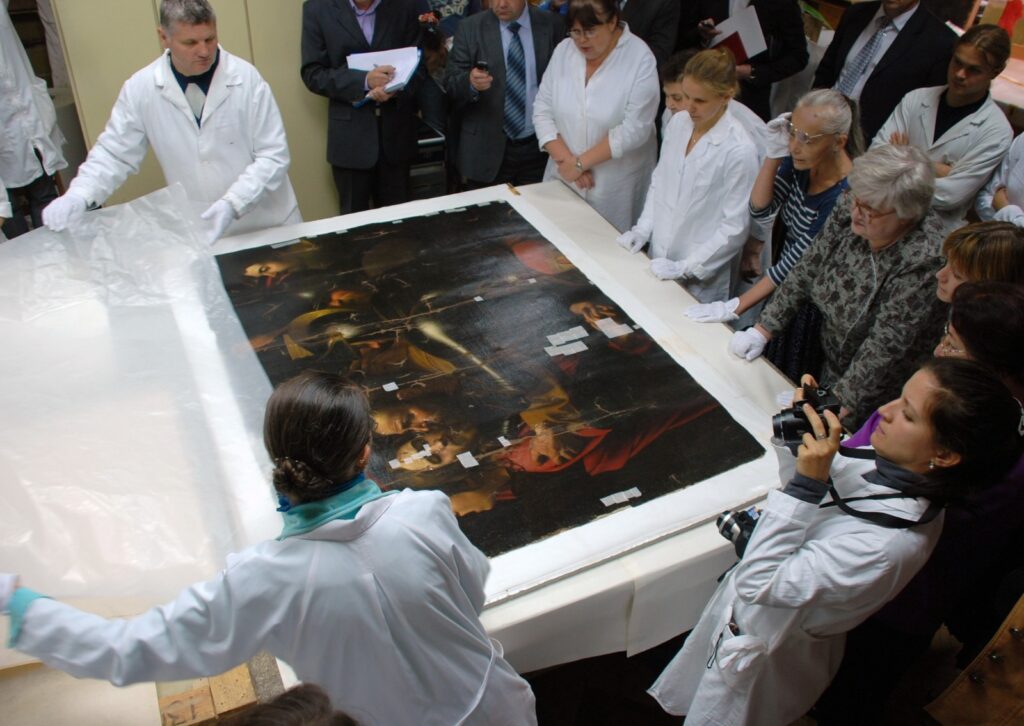
The project was presented by the National Research and Restoration Center of Ukraine, the Odesa Museum of Western and Eastern Art, and the National Sanctuary Sophia of Kyiv.
History of Theft and Return
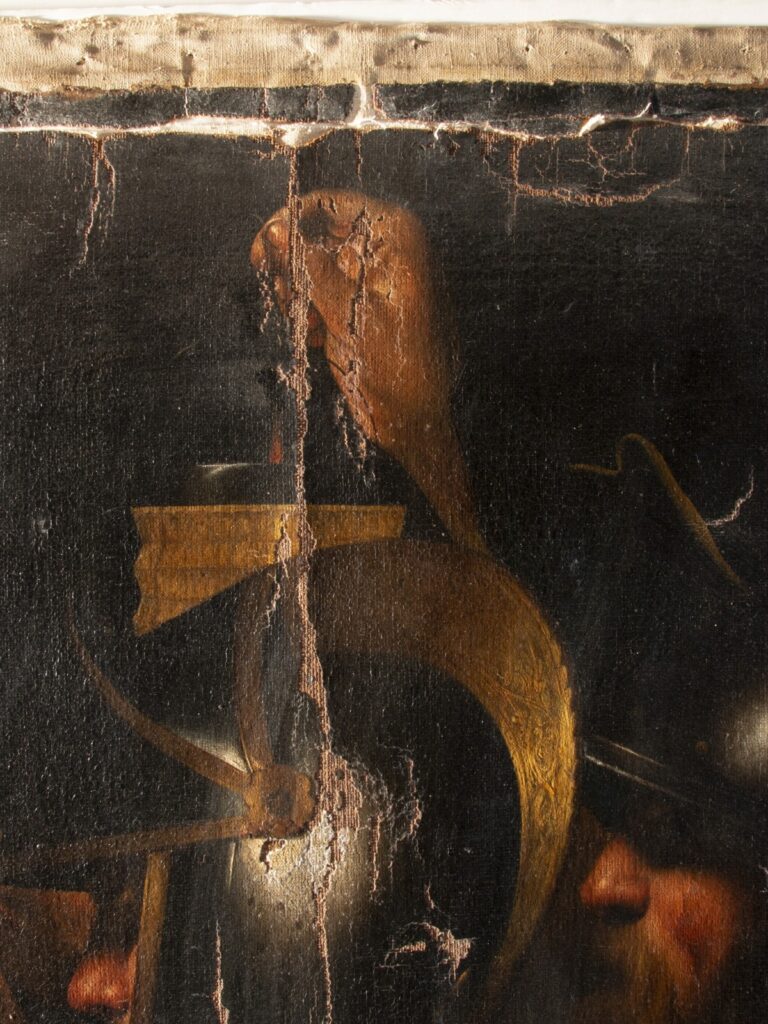
The painting was stolen 18 years ago from the Odesa Museum of Western and Eastern Art. The perpetrators cut the central part of the canvas from the stretcher. Later, the work was found in Berlin and returned to Ukraine.
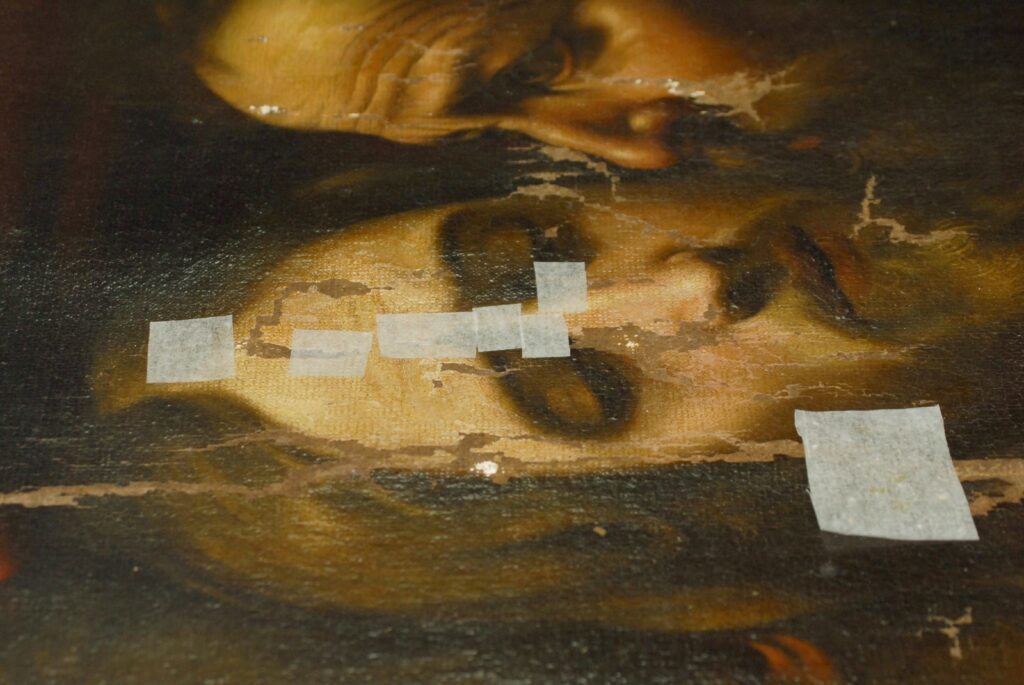
The painting became evidence in a criminal case. Only in 2018 did the court allow restoration to begin. After the case was closed, specialists were able to work on the painting fully. The painting arrived at the restoration center in two parts—the central composition and fragments of the edges. Conservators documented numerous losses of paint layers, tears in the canvas, deformations, and damage caused by the barbaric cutting.
Specialists at the National Research and Restoration Center of Ukraine conducted detailed scientific studies. They examined the canvas base, pigments, and varnish layers and developed a step-by-step restoration plan.
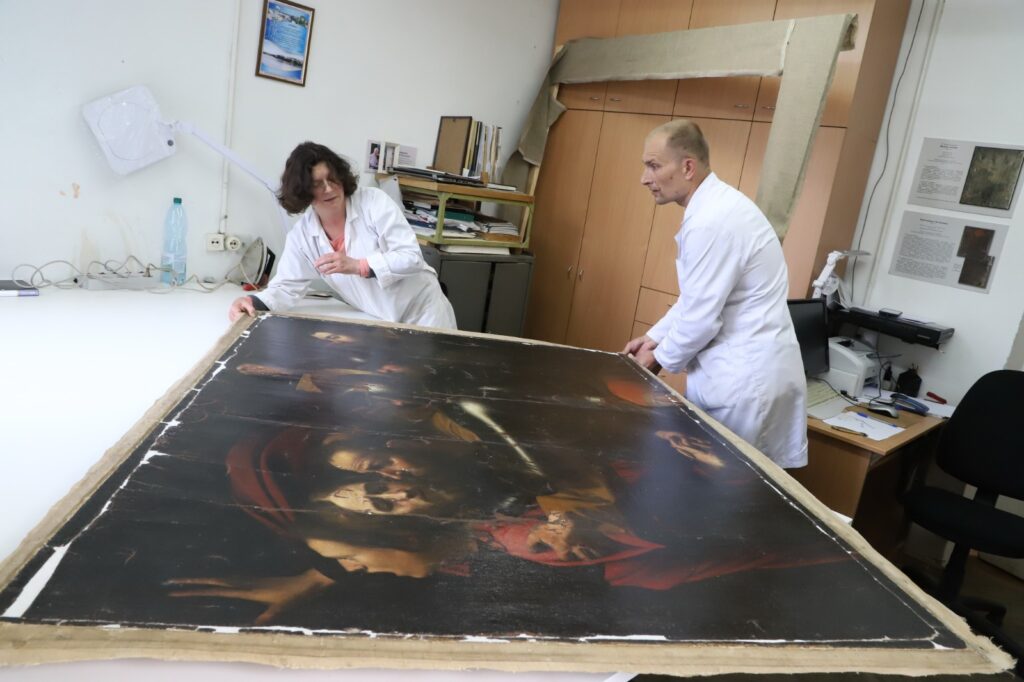
The conservators reinforced the base, joined the fragments, and stabilized the paint layer. They worked with microscopes and specialized materials to avoid interfering with the original painting, documenting every stage.
The work took several years and required high precision and responsibility. Ukrainian specialists restored the painting’s integrity and museum-quality appearance.
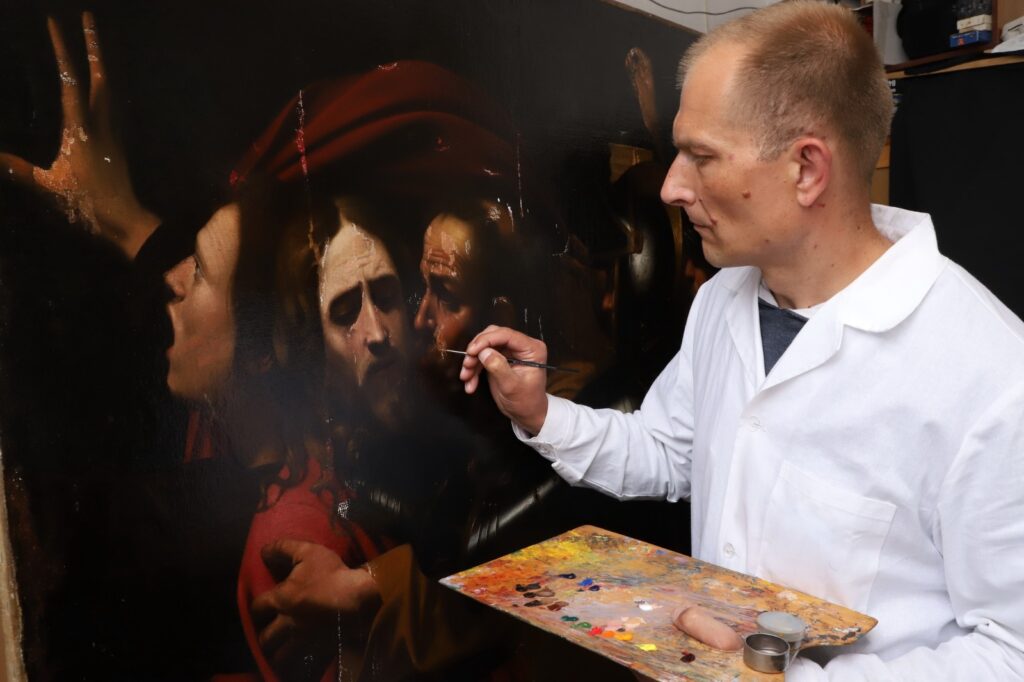
The exhibition opened at the “Metropolitan’s House” in the National Sanctuary “Sophia of Kyiv” (24 Volodymyrska Street, Kyiv). It will run from February 13 to April 12, 2026, daily from 10:00 to 18:00.
The project is implemented with the support of the UNESCO Representation in Ukraine, the Ministry of Culture of Ukraine, and the Department of Culture, Nationalities, Religions, and Protection of Cultural Heritage of the Odesa Regional State Administration.