

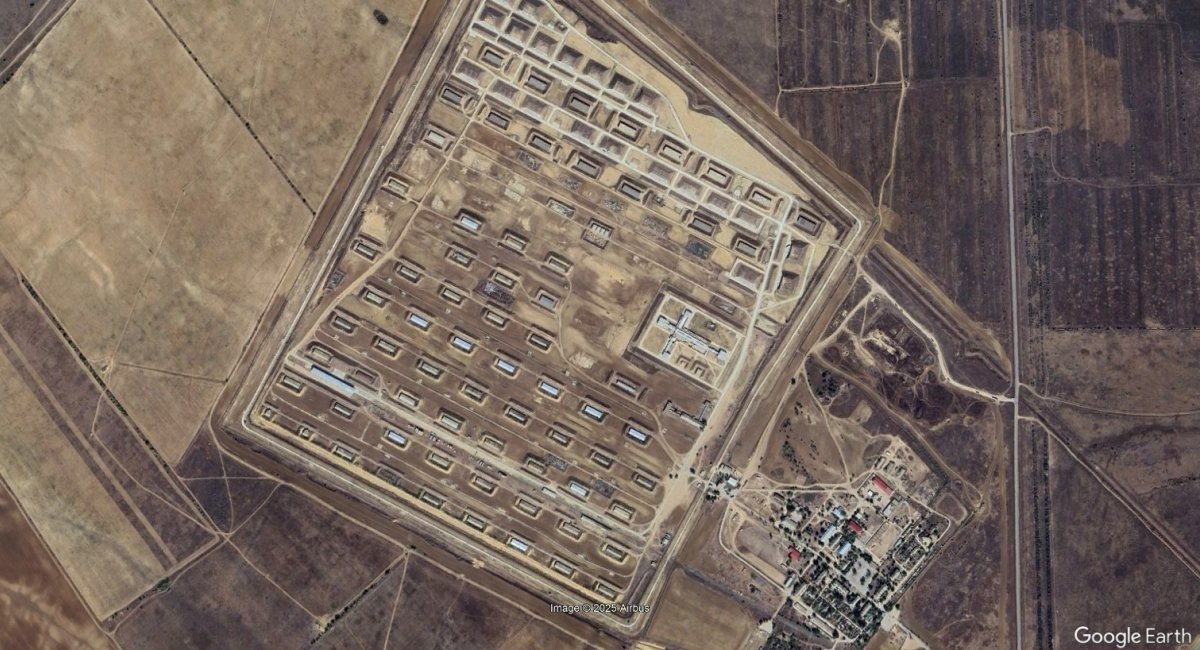

Main image: Russian GRAU arsenal, known as military unit 57229-51 near Kotluban (photo from Google Earth, September 2025)
In 2025, Russia managed to produce as many as 7 million munitions, worth 1 trillion rubles, or roughly 10.6 billion euros. The breakdown by type is as follows:
3.4 million shells of 122 mm, 152 mm, and 203 mm calibers;
2.3 million mortar rounds of 120 mm and 240 mm calibers;
0.8 million rounds of 100 mm, 115 mm, and 125 mm calibers for BMP guns and tanks;
0.5 million rocket projectiles for MLRS of 122 mm, 220 mm, and 300 mm calibers.
Compared to 2023, production increased by at least 50%. And if you add roughly 7 million munitions supplied between 2023–2025 from Iran and North Korea, Russia essentially had the ability to stockpile its domestically produced shells in storage depots for future campaigns against the Armed Forces of Ukraine or even a hypothetical “war against NATO.”
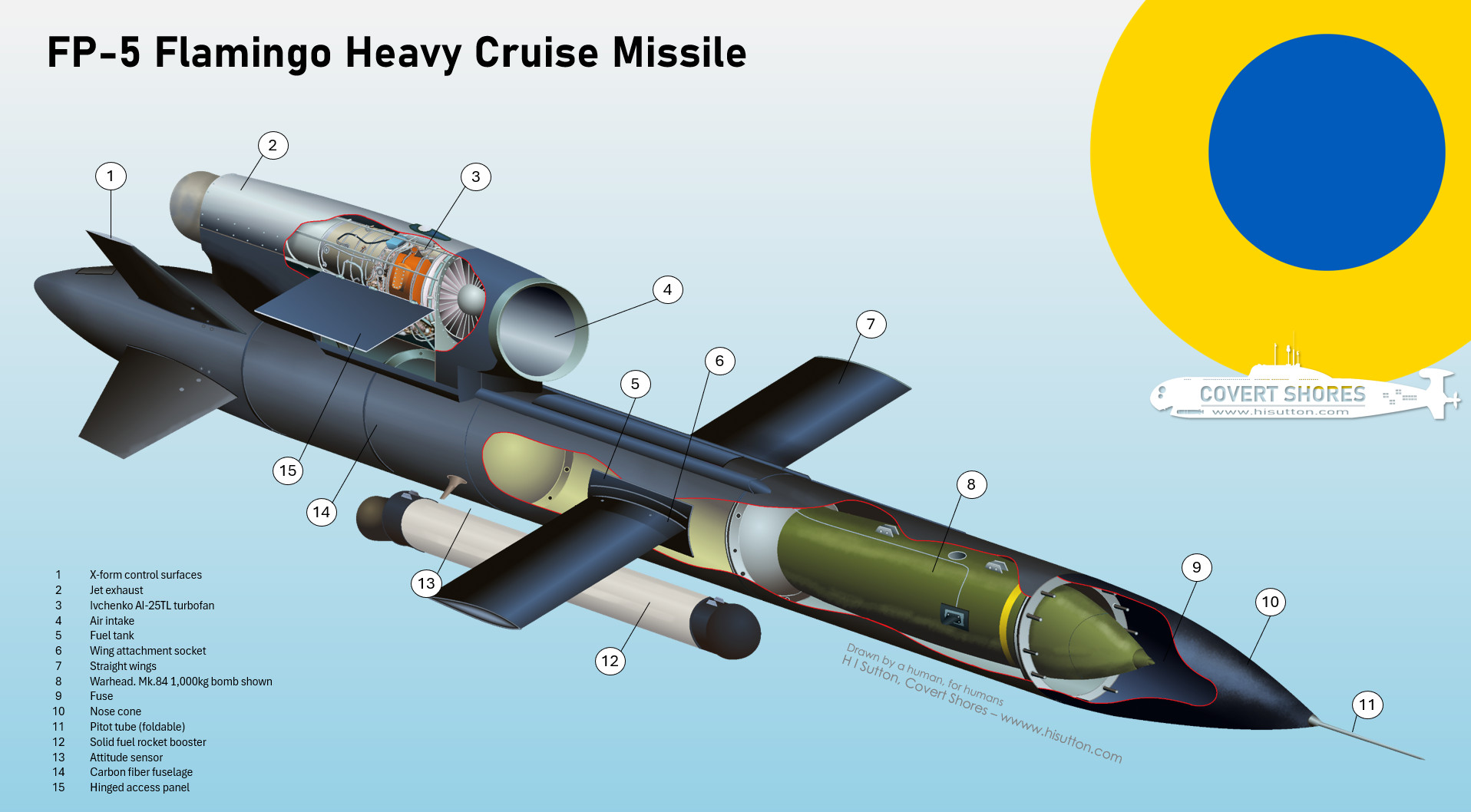
However, on the night of February 12, 2026, Ukrainian missile units successfully struck the GRAU arsenal near Kotluban with FP-5 Flamingo missiles—in other words, one of Russia’s largest artillery ammunition depots.
As a result, the dynamics of Russia’s ammunition stockpiling have now become highly unfavorable, thanks to our Flamingo strikes.
That’s the situation.