

Ukrainians demonstrate the highest level of trust in state institutions directly responsible for the country’s defense — the Armed Forces of Ukraine, the Main Intelligence Directorate of the Ministry of Defense, the National Guard, the Security Service of Ukraine (SSU), and the State Border Guard Service, according to a sociological survey conducted by the Razumkov Centre at the request of the Kyiv Security Forum.
A majority of respondents also trust the President of Ukraine: the balance of trust (the difference between positive and negative assessments) stands at +9.3% (40.2% rather trust, 11.5% fully trust). Compared to September 2025, the figure has slightly decreased — at that time, the balance was +12%.
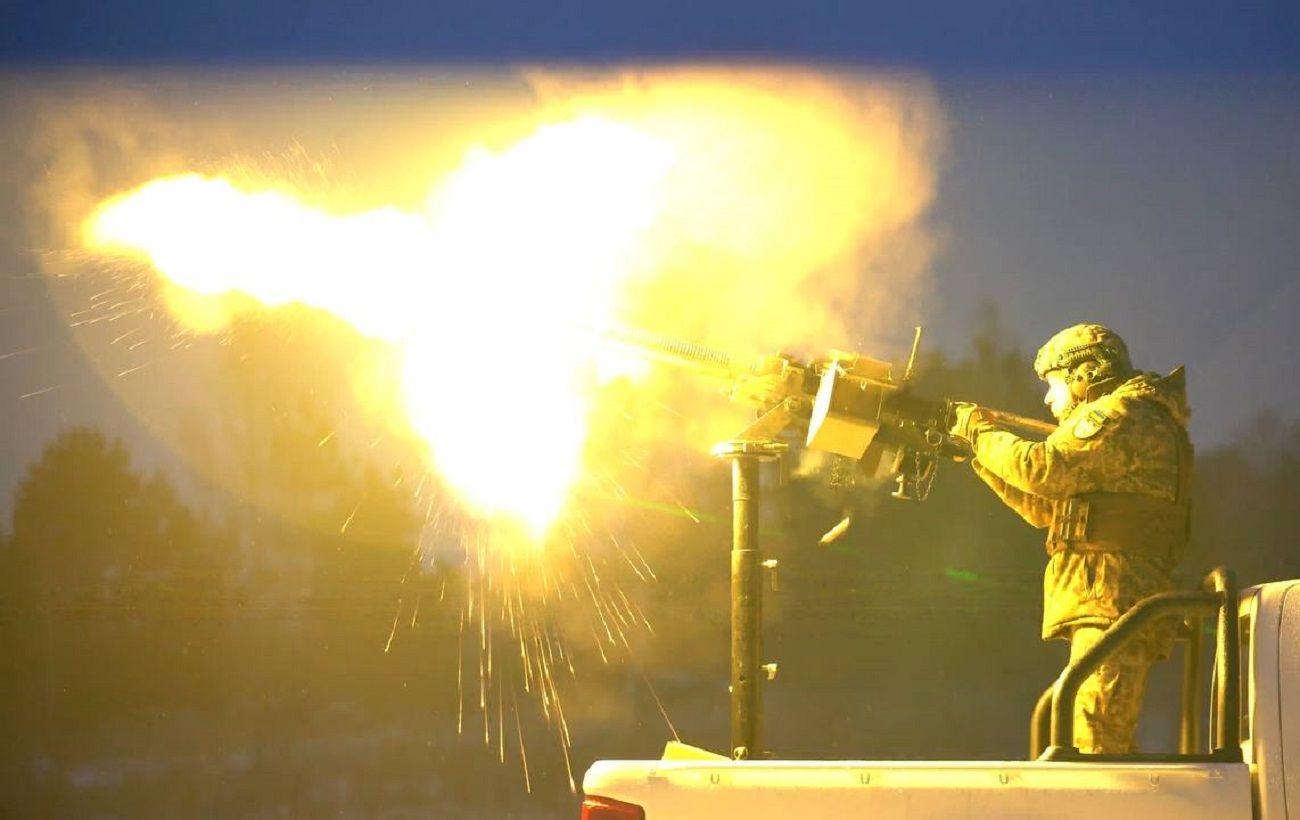
The Armed Forces of Ukraine remain the undisputed leader in terms of trust, with a trust balance of +88.5% (57.4% rather trust, 36.9% fully trust). Compared to September 2025, the figure increased by 1.5% — at that time, the balance was +87%.
The Main Intelligence Directorate received a balance of +63.4% (62.4% rather trust, 16% fully trust, an increase in the positive balance by 7%), the National Guard +59.4% (59.2% rather trust, 18.1% fully trust), the SSU +51.4% (60.9% rather trust, 11.9% fully trust, an increase in the positive balance of nearly 10%), and the State Border Guard Service +50.1% (56.1% rather trust, 14.1% fully trust, a decrease in the positive balance by 5%).
Over the past six months, trust in the National Anti-Corruption Bureau of Ukraine (NABU) has increased significantly: the balance improved from -25.2% in September 2025 to -3.6% in February 2026. Currently, 38.3% of respondents trust NABU (32.5% rather trust, 5.8% fully trust), 32.6% rather do not trust it, and 9.3% do not trust it at all.
Trust in the National Police stands at 37% (32.5% rather trust, 4.5% fully trust), while 54.7% do not trust it (42.7% rather do not trust, 12% do not trust at all), resulting in a balance of -17.7%. This indicator worsened by 16.5% compared to September 2025, when the balance was -1.2%.
The Prosecutor’s Office is trusted by 25% of respondents. 46.2% rather do not trust it, and 11% do not trust it at all. The balance stands at -32.2%, compared to -36.1% in September 2025.
The judicial system is trusted by 23.1% of respondents, while 58.3% do not trust it (45.5% rather do not trust, 12.8% do not trust at all); 18.7% found it difficult to answer. The balance stands at -35.2%, which is significantly higher than in September 2025, when it was -51.4%.
The Government of Ukraine received a balance of -54% (49.8% rather do not trust, 25.2% do not trust at all). In September 2025, the trust balance stood at -47.7%.
The lowest level of trust among the listed state bodies was recorded for the Verkhovna Rada of Ukraine, with a balance of -77.4% (51.3% rather do not trust, 35.9% do not trust at all). Compared to September 2025, trust in parliament declined further — at that time, the balance was -59.5%.
The sociological survey was conducted by the Razumkov Centre at the request of the Kyiv Security Forum from January 31 to February 4, 2026, using telephone interviews. A total of 1,003 respondents aged 18 and over were surveyed in all government-controlled regions of Ukraine covered by Ukrainian mobile operators. The sample structure reflects the demographic composition of the adult population of the surveyed territories as of early 2022 (by macro-region, age, gender, and type of settlement). The theoretical margin of error does not exceed 3.2%.