


Russia’s military campaign against Ukraine is approaching the limits of its economic sustainability, meaning the Kremlin will soon face a radical choice between scaling down the “special military operation” or imposing harsh coercive mobilization of the economy and society.
According to a major analytical report by the International Institute for Strategic Studies (IISS), Russia’s economic system has almost fully exhausted its production capacity and is experiencing diminishing returns from allocating scarce resources to the defense industry. The main barrier for Russia is a critical labor shortage, caused by a massive increase in demand for soldiers and defense industry workers coinciding with heavy battlefield losses and large-scale emigration.
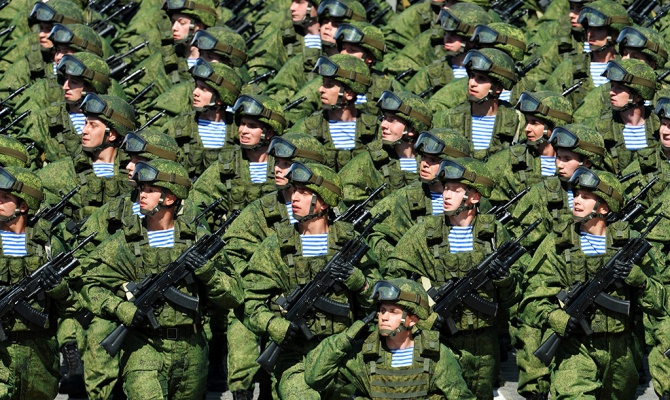
Experts emphasize that this is the first major war in modern Russian history in which the state did not initially force mass conscription, but instead tried to attract recruits through extremely high market-based payments. However, there are now clear signs that this incentive system is losing effectiveness, and the army is beginning to lose more soldiers than it can recruit under contract.
The IISS report highlights a deep internal contradiction in Russian policy, as the Kremlin is still trying to wage large-scale warfare without full societal mobilization in order to preserve the illusion of normal life inside the country. Unlike the Soviet era, Russia is now forced to pay full market prices for military raw materials, labor, and capital financing, making military expansion significantly more expensive for modern Moscow than it was for the USSR during the Cold War. As a result, public finances are under increasing pressure, and war-driven inflation in wages, goods, and credit, combined with tax increases, is starting to suppress the civilian sector of the economy.
This process does not free up resources for the defense industry; instead, it splits the economy into two parts, creating a dangerous imbalance between an overheated defense sector and deep stagnation in the civilian economy.
For long-term continuation of the war, the Kremlin would need to introduce strict command-administrative economic controls, effectively eliminating the remaining post-Soviet market freedoms, including labor mobility and freedom of movement.
Such coercive mobilization measures would inevitably cause significant economic disruption and would be highly unpopular among ordinary citizens. Russian authorities are already aware of these risks, as evidenced by the tightening restrictions on internet access intended to preemptively block political mobilization and grassroots protests.
In addition, recognizing that elite fragmentation and betrayal are key drivers of authoritarian collapse, the Kremlin is expected to further tighten control over its own ruling class. Total forced mobilization carries major and unpredictable risks for the stability of Vladimir Putin’s regime; however, analysts warn that European security should not assume it would automatically fail, as the real limits of how much state violence Russian society is willing to tolerate remain unknown.