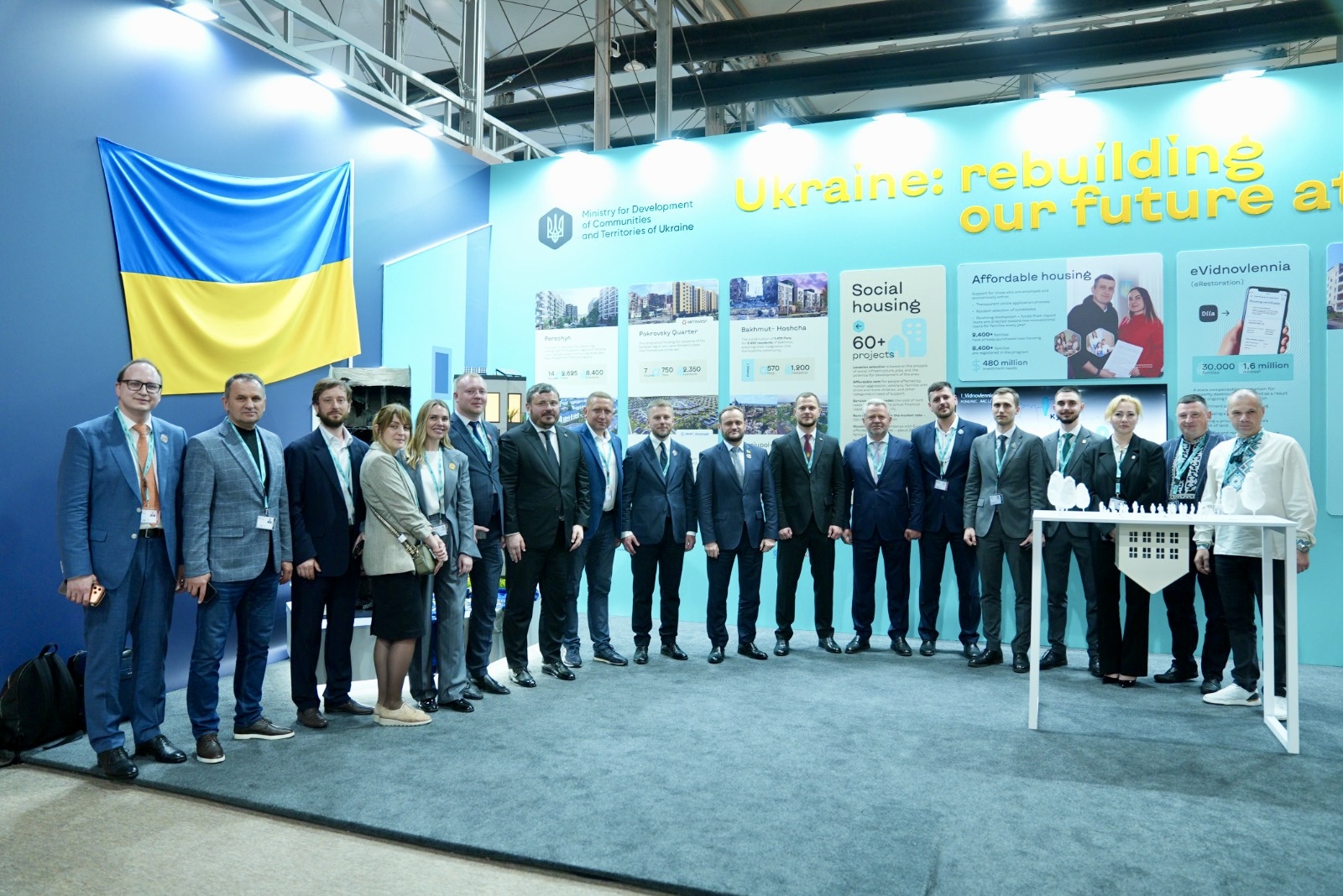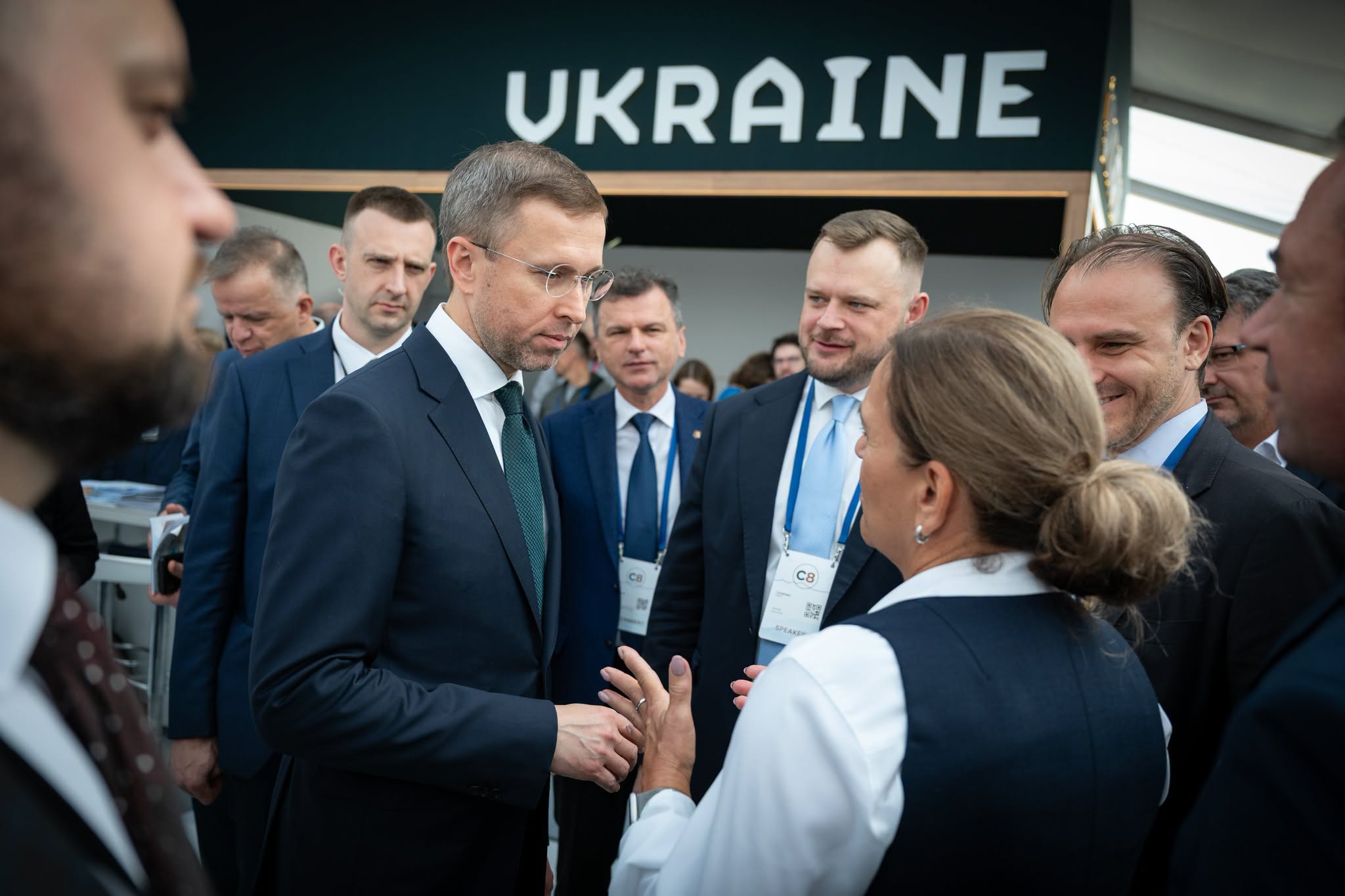


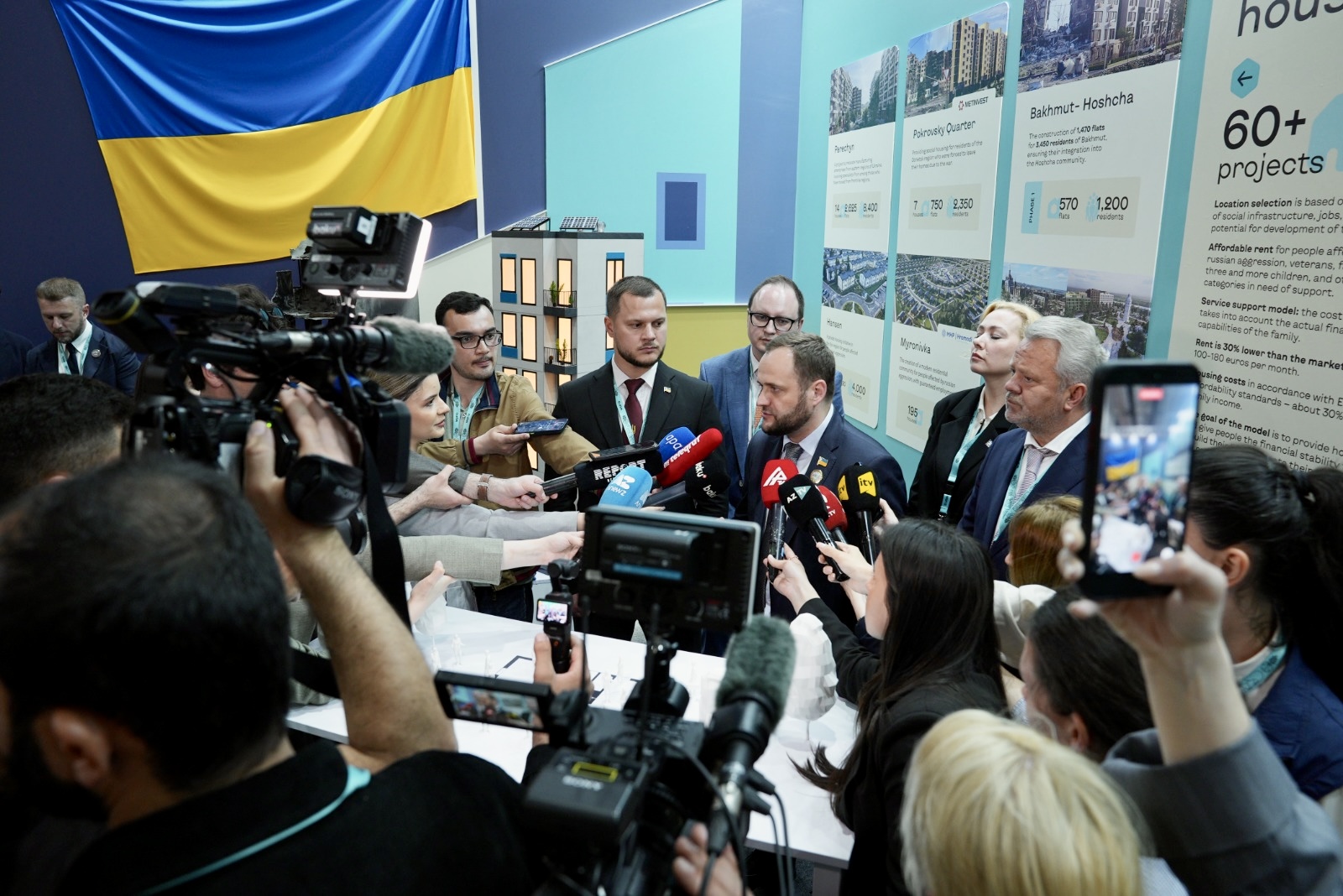
Ukraine is taking part in the Thirteenth session of the World Urban Forum (WUF13), where it is presenting a national pavilion under the slogan “Ukraine: rebuilding our future at home.” This event is one of the key global UN platforms where the vision for the future of cities, communities, housing policy, and infrastructure is shaped.
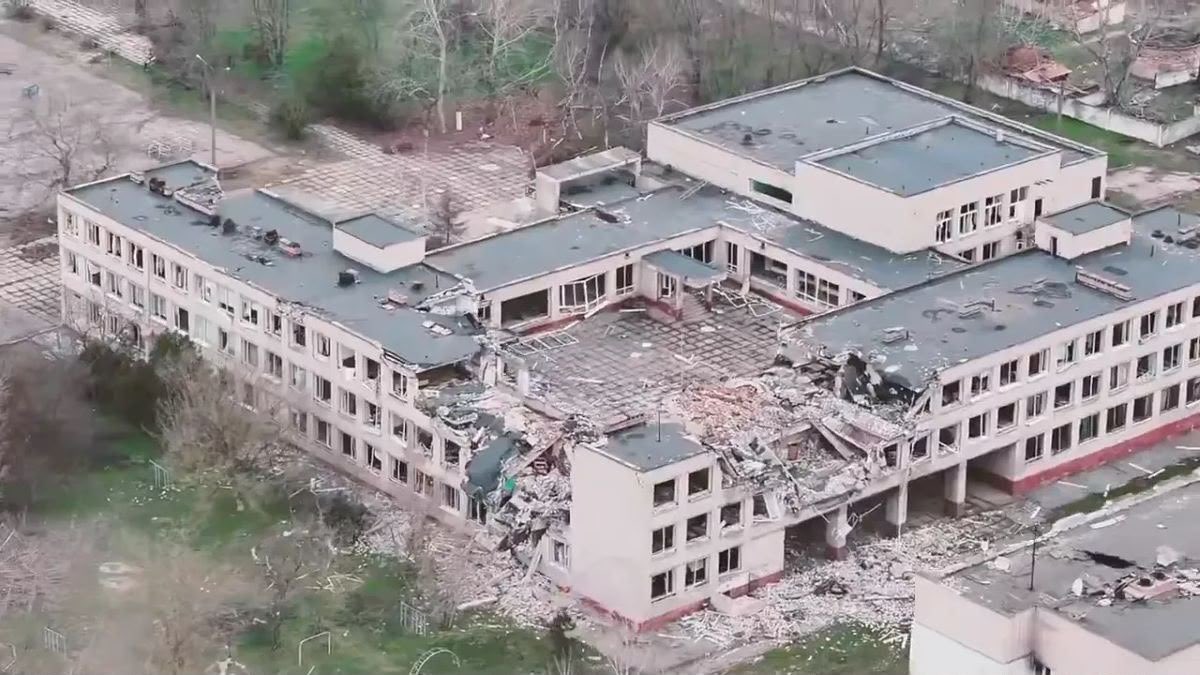
The Ukrainian delegation is headed by the Deputy Prime Minister for Ukraine’s Reconstruction and Minister for Communities and Territories Development, Oleksii Kuleba. The central exhibit of Ukraine’s pavilion is a model of a building in Borodianka that was destroyed as a result of Russian aggression and rebuilt according to modern standards. It demonstrates how Ukraine is rebuilding what was destroyed, doing it better than before, and implementing modern global standards: from energy efficiency and accessibility to the creation of reliable safety solutions.
“Unique solutions in the field of rapid recovery and housing programmes that Ukraine is presenting at WUF13 are the result of extremely difficult challenges faced by our state due to full-scale Russian aggression. By destroying our cities and villages, the enemy is trying to deprive Ukrainians of their homes, but we are transforming this painful experience into new standards of safety and resilience. Our goal at this forum is to share Ukraine’s unique experience in overcoming the consequences of large-scale destruction of the housing sector due to Russian aggression, consolidate international support, and attract investment to scale up compensation programmes and comprehensive community reconstruction,” said Oleksii Kuleba.
Investments are needed for rebuilding cities, housing programmes, and compensation for affected residents. The initial investment required to launch these projects amounts to 3.9 billion US dollars, while the total housing recovery need in Ukraine is significantly larger and is estimated (according to RDNA5) at 88 billion US dollars. At the same time, more than 4.6 million internally displaced persons are officially registered in Ukraine.
“This is why it is crucial for us that at such international platforms the world clearly understands the source of this crisis. Russia daily strikes Ukrainian cities, residential areas, energy infrastructure, schools, hospitals, and critical infrastructure. It is Russian aggression that has created one of the largest humanitarian and housing crises in Europe in recent decades. Therefore, we are convinced: a country that systematically destroys cities and civilian housing cannot claim a role in the global discussion on sustainable urban futures, community development, or reconstruction,” Oleksii Kuleba emphasized.
The national pavilion presents effective mechanisms in the housing sector and Ukraine’s recovery needs. In particular, under the state programme eRecovery, more than 196,000 families have already received compensation for destroyed or damaged housing over the past three years. In addition, more than 2,400 families have used subsidized mortgage programmes, and a concept of social housing with affordable rent is being developed.
Ukraine is also sharing its experience of comprehensive reconstruction. This is not only about rebuilding individual damaged or destroyed buildings, but about creating a modern, safe, energy-efficient environment that meets people’s needs. Comprehensive reconstruction is currently underway in Borodianka in Kyiv region, Yahidne in Chernihiv region, Posad-Pokrovske in Kherson region, and Trostianets in Sumy region.
The World Urban Forum (WUF) is a global platform under the UN (UN-Habitat), which gathers heads of state, international partners, and leading experts every two years to discuss strategies for sustainable urban development and community resilience.