


Never in the entire history of Russia have liberals been in power. They have never even come close to it. What is power in Russia at all? It is the ability to control at least one of the three branches of power — legislative, executive, or judicial. One must control at least several financial flows. And obviously — the siloviki (security forces). At least someone: the army, the police, the security agencies. Without this, it is meaningless to pass a law in the morning that will get you arrested or shot in the evening.
But the thing is that in Russia, the Chekists (chekisty) together with the communists have never released power even once. Who got all the property in Russia? The “red directors” of Soviet factories privatized their own enterprises by buying voucher shares. Regional elites — former first secretaries of regional party committees — became governors and owners of local economies. The siloviki received their share through protection rackets and later through direct integration into boards of directors. Criminal groups from the late 1980s were legalized as security structures and co-owners of business. This was not liberal privatization — it was a division of spoils within the former ruling class, expanded by its shadow segments.
Out of roughly two dozen prime ministers and siloviki who held key posts in the country, only a few were not connected to the CPSU, the KGB, or the Soviet sectoral bureaucratic apparatus. Liberals as a political force in Russia have never controlled the security agencies, the presidential administration, a parliamentary majority, the Supreme Court, or major property.
After 1991, the communists together with the Chekists did not allow anything that needed to be done immediately. Communist ideology was not banned. Access to archives was briefly opened and then immediately closed again in panic. The army leadership was not replaced. Civilian control over the security structures was not established. There was no ban on holding state positions for former party and KGB officials, nor even a formal state-level condemnation of the crimes of the regime. There was no judicial reform. There was no reform of the penitentiary system (FSIN).
The KGB was not declared a criminal organization and was not dissolved. Personnel, operational, and intelligence continuity was fully preserved. Methods of work, files, rituals remained the same. There were no trials of organizers of political repression, no publication of lists of informants (as was done, for example, in East Germany with the Stasi files). Informants and collaborators were not named.
And as a result — the shelling of parliament in 1993. The 1993 Constitution, written for one person and granting the president monarchical powers. The First Chechen War, the Second Chechen War. What some took for liberalism was the ability not to be immediately killed or imprisoned for speech. But even that was quickly ended. The destruction of NTV was not the beginning, but the end of a process that had been ongoing since the mid-1990s.
Yes, there were a few relatively liberal reforms — like calling plumbers to fix a broken sewage system, only to later blame everything on them. Calling this “liberal rule” is only possible in the same sense as calling a plumber the ruler of a toilet because they were allowed to unclog it.
None of the comparative political indices — Polity, V-Dem, Freedom House — ever classified Russia of the 1990s as a liberal democracy. In its best years it was considered a “hybrid regime” or “electoral authoritarianism with competitive elements.”
P.S.
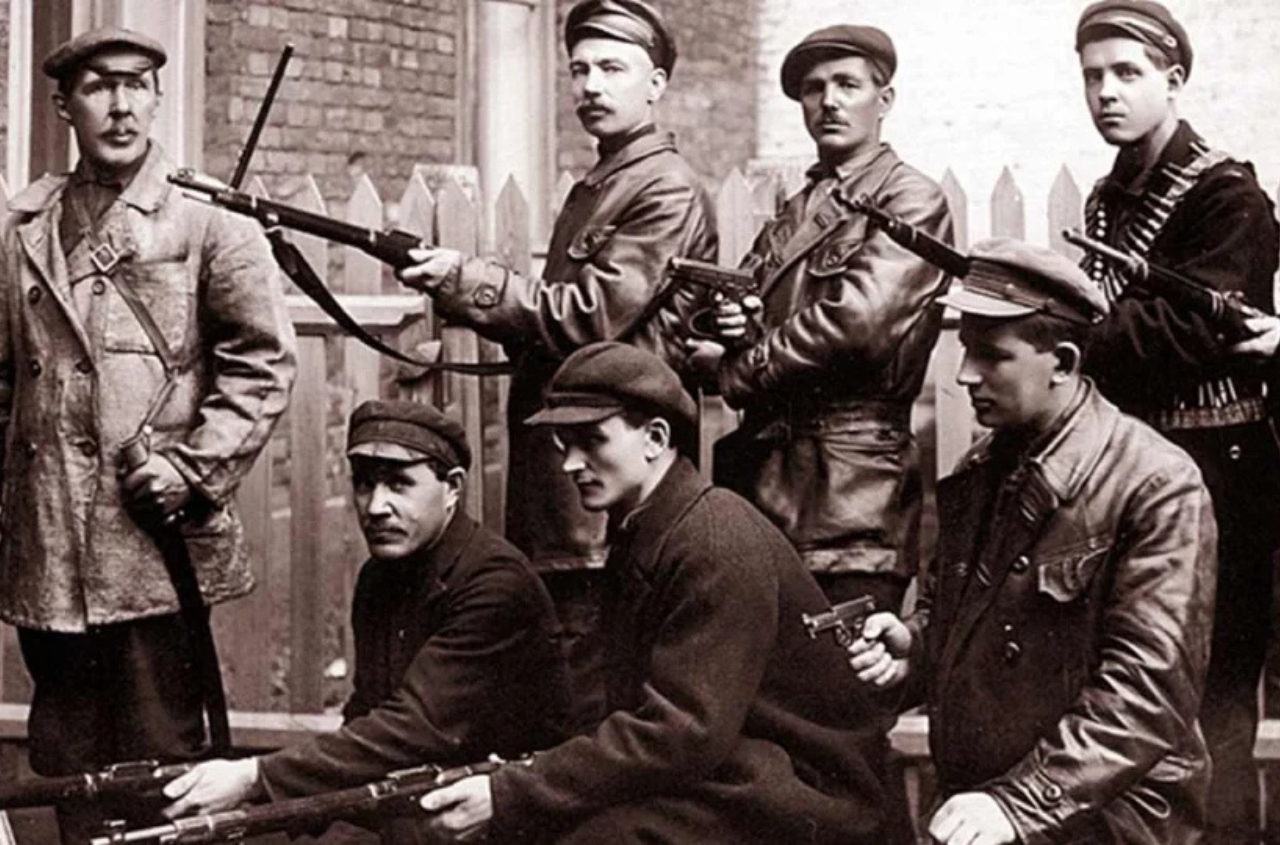
And two more words about the siloviki. Lenin seized power in Russia not because he knew the word “empiriocriticism,” but because he had a large group of armed people willing to use force. Honesty and the ability to go to prison for one’s words are very expensive qualities. But people who go out to protests with beautiful slogans will stand in a square for a while and then go home. Without a serious armed structure, changing power in Russia is impossible.