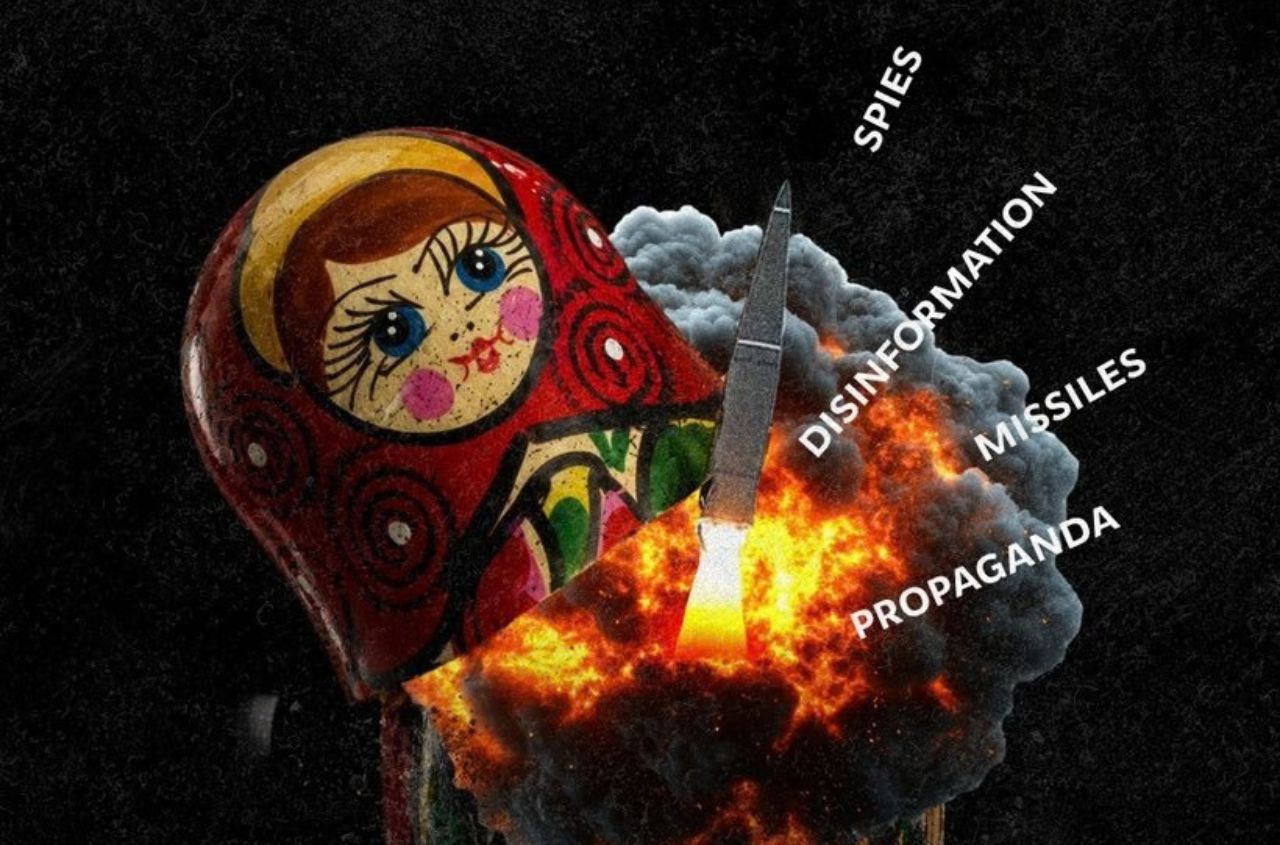



In 2026, Russia allocated $1.85 billion to finance information influence operations abroad, which is 50% more than last year. The purpose of these expenditures is to foster distrust and provoke internal crises in democratic countries, particularly within the EU and NATO.
This was stated by Deputy Chairwoman of the Verkhovna Rada Olena Kondratiuk during the Fourth International Scientific and Practical Conference “The Practice of Strategic Communications in Wartime.”
According to her, Russia is systematically investing in propaganda, disinformation, and information, political, and cultural influence operations.
“A simple but telling fact: in 2026, Russia reached a record level of funding for information influence abroad. The Russian Federation allocated $1 billion 850 million to the information sector alone in this year’s budget. Incidentally, this is 50% more than in 2025,” she said.
Kondratiuk clarified that this concerns the promotion of pro-Kremlin narratives in Europe: financing networks of “Russian Houses,” loyal organizations, information platforms, as well as maintaining offices in European capitals.
She also referred to data from Ukrainian foreign intelligence, according to which, after the tightening of EU sanctions, Russia adapted its propaganda methods, including by creating duplicate websites without openly pro-Russian slogans.
“In general, Russian propaganda aimed at external aggression follows the following strategic messages: ‘Europe is tired of the war,’ ‘Europe is tired of Ukraine,’ ‘Europe is tired of helping Ukraine,’ ‘Russia cannot be isolated,’ and ‘peace is needed, but it is Ukraine that does not want reconciliation,’” she said.
Kondratiuk noted that Russia’s information warfare is shifting from traditional propaganda methods to cognitive warfare.
“Its goal is not necessarily to make people support Russia, but to convince them to stop believing anyone at all,” she explained.
The deputy speaker stressed that Ukraine already has a developed system for countering Russian propaganda, which includes special services, intelligence agencies, the Center for Countering Disinformation under the National Security and Defense Council, the Armed Forces’ StratCom unit, the Center for Strategic Communications under the Ministry of Culture, media organizations, and civil society groups.