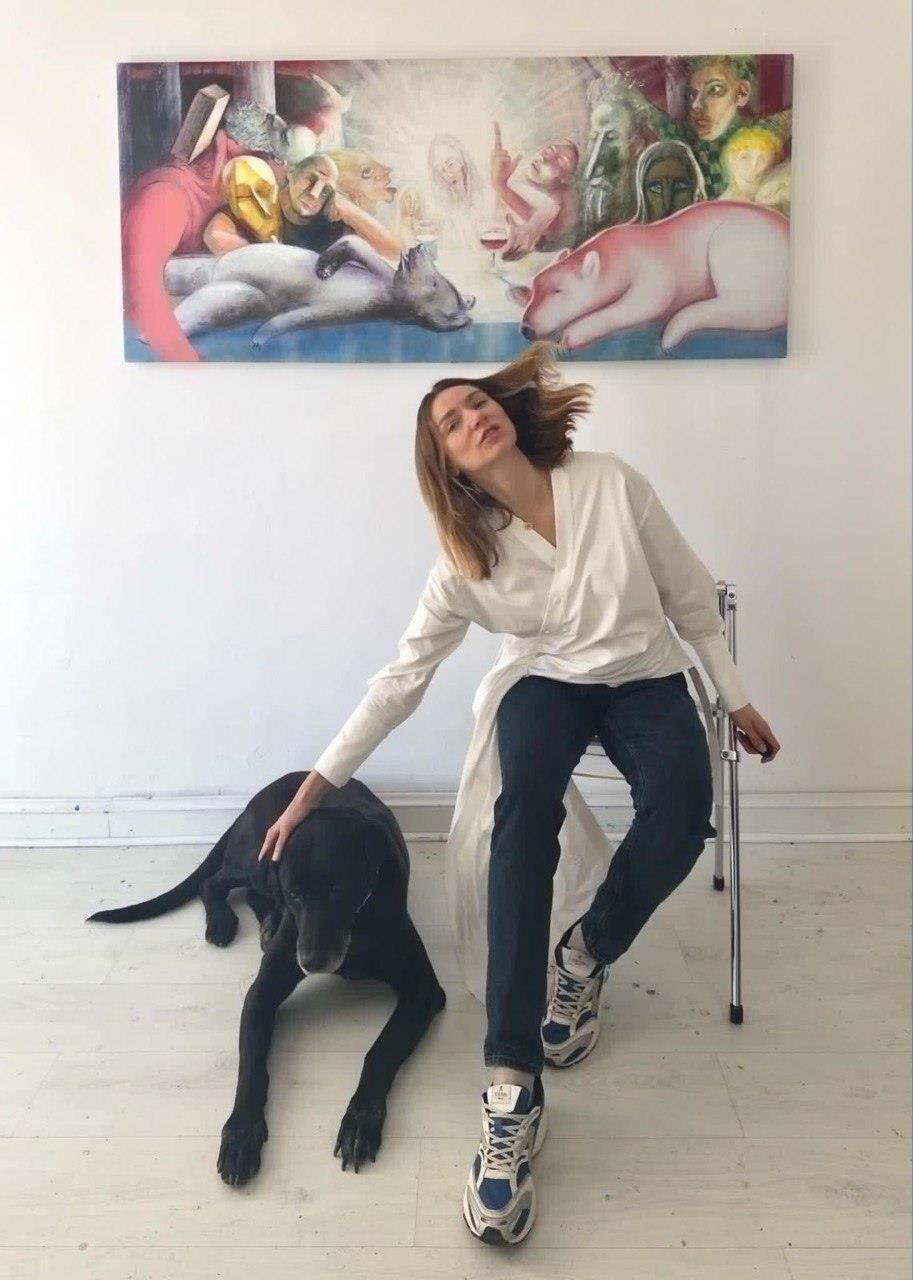


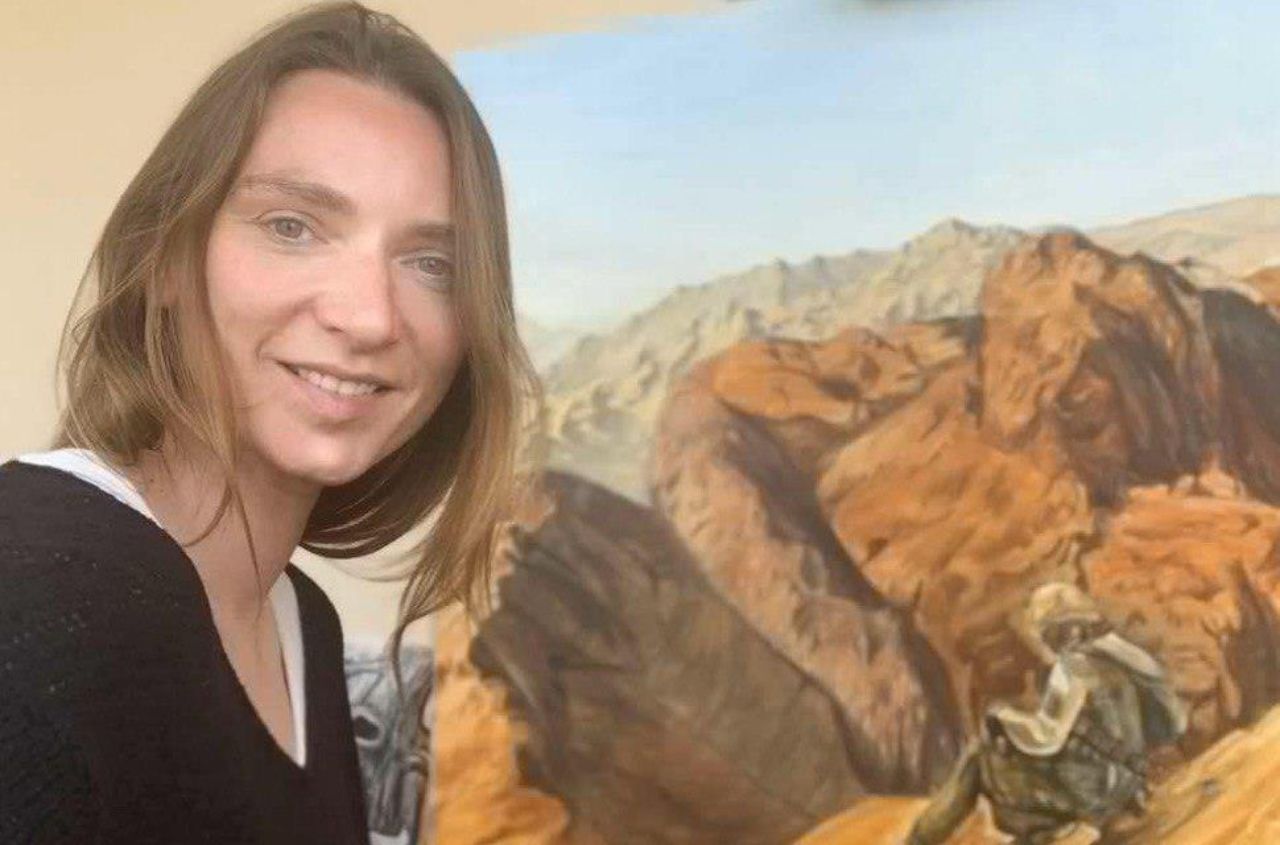
Main image: Anastasia Belous
The forty-second interview through images by Andriy Sheptunov
Contemporary Ukrainian art is increasingly finding its voice in the global space, becoming a kind of cultural bridge between local meanings and the global context. Anastasia Belous is one of those artists whose creative biography vividly illustrates this path: from academic foundations and a deep dive into art history in London to the creation of her own recognizable visual language, where the classical school meets the nerve of modernity.
Her journey began in Kyiv, but it was the London period and her current life in Mallorca that formed the distance allowing her to look at her Ukrainian roots with special poignancy and nostalgia.
Anastasia's educational background deserves special attention, as it serves as the foundation for her dialogue with the classics. Working in the technique of figurative painting, she does not simply copy reality, but enters into a polemic with the great masters of the past — from Velázquez to the classic masters of the Nude.
This is not a flirtation with form, but a deep rethinking of canons, where a "beautiful back" in the spirit of the old masters suddenly finds itself behind barbed wire, transforming an aesthetic object into a political and emotional statement.
For us in Odessa, Anastasia's work is of particular interest. Odessa nonconformism and the local art school have always valued freedom of expression and the ability to work with multi-layered meanings.
In Belous's works, we see a search for identity that resonates with us, where the southern sun and bright colors unexpectedly clash with dramatic subjects reflecting the realities of modern war and forced emigration. This "sunny melancholy" and the ability to fit tragedy into the framework of high art make her style unique.
The author's style is always a balance between material and emotion. Anastasia boldly experiments with textures, introducing soot, sand, or barbed wire into the classic oil canvas. These elements cease to be mere decoration, becoming direct witnesses of the time. In her portraits, whether it is the little girl Marta or figures hidden under the "cracks of clay," one can read an attempt to capture the elusive essence of human resilience.
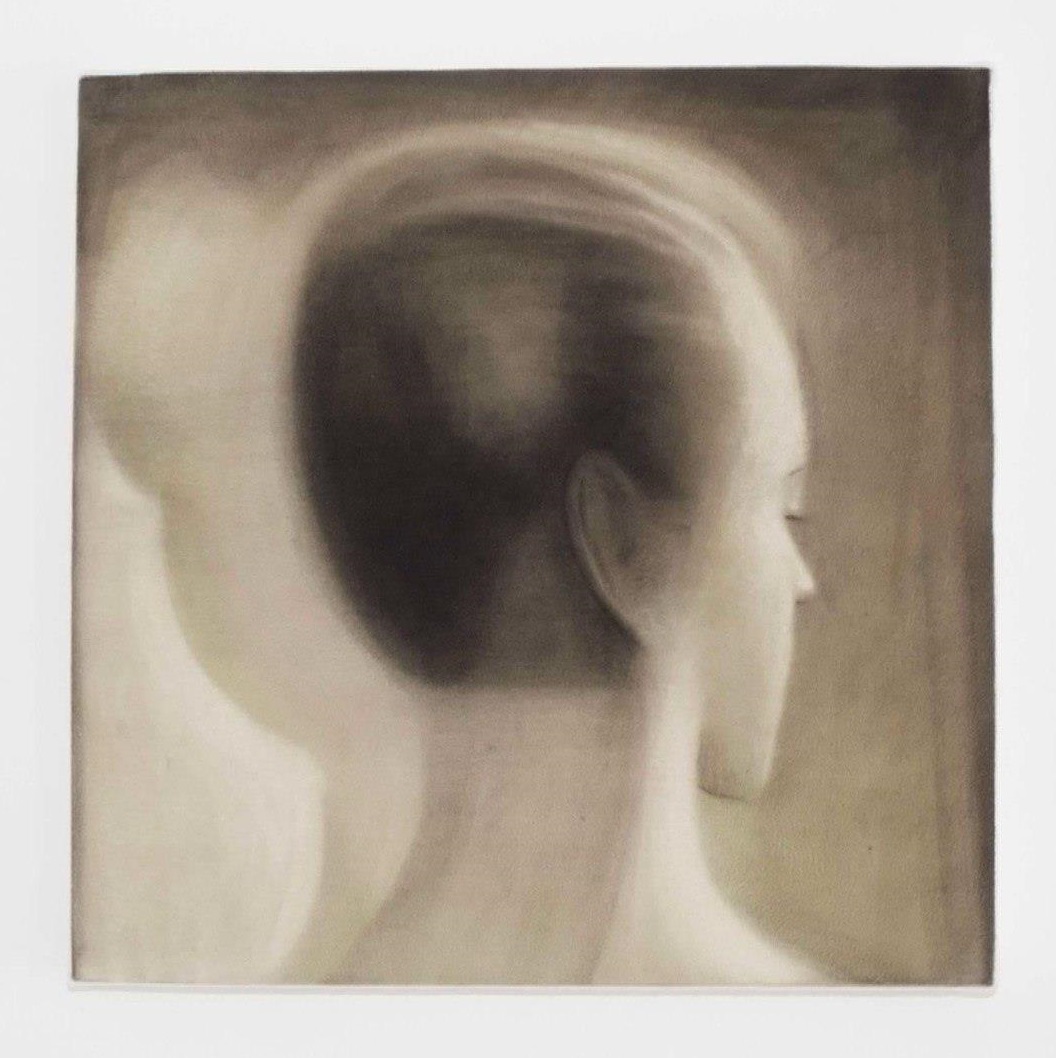
For Belous, the figurative is not a static image, but a living space where the air around the character sometimes says more than the figure itself.
The last few years have become a time of ultimate honesty for the artist. The tragedy in Bucha, the fate of children, and the general feeling of the "distance to home" have turned her canvases into a kind of memory diary. There is no poster-like directness here, but there is a deep silence in which the voice of an entire nation can be heard.
The use of unconventional structures, like a cross instead of a frame, emphasizes the sacredness of this experience, taking painting beyond the usual decorative object into the realm of pure statement.
Belous's works are a kind of visual archive, where each canvas captures the sharp intersection of personal vulnerability and global historical fractures. The artist masterfully translates her internal dialogue into a universal language that resonates equally strongly both in the European art space and in our Ukrainian context.
It is exactly this ability to transform intimate experiences — from the poignant warmth of childhood memories to the numbness in the face of the cruelty of reality — into monumental images that gives her art a special, timeless value.
In this article, we decided to step away from the traditional text interview format to let the art speak for itself. We invited Anastasia to participate in our special feature, where the artist answers questions not with words, but with her artworks.
After all, sometimes a single painting, created with oil and soot, can convey the feeling of the "Low-Cost Sabbath" or the warmth of a grandmother's house more accurately than the longest monologue.
Before you are a visual dialogue with Anastasia Belous, where each canvas becomes a sincere answer to questions about home, pain, history, and hope.
1. Which of your works best conveys the feeling of distance and bright nostalgia for home?
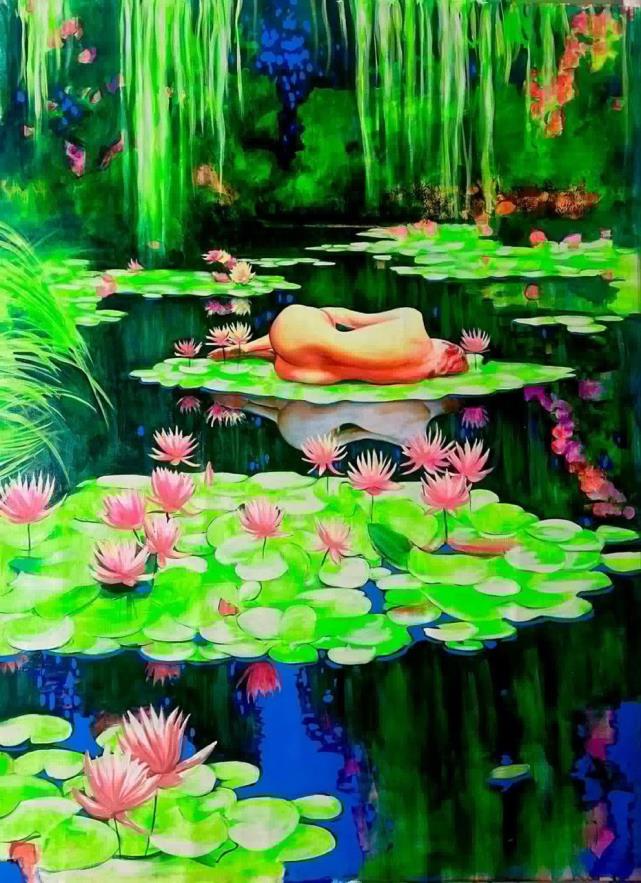
This work is titled "Pond of Tranquility" and carries a nostalgic meaning about late adolescence spent in Ukraine before moving to London, about a time that cannot be returned. Oil on canvas, 2024.
2. Share a painting where your classical painting technique meets an absolutely modern emotion.
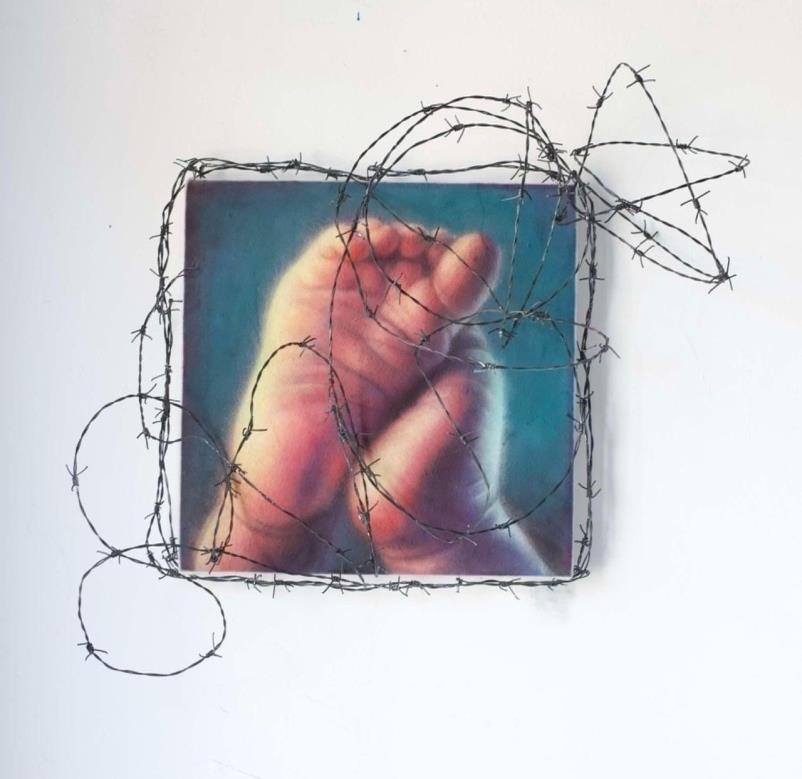
This is a classically executed work, but in my own technique — pastel on fabric — which accidentally ended up behind barbed wire. This directly reflects the chosen emotion in the context of modern wars.
3. Which work became an invisible bridge for you between your present in Mallorca and your Ukrainian roots?
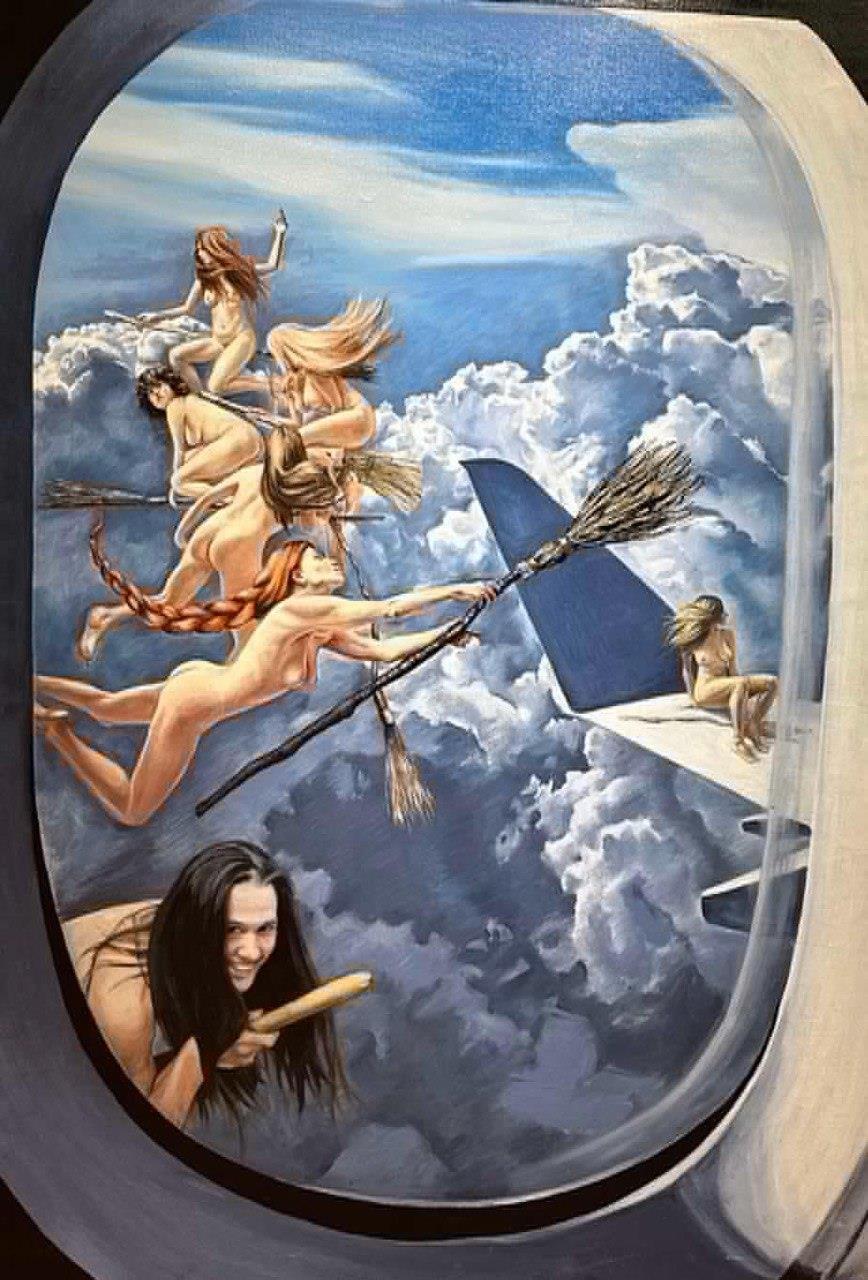
Perhaps this one — oil on canvas. It's called "Low-Cost Sabbath".
4. Which canvas most accurately reflects your knowledge of art history, yet speaks exclusively in your voice?
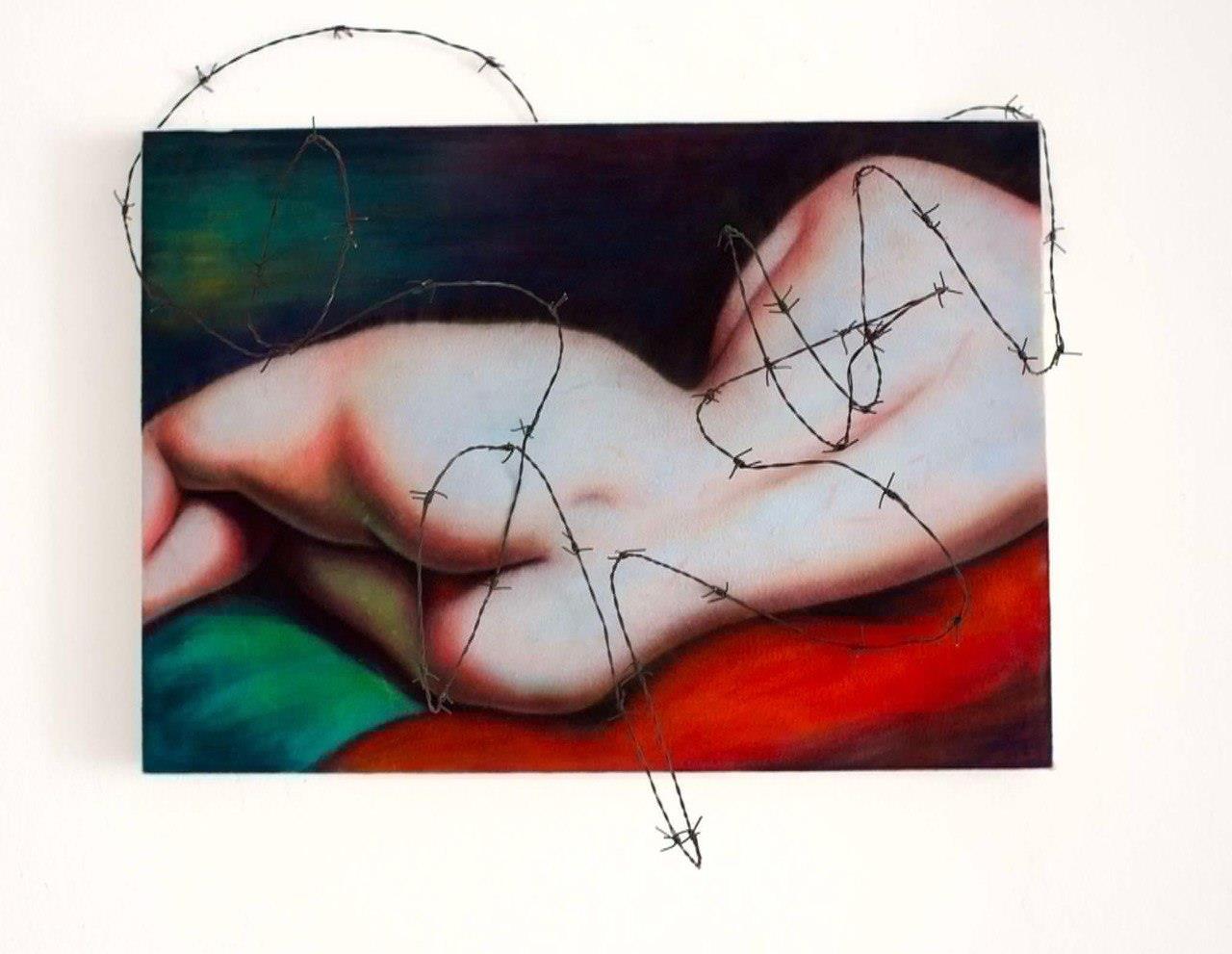
This work communicates with all classic Nudes, and directly with the "Rokeby Venus" by Velázquez (National Gallery in London), which was also slashed by suffragette Mary Davies. My 'beautiful back' is located behind barbed wire and has barely visible scratches on the skin. Executed in the author's technique.
5. Reveal to us the painting that was born in the moments of your deepest reflections on the path and fate of Ukraine.
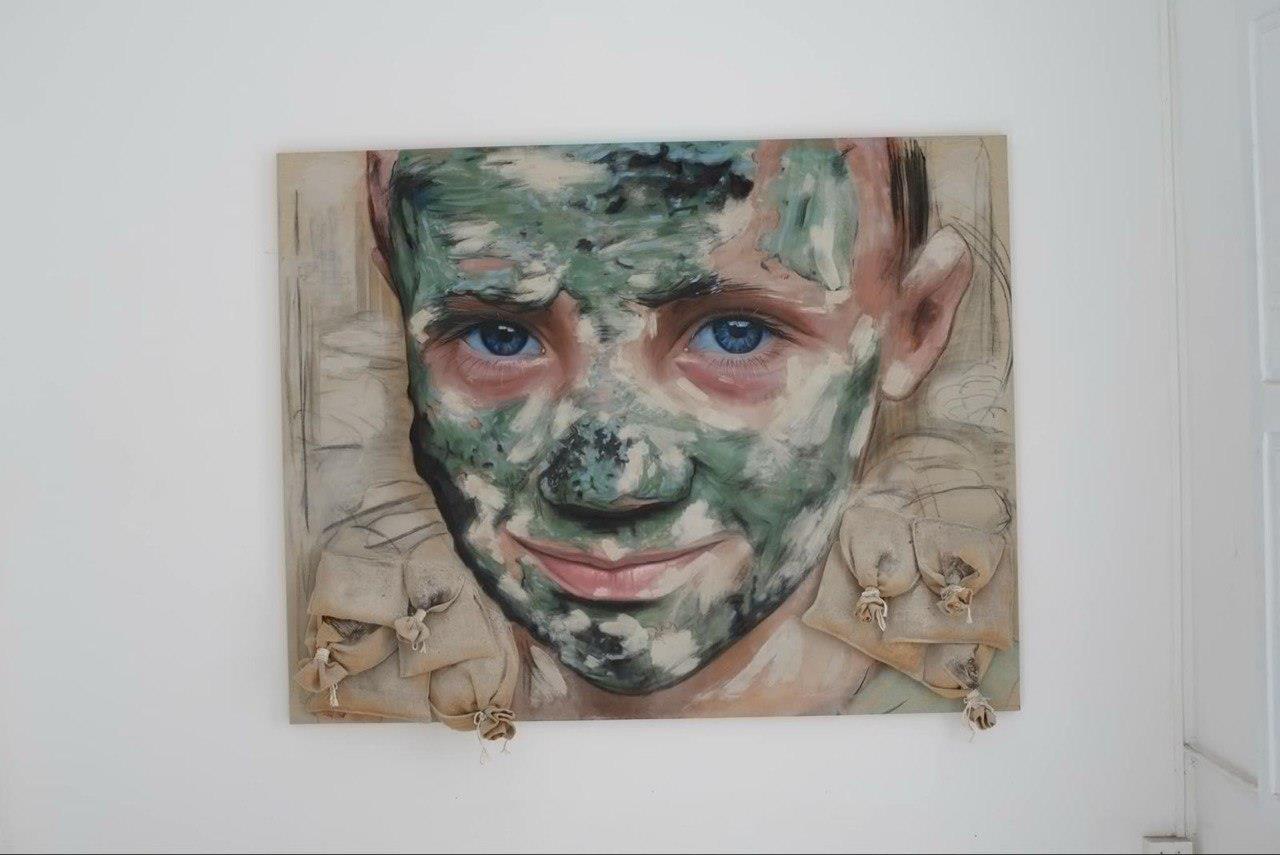
"My Marta", oil, soot, and sandbags on canvas. This is a portrait of a little girl from Ukraine, smeared with mud, coal, and soot — and confidently looking into the future.
6. Demonstrate a work in whose color palette your warmest childhood memory is encoded.
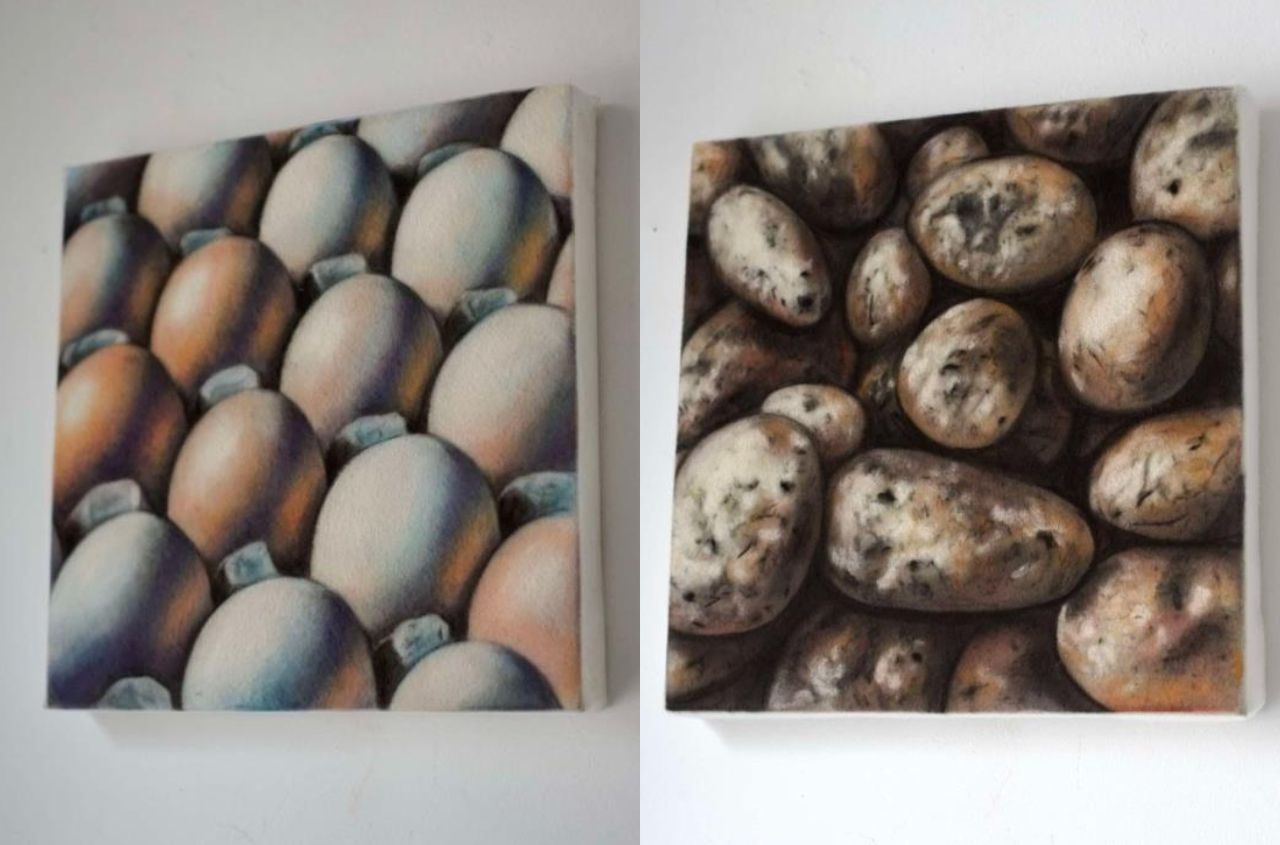
Eggs and potatoes — ordinary things that evoke the warm feelings of visiting grandmothers.
7. Show the work that was emotionally the most difficult for you to create over the past few years.
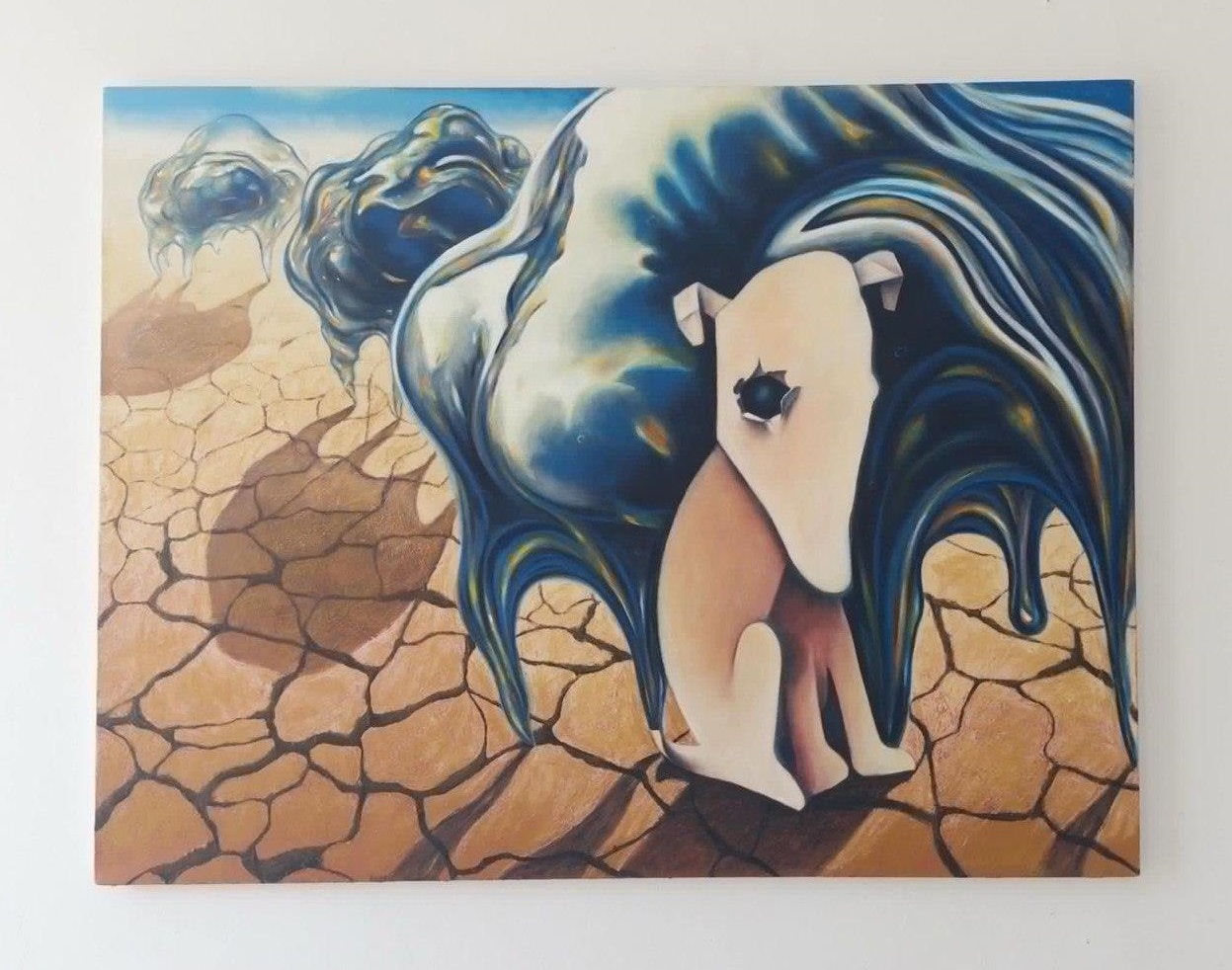
A very difficult one for me is the work capturing a photograph seen after the liberation of Bucha, featuring a faithful dog that would not leave its deceased owner.
8. Share a work in which the light or atmosphere of Mallorca unexpectedly blended with Ukrainian color.
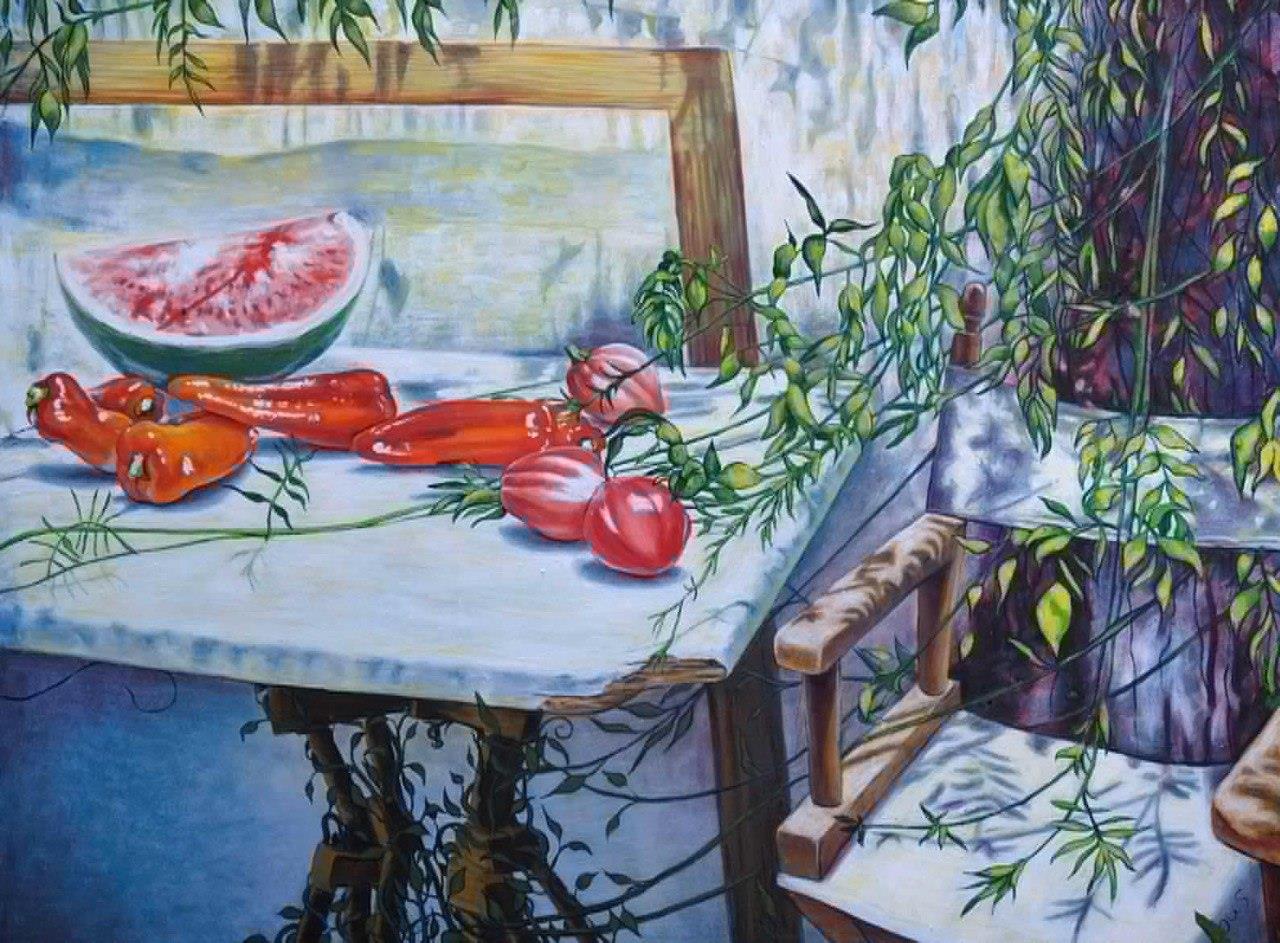
Upon moving to Mallorca, I was fascinated by the scorching power of the sun, which I tried to capture in this work called "Matrimonial Plans", where an empty chair has an interest in a full table.
9. Which canvas would you call your most candid self-portrait, even if your face is not on it?
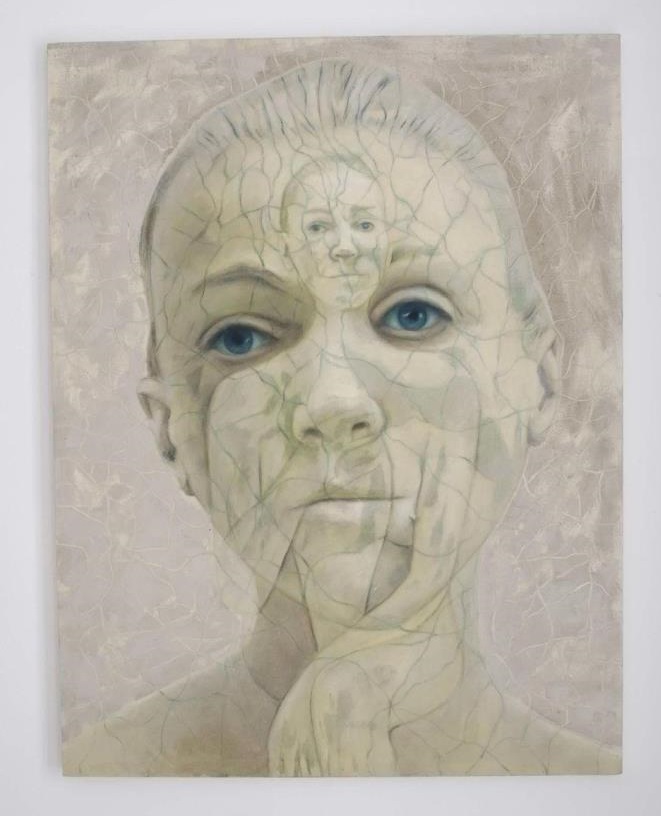
My face is actually on this work made with oil and soot. And a body is hidden within the face. It is a double portrait, hidden under clay and cracks. For some reason, no one sees the body in person, only in the photo..
10. Share a painting where the main role is played not by the figure itself, but by the elusive space and air around it.
11. Which work became a real experiment and a bold step out of your usual comfort zone?
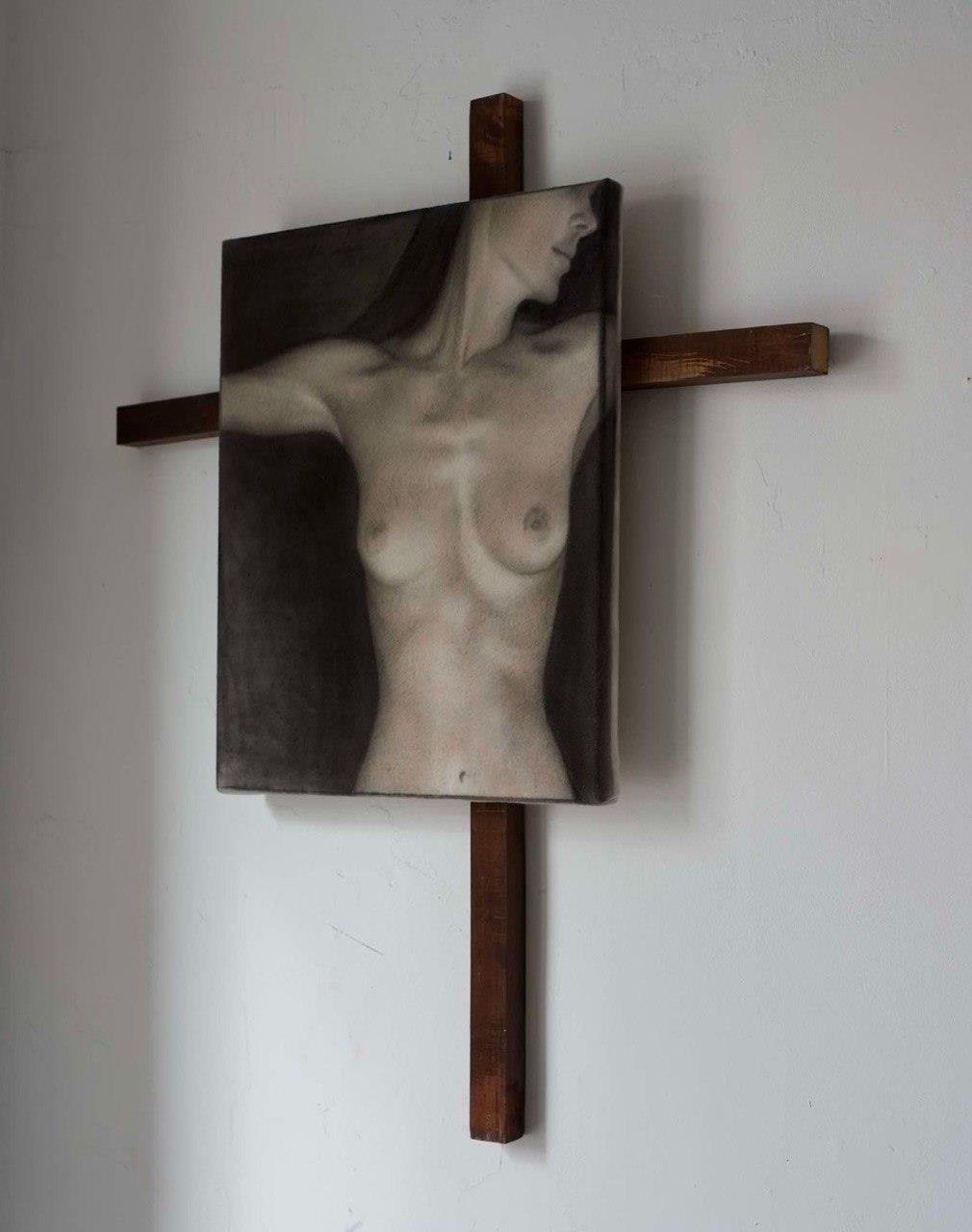
A cross instead of a frame was a kind of step beyond painting for me. As well as the use of barbed wire, which is also the result of a successful experiment.
12. Which of your creations would you want the viewer to see first when getting to know you?
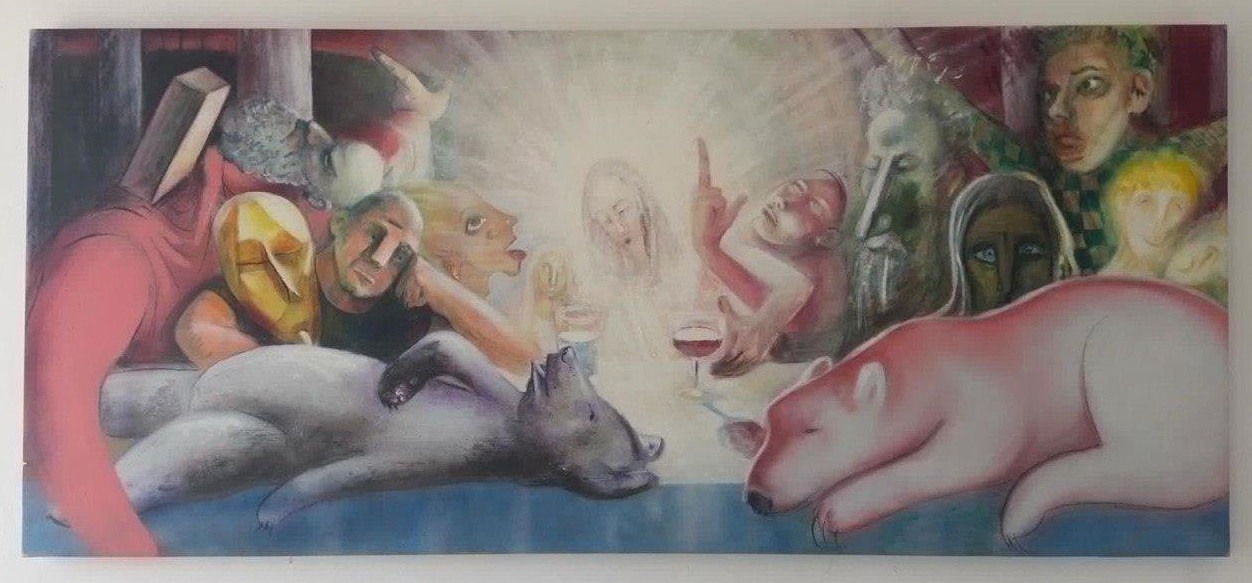
The art of Anastasia Belous is not just visual aesthetics, but a deep, multi-layered dialogue with the viewer and herself. In her works, personal nostalgia is inextricably interwoven with collective memory, and her academic foundation becomes a powerful tool for expressing the acute, sometimes painful emotions of our time.
Anastasia's answers, given through oil, soot, and barbed wire, demonstrate the amazing courage of an artist who is not afraid to step outside the boundaries of traditional painting to confront harsh reality.
Each of the presented paintings leaves an aftertaste, inviting us to independent reflection. Whether it's the scorching sunlight of Mallorca, the aching pain of Ukrainian stories, or subtle references to the great masters of the past, Belous's art remains alive and pulsating. It breathes, changes, and continues to explore the fragility of human nature against the backdrop of global upheavals, while maintaining an unwavering sincerity.
To continue your acquaintance with the multifaceted world of Anastasia, to see her new experiments with textures, and to be the first to know about her future projects, we invite you to look into her digital space.
You can follow the artist's creative journey, the process of creating new canvases, and exhibition announcements on her official social media pages: