

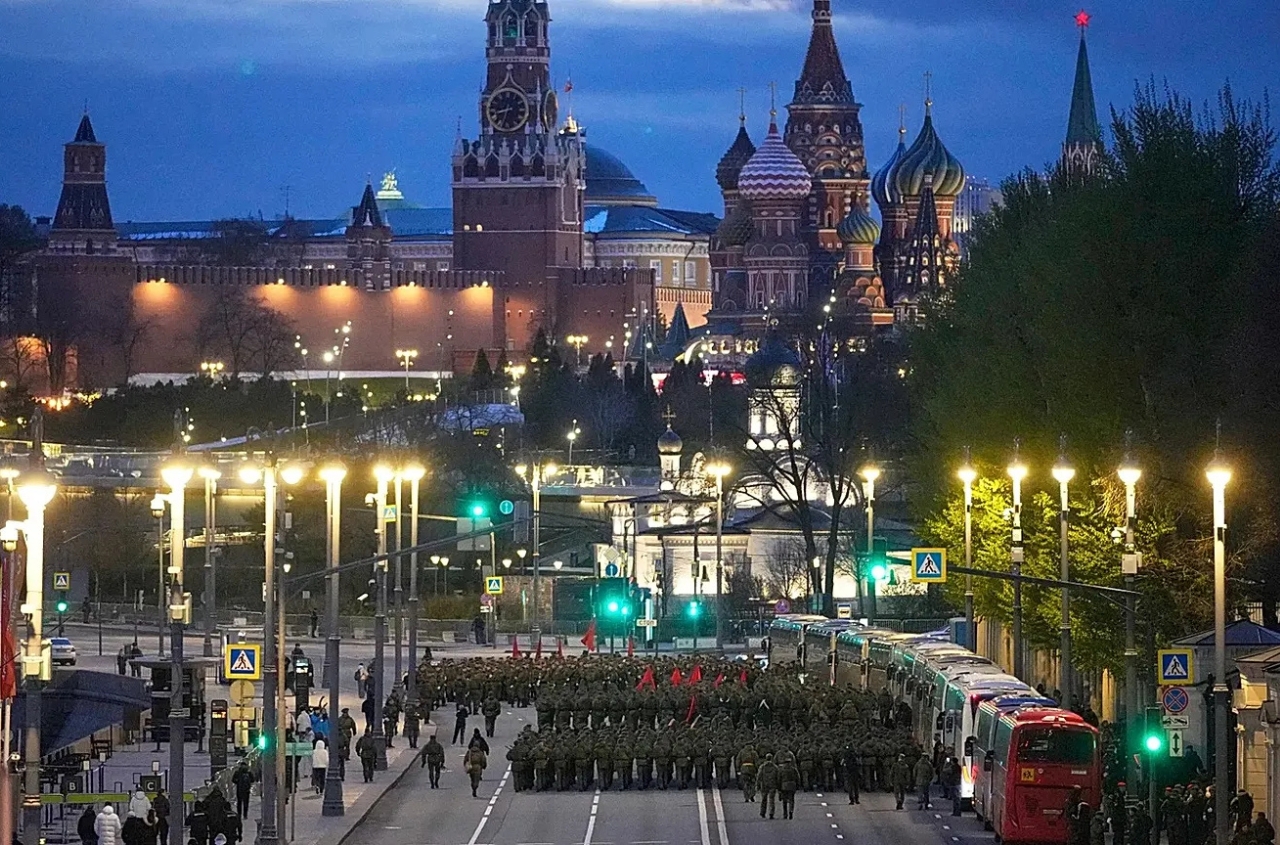

Russia is preparing for its annual May 9 Victory Day parade in Moscow, but this year’s event is expected to feature far fewer high-profile foreign leaders compared to 2025, when the 80th anniversary celebrations drew several prominent guests.
Unlike last year’s jubilee parade, which was attended by Chinese President Xi Jinping, Slovak Prime Minister Robert Fico, Serbian President Aleksandar Vučić, and Venezuelan President Nicolás Maduro, the 2026 guest list remains largely undisclosed.
The Kremlin has so far confirmed only limited foreign participation, with most invitations and attendance details kept confidential.
Robert Fico is the only European leader currently confirmed to visit Moscow. However, he has clarified that while he plans to lay flowers at the Tomb of the Unknown Soldier and meet with Russian President Vladimir Putin, he will not attend the military parade itself.
Aleksandar Vučić’s participation remains uncertain. After attending the 2025 celebrations in Moscow, where he emphasized Serbia’s independent foreign policy despite EU pressure, he has not yet confirmed whether he will travel to Russia this year. As of early May, he had only sent a written congratulatory message to Moscow via the Russian ambassador in Belgrade.
Hungary, which also declined to send senior leadership to the 2025 parade, is again expected to be absent. Political uncertainty in Budapest, including a government transition, has further complicated representation plans.
In 2025, Xi Jinping’s multi-day state visit to Moscow was one of the key diplomatic highlights of the celebrations. He was officially presented as the parade’s main foreign guest. However, with only days remaining before the 2026 event, there has been no public confirmation of his attendance this year.
_1778073981.jpg/Ns8FV4fFRoUkMbtf7cD90G61fi6B248mRtzcWbLf.jpg)
Unlike the highly publicized jubilee celebrations of 2025, this year’s preparations have been notably less transparent, with the Kremlin avoiding detailed announcements about foreign delegations.
Reports suggest that the parade may be scaled down, with reduced military displays compared to previous years. Analysts link the adjustments to security concerns, including fears of Ukrainian drone attacks and long-range strikes reaching deeper into Russian territory.