



Global geopolitical concepts are often used to explain the past and much more rarely to predict the future. The concept of strategic depth, which is part of military-political strategy based primarily on the geographic factor, can become the foundation for a vision of a successful future Ukraine. However, to achieve this, it must be significantly expanded beyond its classical understanding.
The experience of modern warfare — primarily the emergence of missile and space-based weapons and the rise of drones to leading roles — has completely nullified the advantage of geography. It is now evident that there is nowhere to hide, neither beyond the Urals nor across oceans. Today it is impossible to separate the purely military factor of strategic depth (ensuring defence capability) from the economic or socio-cultural components of a country’s and society’s ability to survive in conditions of intense competition, to resist aggression, and to develop even under resource constraints.
Examples of small and medium-sized countries that have managed to build their own model of “strategic depth” include Turkey, Japan, Israel, and even Iran. It is precisely in the case of small and medium-sized countries that it becomes clear which factors can substitute for large territories when considering the modern interpretation of the concept of strategic depth, as described in detail by Ahmet Davutoğlu — professor and long-time Minister of Foreign Affairs of Turkey — in his foundational 2001 work.
If a country’s own territory is insufficient for the optimal deployment or relocation of armed forces and critical production facilities in case of threat, then it must develop a network of alliances and partners that can provide assistance — either active or passive (Iran–Yemen, Russia–China; North Korea–Russia and China; Israel–USA). If conventional weapons do not provide the necessary “depth,” then one must consider non-conventional means or seek leverage points — whether the Strait of Hormuz, the Houthis, or a monopoly on rare earth metals.
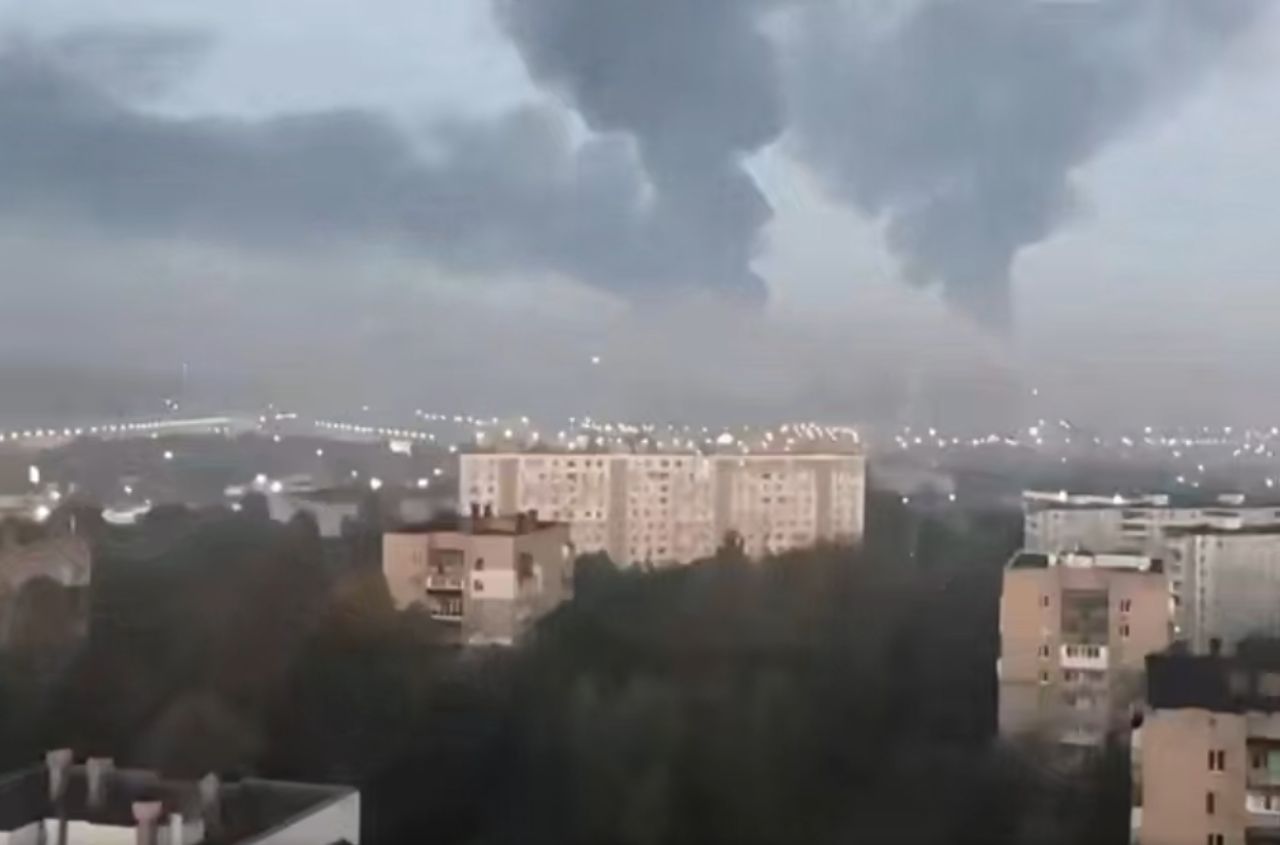
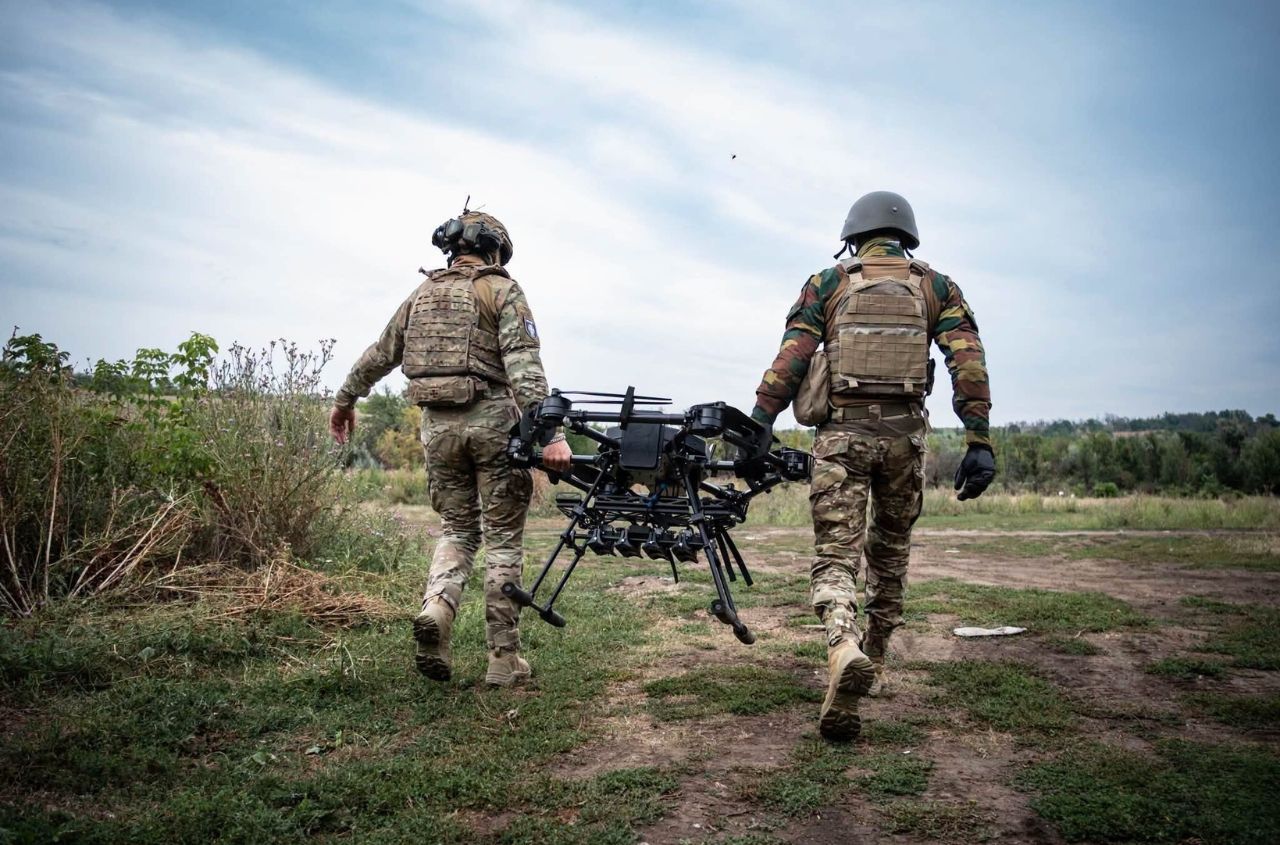
In 2020, the strategic analyst George Friedman explained Russia’s policy in the Caucasus and the possibility of a new major war in Europe precisely by the reduction of Russia’s “strategic depth” due to increased Western attention to the South Caucasus and NATO expansion. In his view, Russia’s “historical memory” is so deeply embedded in the worldview of Kremlin strategists that they are willing to engage in bloody wars to preserve “strategic depth,” despite the actual absence of any real security threat from NATO. According to Friedman’s logic, the invasion of Ukraine happened for the same reason. What Friedman could not foresee was the fundamental transformation of warfare methods and means of destruction, including even very “deep” targets, which is taking place before our eyes thanks to the mastery of the Armed Forces of Ukraine.
That is why it is not surprising that a rethinking of the concept of strategic depth has already begun. It is becoming increasingly clear that it must include, in addition to the military component, elements of economic security — protection of critical infrastructure, creation of strategic reserves of food and energy resources, ensuring alternative logistical routes and sources of critical materials, and the formation of effective regional security alliances. A new factor is the understanding of strategic competition in the technological sphere, primarily artificial intelligence, and the choice of the right model of digital sovereignty.
Eastern philosophy teaches that the best way to win is to avoid fighting. This means that strategic depth, especially in the context of global competition involving artificial intelligence, is first and foremost about people.
Taisen Deshimaru — a Japanese Soto Zen Buddhist teacher who founded the International Zen Association — once said: “In a struggle between strong technique and a strong body, technique prevails. But in a struggle between a strong mind and strong technique, the mind will win, because it will find the weak point.” Jack Ma agrees with him. In one of his recent interviews, he answered a question about machines becoming better than humans as follows: “Smart people know what they want. Wise people know what they don’t want. Machines can be smarter than the smartest people, but machines cannot be wiser than wise people. Smart people use the brain, wise people use the heart. Machines have chips like a brain, but they do not have hearts. People must learn to be wise in order to say ‘no’ when they know what they don’t want.”
Human strategic depth is something entirely different from formal signs of wealth, influence, or even education. It emerges when, beneath an external layer of calm and confidence, there is a deep culture, an understanding of the interconnections of the surrounding world, wisdom in decision-making, and the character to act. Wisdom means the ability to anticipate the consequences of one’s actions and decisions in conditions of total uncertainty. Success does not mean never making mistakes or never experiencing failure. Success is the ability to recover and continue moving toward the goal. This is a component of strategic depth, along with unity, harmony, a healthy economy, and a deep awareness of one’s own history and culture.
And what is strategic depth for Ukraine? This question inevitably arises when trying to understand how to stop the catastrophic destruction of entire sectors of the economy, the population decline (we are first in the world in this regard); how to bring back those who have left and give hope to those who have stayed all this time. Talk of the possibility of mass migration into Ukraine from countries whose culture and traditions are infinitely distant from ours is yet another attempt to find a simple, obvious, and wrong solution to a complex problem.
Ukrainians, especially young people, need a dream worth living for and worth defending. They need tomorrow’s technologies, not even today’s. Young people must see a brilliant Ukrainian future; otherwise, they will lose interest, leave, and not return. Steve Jobs once said about his best employees: “What they need is a shared vision. And that is what leadership is — having a vision. And being able to articulate it so that people around you can understand it. And achieving consensus around a shared vision.” Any political idea, even a very unorthodox one, can become reality if you are able to communicate it to your own people — but for that, it must first exist.
Once upon a time, Ukraine was the center of the historical route “from the Varangians to the Greeks,” and Kyiv — as the “Kyivan Letter” suggests — was a cosmopolitan city from which Byzantine culture spread to Slavic and not only Slavic tribes. On the banks of the Dnipro, cultures, beliefs, and peoples blended: Slavic traditions, Scandinavian order, and the spirit of the Great Steppe.
At first glance, these may seem like insignificant details, something in the realm of imagination. But ask Iranians about their Persian roots, Israelis about King David, Turks about the greatness of the Ottoman Porte. Recall Orwell’s 1984: “Every record has been destroyed or falsified, every book rewritten, every picture repainted, every statue and street and building renamed, every date altered. And the process continues day by day and minute by minute. History has stopped.” This is not about Turkey — it is about us.
Our uniqueness lies in understanding multiple cultures, the desire for freedom and the will to act despite all obstacles; in tolerance and the existence of several strong regional centers with their own histories and traditions; in a high level of education and an active civil society. Geographic factors that oligarchic clans have not yet managed to destroy — water, land, forested mountains, access to the sea, and powerful transport arteries — are the foundation of internal self-sufficiency. We have not even begun to properly use them, yet all of this is part of strategic depth. All the recipes are already known, but they will not become reality until critical reflection on the past turns into mutual trust and a readiness to build a successful Ukraine of the future.
In 1965, a group of Japanese engineers standing at the mouth of three tributaries of the Yodo River, on which Osaka is located, made a promise: never again. They remembered how the typhoons of 1934, 1950, and 1961 killed thousands of people and destroyed tens of thousands of houses. So they designed something the world had never seen before — the first arched tidal gates.
Each of these gates, spanning the rivers Aji, Shirinashi, and Kizu, weighs 500 tons. The arches were not aesthetic, but mathematical: the curved structure distributes wave pressure evenly along its frame, whereas a flat wall of the same size would crack. When a typhoon warning is issued, the gates rotate downward, separating Osaka from the sea.
Japan built these arches in 1970 and is already replacing them with new ones designed to withstand tsunamis. Since then, Osaka has not lost a single house or life to storm surges. This example once again shows: those who want solutions look for ways; those who do not want them look for excuses. This is the very essence of the strategic depth of a successful country.