

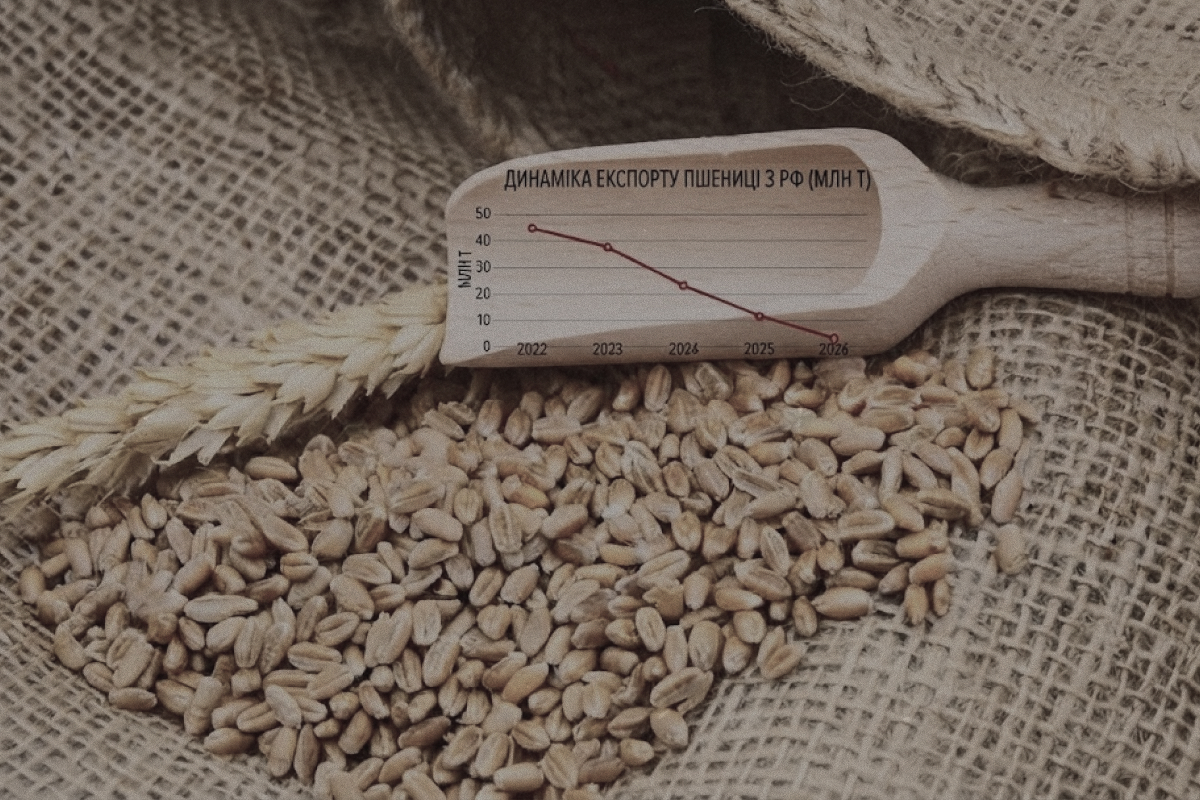

Russia is losing buyers for its wheat. In September, only eight countries are purchasing Russian grain, compared with 26 during the same period last year. As recently as July, Russian wheat was being purchased by 23 countries, compared with 27 a year earlier, but the situation began to deteriorate rapidly after restrictions on navigation in the Sea of Azov were introduced.
In August, the number of buyers fell to 16, compared with 43 a year earlier. By the middle of the month, grain shipments from ports in the Azov-Black Sea basin had almost completely stopped. Russia redirected some exports through Baltic ports, but this was not enough to compensate for the losses.
In September, shipments could amount to around 1 million tonnes. A year earlier, Russia exported 5.7 million tonnes during the same month.
Even Russia’s main buyers have sharply reduced their purchases. During the second ten days of September, Egypt received 81,000 tonnes of Russian wheat, 3.6 times less than during the same period last year. Kenya purchased 50,000 tonnes, 2.3 times less, while Yemen imported 32,400 tonnes, 1.6 times less.
Export problems are being compounded by the slow pace of preparations for the next harvest. As of 18 September, Russia had planted 6.1 million hectares with winter crops, compared with 7.1 million hectares a year earlier. The pace of sowing is 14% below last year’s level and 25% below the five-year average. This is the weakest result since at least 2013.
Wheat accounts for around 90% of Russia’s winter grain acreage. At the same time, export restrictions are already putting pressure on the domestic market, with grain prices falling 20–30% below break-even levels.
Russia is losing export markets, export revenues and the profitability of grain production. The growing problems with exports are therefore increasingly likely to affect not only trade, but Russia’s agricultural sector itself.