


By Vladislav Inozemtsev, Doctor of Economic Sciences, co-founder and leading expert at the European Center for Analysis and Strategies for The Moscow Times
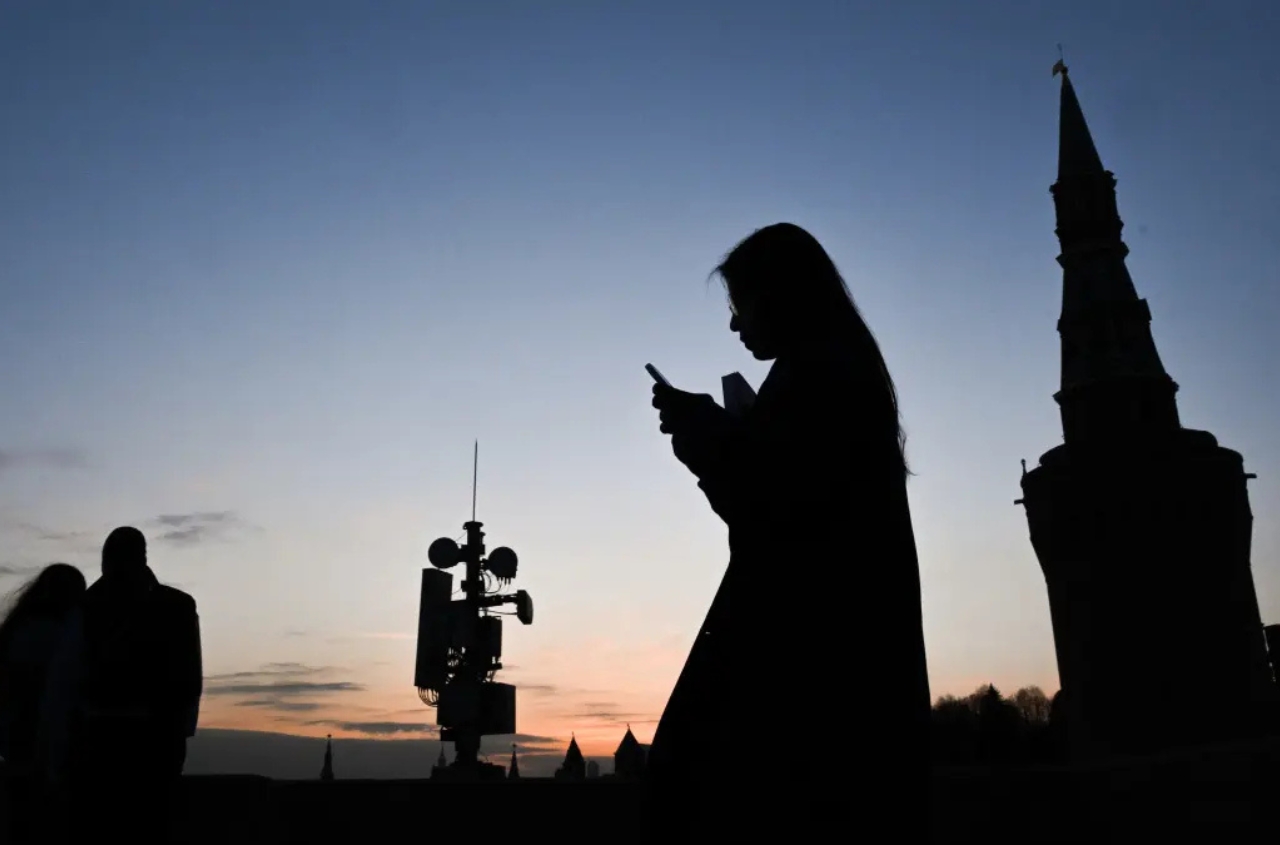
I have said more than once that "Putinomics" is more likely to be destroyed by Putin himself than by any sanctions imposed by Western politicians. In recent weeks, during the budget-relieving wars of the US and Israel with Iran, new confirmation of this has appeared. Putin’s phobias—combined with previously adopted amendments to the communications law—caused mass internet and mobile network shutdowns in Moscow, and governors replicated the Moscow experience in dozens of regions. This noticeably changed the picture of “online regulation” in Russia: if before the last blackout the main players were Roskomnadzor, fighting hostile resources and foreign messengers, and the Macha witnesses serving the financial interests of the Kovalychuk and Kiriyenko families, now the main actors are those for whom no economic factors seem significant.
The scale of the problems was such that news feeds filled with reports of a record drop in Putin’s ratings (which, frankly, affects nothing in Russia), applications for rallies and protests against communication system blockages, deep incomprehension from young people, and even a reportedly sharp increase in demand for apartments in Belarus, where Russians considered moving to find a more familiar communication environment. The general impression of almost everyone currently in Russia, with whom I recently spoke, boiled down mainly to a feeling of growing chaos affecting almost all areas of everyday life. This, of course, can somewhat change the worldview of Russians, but I would like to focus on the purely economic dimension of the problem created by the Kremlin.
We can start with the simplest—the communications sector itself.
Last year, its leading companies showed solid growth: the revenue of Megafon, Beeline, and MTS grew by 7.2–14.7% with increasing profit and record OIBDA margins of 34.6–46.1%. Yandex’s revenue for the year grew by 34%, and net profit by 40%. Compared to the rest of the Russian economy, which was creeping into a recession, these figures were a rare exception. Now there is every reason to doubt that the dynamics of these companies this year will be as impressive. Of course, these corporations are by no means market leaders in terms of current capitalization or profit, but still…
The main blow, however, was not to the communications companies themselves but to all those whose business depends on their services. Russians were fully able to see how digitalized the domestic economy had become. Predictably, taxi ordering services, car-sharing systems, parking and delivery payment operators, and order pickups at retail chain points were paralyzed. Transportation card top-ups were disrupted, and toward the end of the mass blockage, online banking for many financial institutions and even cash withdrawals from thousands of ATMs were affected. Not only e-commerce but all transactions using payment cards came under serious pressure.
I once reasoned that even Western governments in the first weeks of Russian aggression against Ukraine did not dare to introduce sanctions that would paralyze secure internet connections of Russian companies—but nowadays, the Russian government itself has inflicted that experience on its own subjects. The scale of the disaster can be fully understood if one remembers that Russians, even accounting for some reduction in 2025, had at least 304 million active SIM cards, and the mobile segment provides more than 70% of internet traffic—while in the US this figure is about 50%, with slight deviations in either direction.
I deliberately do not discuss how significant the authorities’ impact on communication between citizens has become due to messenger shutdowns, stemming from growing distrust of Macha and other surrogates; or how serious the dissatisfaction among children and young people has been because of the inability to access even basic entertainment content—or the problem of freedom of speech in connection with Telegram channel blockages. The consequences are yet to be assessed. Last year, experts estimated the Russian internet economy at 24–25 trillion rubles (or 12% of GDP), and losses from internet shutdowns at almost 1 trillion rubles. This year, losses will definitely exceed last year’s figure—the catastrophic effect on the sector was even mentioned by the highly loyal Natalia Kasperskaya, though she quickly deleted her comments after a reprimand from Roskomnadzor.
It is usually said that many sectors will struggle to adapt to new conditions due to the sustained growth of cashless payments (last year their share rose to another record—88% of retail turnover in Russia, which amounted to no less than 61.3 trillion rubles).
Here, the situation could theoretically be corrected by using cash, although in large cities people have already become unaccustomed to it—yet in online commerce, this is much less likely. According to YuKassa, a leading Russian service for accepting online payments for businesses, legal entities, individual entrepreneurs, and self-employed people, the turnover of online stores on the platform jumped 26%, and the most active users of the service were self-employed and individual entrepreneurs—their number increased over the year by 54% and 28%, respectively. For many market participants, to whom the authorities at the New Year also “gifted” changes in taxation conditions, the increased difficulty of cashless payments could be fatal. If we consider that even before the authorities’ attack on the internet, up to 31% of individual entrepreneurs were considering exiting their business, the picture for small business development (in 2025 more than 233,000 such companies closed in Russia) becomes completely grim.
No less surprising is the clampdown on online operations at a time when both Putin and top officials of the economic block of the government constantly speak about the need to “whiten” the Russian economy and seek greater control over the flow of funds within it—here one can recall restrictions on transferring money to oneself and attempts to tax movements through the Fast Payment System (SBP).
This approach, in itself, looks completely logical when the budget has a serious deficit, which the Kremlin repeatedly tries to compensate by raising taxes, but it is extremely naive to assume that consumers will stubbornly prefer cashless payments not only despite their cost but also under conditions of increasing unreliability. Increasing the share of cash in retail turnover and services by 10 percentage points could completely “erase” all fiscal benefits from the recent VAT hike (not to mention salaries “in envelopes”). If the problem persists or grows, it will be an even more serious challenge for the banking system than the constantly discussed phantom of “deposit freezes”: by withdrawing funds in cash, Russians will deprive the government of a significant portion of the money it currently de facto uses to finance the budget through the sale of government securities to banks.
As far as one can judge, the Kremlin does not plan any correction of the chosen course. The removal of foreign messengers will continue, the fight against VPNs will only intensify, and the main focus will be on ensuring uninterrupted access to sites from the so-called “white list”—in such an architecture, the consumer can only use pre-approved resources and services. It may seem better than the current chaos and mass shutdowns, but hardly so: operating the internet on “white lists” implies that any new service, website, or digital product will need to go through an approval procedure for user access—which, given Russian bureaucracy and the Kremlin’s phobias, means not just slowing down but almost collapsing innovative processes, complicating the launch of new services, and slowing the development of the tech sector—not to mention international traffic.
Everything related to the use of artificial intelligence, which requires maximum speed of all system elements, can be forgotten (even though Putin constantly repeats the mantra about its necessity). This reform will not make the internet in Russia fully “national,” but it will certainly increase corporate costs for bypassing blocks, duplicating capacities and equipment—which in one form or another will be passed on to the consumer. And while worldwide e-commerce has become a key tool for controlling prices through increased competition and, consequently, an anti-inflationary factor, in Russia in the near future, the fight against freedom in the digital space will become one of the significant elements of price growth—perhaps not as dramatic as the spike in taxi costs at Moscow airports during mobile shutdowns, but still.
The Russian authorities’ fight against the internet economy represents a completely new phenomenon, although it may seem merely a continuation of the trend that formed in 2024–2025. The fundamental difference of the new policy from all previous (systemic and private) measures is that raising taxes, redistributing property, and even forcing users into Macha and blocking Telegram were motivated by economic considerations and the interests of the Ministry of Finance or individuals close to the Kremlin; the destruction of the internet economy in its current form is motivated by non-economic considerations, brings no benefit to anyone, and any overtime payments, if they exist in Roskomnadzor or FSB, do not count.
Of course, this course fits Putin and his clique’s desire to build an “unsophisticated country” in every aspect, but in this case, the cost of the attempt and its consequences may be too significant for the entire economic system. Laying Soviet-style landline phones in every apartment and flooding the market with pagers is probably possible, but to assume that this would not cause a rollback of the economy to Soviet standards would be naive. So a “small” problem, invisible to those measuring success by millions of tons of exported oil and the volume of cargo in the RZhD system, could turn out to be one of the greatest difficulties Russia has faced in recent years…