


So, if Iran does not agree to a deal, Trump has three stated scenarios on the table—if we do not count as a scenario the primitive stalling tactic, where Trump keeps posting on Truth but does nothing substantial (well, that is, “bombing a little bit”). This can still be played with for a short time, but the risks of entering the election campaign not on a white horse but on a lame goat are growing by the day. Therefore, we can already focus on the “proactive” scenarios:
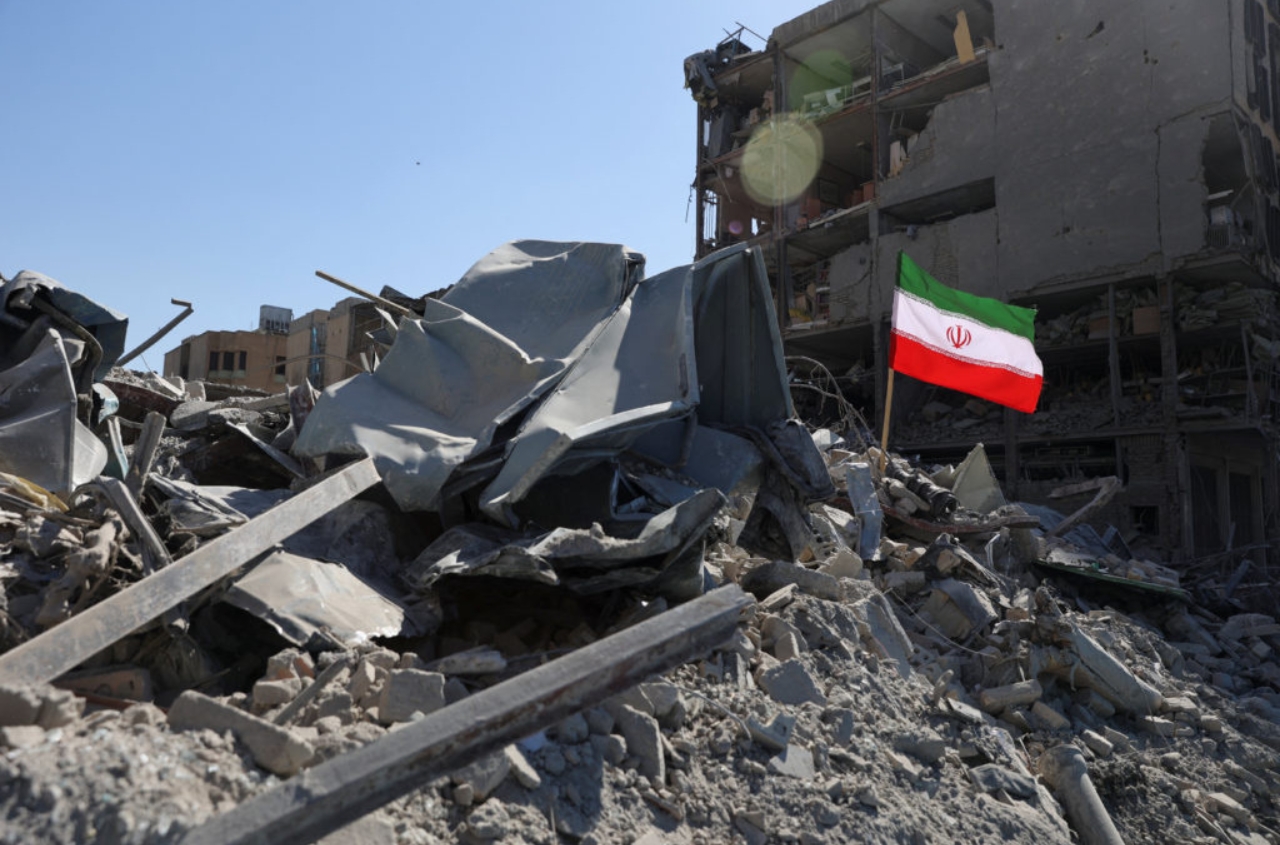
First. Trump destroys Iran’s energy infrastructure; Iran destroys the energy infrastructure of Gulf countries. A significant share of oil and gas supplied to the global market is lost, energy, fertilizer, and food prices grow exponentially, and a global recession begins, hitting everyone—including Trump.
Second. Under some other pretext, Trump winds down the operation in the Middle East, but does not strike Iran’s vital infrastructure—he simply quietly withdraws, while Iran takes on no obligations (since there is no deal). In this case, Iran, oddly enough, will have a free hand for some time in choosing its further strategy. The simplest assumption is that it will continue shelling Israel while beginning negotiations with the Gulf Arab states.
In effect, it becomes the “king of the hill” (or rather, the strait) and tries to collect tribute for allowing ships to pass, as a kind of “reparations measure.” At the same time, negotiations will be conducted with external players about partially lifting sanctions (in exchange for allowing their vessels to pass through the strait).
Calculating the consequences of introducing a new shipping regime in the Strait of Hormuz for the global economy is more difficult. They may not be as catastrophic as in the case of a collapse of the entire Gulf economy, but they could be negative enough to trigger a recession and market collapse in the short term. For Trump personally, this scenario promises nothing good.
Third. Trump does not resort to “doomsday” measures and does not destroy the foundations of Iran’s economy, but also does not agree to leave empty-handed—instead, he raises the stakes. In this case, he launches a ground operation to unblock the Strait of Hormuz. The problem is that in this scenario Trump again has something to lose, while the Iranians once again have almost nothing to lose. The loss of some territory, even Kharg Island, changes nothing for them for the worse, but gives them the opportunity to inflict damage—easily convertible into propaganda—on ground forces, which are far more vulnerable than the air force or navy. In other words, a ground operation looks more like another delay than a political solution for Trump.
The last thing I would want right now is to be in Trump’s position (just as I wouldn’t want to be in Putin’s position after 2022). All three scenarios look losing and lead by different paths to a negative result in the autumn elections, and possibly even to impeachment, if things go particularly badly. The only option that might suit Trump would be a repeat of the “Kabul scenario” of 1979, when Soviet special forces landed in the Afghan capital, killed Amin, and carried out a coup. So a U.S. airborne landing in Tehran suggests itself as the final chord in this phantasmagoric story.
In short, we can put “Wag the Dog” back on the shelf and switch to “G.I. Jane.” Though even that would probably be too much, even for Trump.