

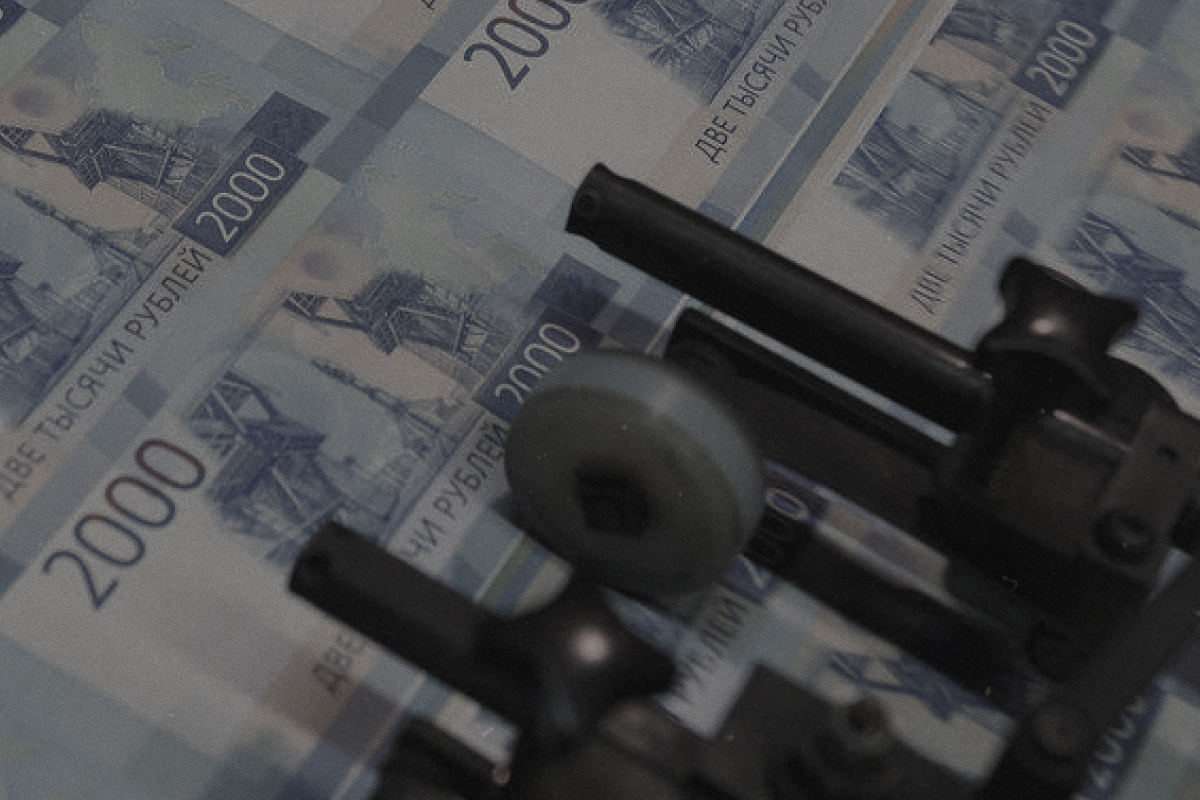

The Kremlin is increasingly financing the war through hidden money creation. As the Russian government can no longer raise the necessary funds on the market, it is forcing state-owned banks to purchase federal loan bonds (OFZs), while the central bank provides the liquidity needed for these transactions. Formally, these are OFZ placements, but in practice they use the banking system as a channel for creating new money.
The mechanism is straightforward: Russia’s Finance Ministry issues government bonds, state-owned banks purchase them, and the central bank supplies additional liquidity. As a result, government debt becomes a tool for indirect money creation. The budget receives funding, but at the cost of increasing the economy’s dependence on newly printed rubles and rising inflationary risks.
To support this process, Russia’s Finance Ministry has registered two new issues of floating-rate OFZs: one worth $6.4 billion maturing in 2037 and another worth $12.8 billion maturing in 2042. As of July 1, Russian banks held $248.1 billion in government bonds, equivalent to about 9% of the banking sector’s assets. Since the beginning of the year, their holdings have increased by another $6.5 billion.
The main reason for this move is the rapid growth of the budget deficit. In the first half of 2026, it reached nearly $77 billion, driven primarily by military spending. Additional wartime expenditures could exceed the budget plan by another $51.3–64.1 billion, part of which the Kremlin intends to finance through new borrowing. Russia’s central bank forecasts that the annual budget deficit could reach $105.1 billion.
At the same time, the market is no longer willing to finance the Russian budget on the government's terms. Due to high interest rates and weak investor demand, the Finance Ministry has been unable to raise the required amounts at acceptable borrowing costs. In June and July, it canceled at least three OFZ auctions after investors demanded higher yields.
The shift toward relying on state-owned banks for funding does not solve the budget deficit—it merely conceals it. This model increases the budget’s dependence on the central bank, concentrates government debt within the banking system, and intensifies inflationary pressure. In effect, the Kremlin is increasingly financing the war through money creation rather than market-based funding.