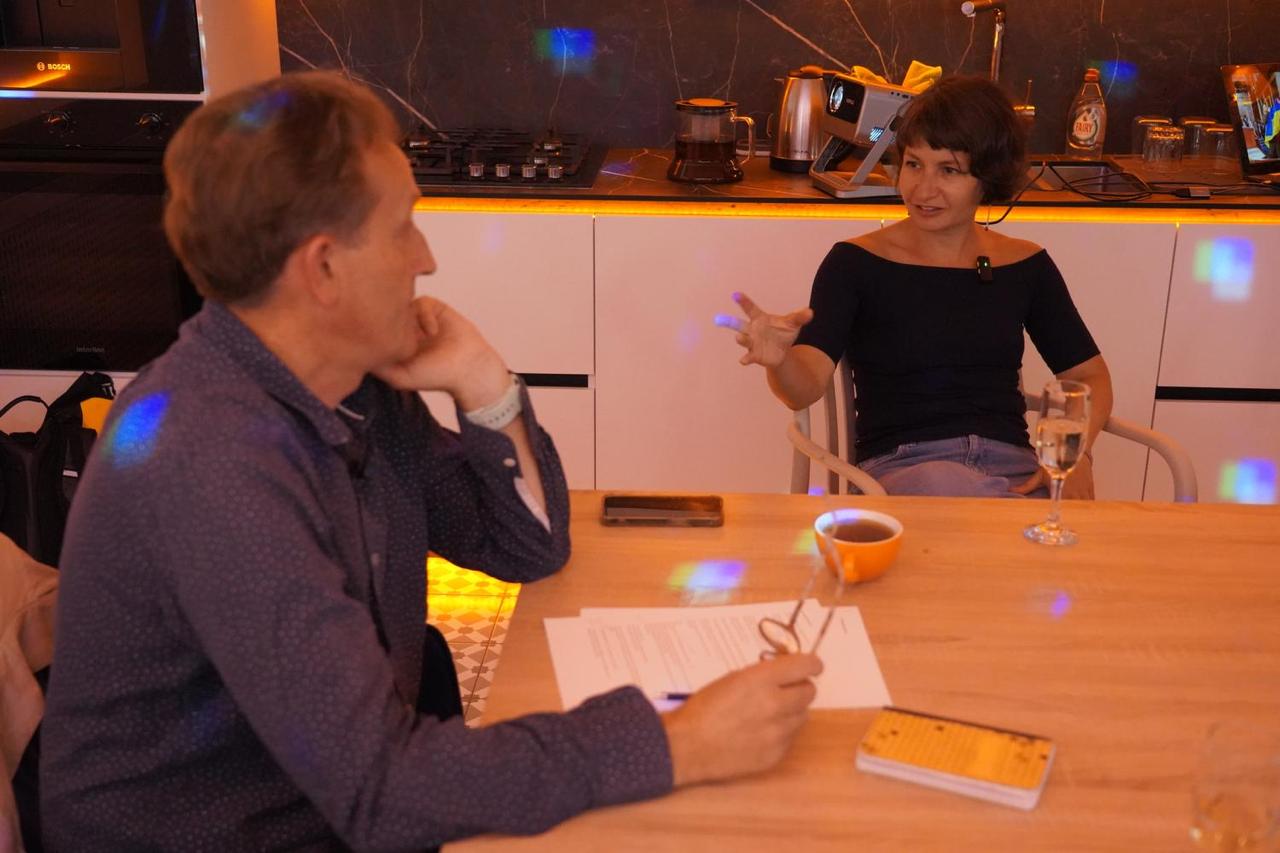


Exports of Ukrainian cement to the EU are being almost blocked with the implementation of the second stage of CBAM (Carbon Border Adjustment Mechanism), and Ukraine must take a proactive stance in supporting its domestic producers, said Lyudmyla Kripka, Executive Director of the UkrCement Association.
“The conditions that the Ukrainian cement industry received at the start of the second phase of CBAM, i.e. at the beginning of this year, are more accurately described not as a ‘barrier’ but as an ‘embargo.’ We were assigned default CO₂ emission values for cement from Ukraine at 1,518 kg per ton of clinker, which is almost twice the actual figures, even in the case of wet production methods,” Kripka said at the conference “Trade Wars: The Art of Protection” in Kyiv.
She also noted that there is currently no EU verifier available for CBAM purposes, and even if they existed, it is unlikely that European verifiers would travel to Ukraine (which is a mandatory requirement in the first year) due to high security risks.
“Under such conditions, exports are impossible in principle! And we are already seeing the consequences: cement production has decreased, budget revenues have fallen, foreign currency earnings have dropped, which has led to an even greater imbalance in the country’s trade balance,” Kripka stressed.
The “UkrCement” Association, both independently and together with partners whose products fall under CBAM, throughout 2025 has been appealing to the government, the European Commission, and all relevant parties to apply a declarative principle during the war and reconstruction period (which is possible under Part 7 of Article 30 of the CBAM Regulation regarding force majeure with devastating consequences for the economy and industrial infrastructure). However, according to Kripka, European Commission officials assured them that the impact of CBAM on the Ukrainian economy would be minimal. First-quarter results showed the impact is significant and is, in practice, blocking exports.
“At present, the European Commission acknowledges that the default value is incorrect; they also see problems with verifier certification, which concern not only Ukraine but EU countries as well. They promise to fix these issues within a month,” Kripka said.
According to her, these encouraging statements prompted companies to resume exports, but there remains a risk of catastrophic penalties for companies and dealers involved in these shipments.
At the same time, the cement industry is one of the leaders of Ukraine’s industrial sector in systematic preparation for the full launch of CBAM.
“We have made significant progress in the use of alternative fuels, have concrete examples of launching our own ‘green’ generation, conduct continuous emissions monitoring (CEM), and have verified emissions using available verifiers in the country,” she said.
Therefore, she stressed, when asked what is holding back exports to EU countries, the answer is “unequal competitive conditions.”
“We see that the world is shifting toward a model of economic pragmatism and protection of domestic markets. In these conditions, Ukraine has a very limited time to adapt its economy to the new reality. We must take a proactive stance in supporting our domestic producers,” Kripka explained.
She cited neighboring Poland as an example of “healthy aggressive pragmatism.” In 2024, Ukrainian cement exports to Poland amounted to 854,000 tons. Poland produced 17.7 million tons of cement that year. In effect, Ukrainian exports accounted for 3.7% of their production. Yet headlines in the Polish press spoke about the “disappearance of Polish cement plants,” and an inter-faction parliamentary group “Support for the Development of the Polish Cement Industry” was created in the Polish Sejm.
Kripka emphasized that Ukraine, in order not to be left on the sidelines of industrial competitiveness, must take a proactive stance in supporting its domestic producers.