


About chronology or the timing of intermediate results.
The contours of the Big Deal were only outlined in Anchorage.
Modeling this diplomatic construct based on indirect signs:
Enriched uranium from Iran is transferred “in deposit” to Russia, and Iran takes on obligations to halt further work on its nuclear program.
At the same time, a peace agreement is concluded to stop the war in Ukraine, including a set of known compromises.
The Big Deal, as is known, never took place.
Regarding Iran – due to Israel’s position, which wants to fully use the chronological “compatibility” of the U.S. Republican political cycle and the right-wing political cycle in Israel.
Such “compatibility” is rare: so much damage can be done, it makes your head spin.
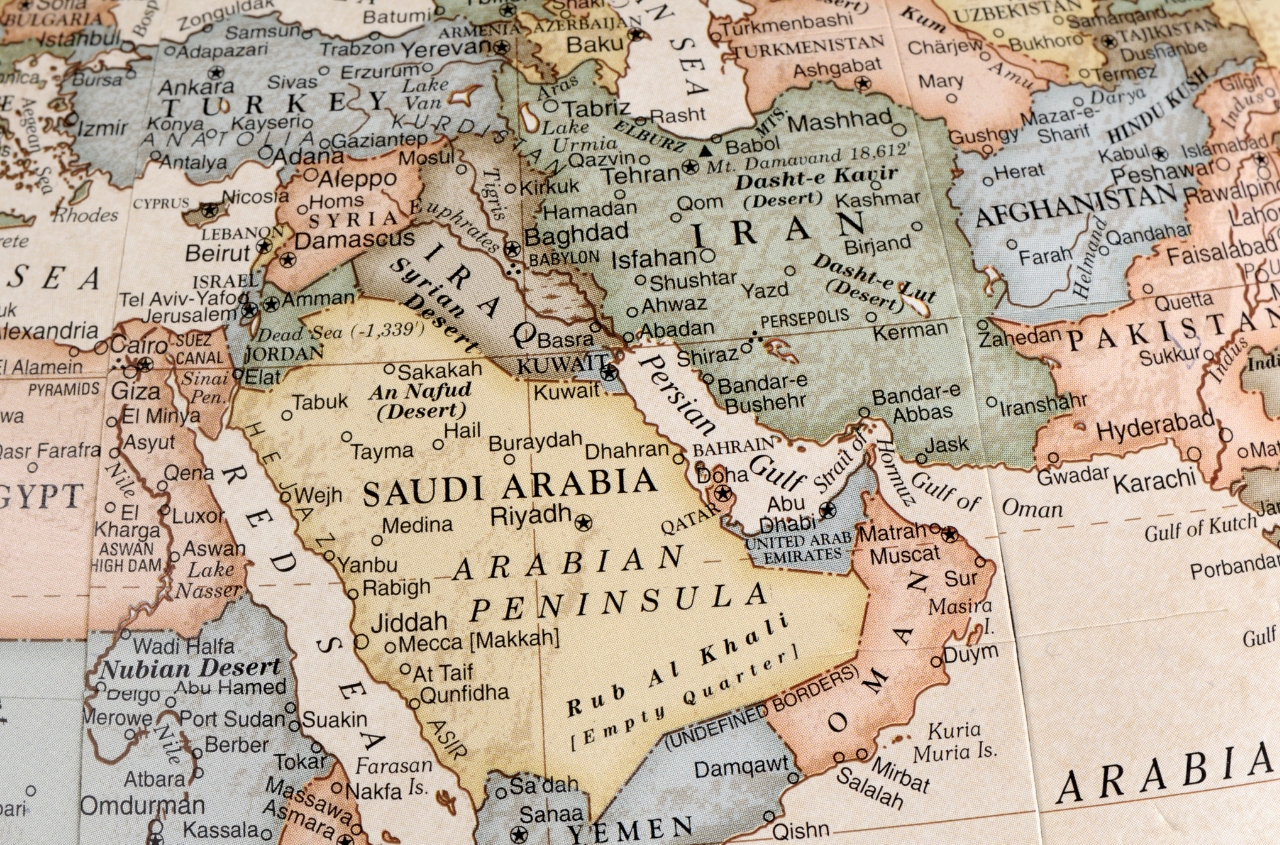
Therefore, the Big Deal easily turned into… the Big War in the Middle East, which no one in the U.S. supports, except for a group of Christian Zionists like Mike Huckabee.
Today (or rather yesterday) Trump unexpectedly called Putin.
The call took place literally a couple of days after Trump’s negotiations with the leaders of Kurdish parties, which ended in nothing.
Azerbaijan’s President Aliyev congratulated Khamenei’s son on being elected acting Supreme Leader (the true one remains “under wraps”).
U.S. Treasury Secretary Bessent meets in Paris at the summit on peaceful nuclear development with Chinese Vice Premier He Lifeng.
It seems the Big War is now again beginning to coil into a knot of the Big Deal.
The U.S. is exiting the war with Iran, or rather the Iranian adventure.
I don’t know how Israel managed to convince Trump of the success of this initiative, but I think Trump has already realized the catastrophic nature of this decision.
It is time to record the losses.
For some time, Israel will continue to develop the logic of the inertia of war, but this is already just inertia.
Now the question is whether Iran will stop?
This depends on the signal Beijing gives to Tehran.
So far, this round is clearly for China.
China has demonstrated that it is a stable geopolitical cluster, not prone to sharp impulsive moves.
By contrast, the U.S. demonstrated uncharacteristic haste and thoughtlessness.
The U.S. reaction to the “junior partner” requests was especially surprising.
Washington urgently needs to demonstrate to the world that it “wags the tail,” not the opposite.
One of the most important confrontations of today is the hidden confrontation between China and Israel.
Geopolitical Zionism is Israel’s regional expansion, manifested in extending its zone of influence over regional countries.
The U.S. traditionally relies on Israel’s strategy in the Middle East. That is, their position is pro-Zionist.
China, on the contrary, relies on Muslim axes of confrontation: Iran, Yemen, Palestine.
Therefore, China’s position is anti-Zionist.
Under Zionism in this post, we mean precisely the strategy of Israel’s regional expansion, not the national ideology of building a Jewish state.
China conducts a policy of “silent anti-Zionism,” while North Korea allows itself “loud anti-Zionism.”
How does anti-Zionism differ from anti-Semitism?
In the first case, it is about denying Israel’s right to regional expansion.
In the second, it is an ideology aimed against the Jews’ right to their national state.
It is important not to mix these concepts.
North Korea, by the way, actively supports Yemen, Iran, and in general any Muslim axes of confrontation in the region.
The Houthi missile program in Yemen is the result of North Korea’s involvement in its development.
China’s strategy is to transfer anti-Zionism as an ideology for containing Israel’s regional expansion into the ideologemes and diplomatic strategies of the EU.
Because this tactic does not so much weaken Israel in the Middle East as it weakens the U.S.
That is, Israel is an indirect target. The main target for Beijing is to weaken the U.S. position in the Middle East.
And this can only be achieved by weakening Israel.
So the confrontation between China and Israel will be very long and extremely sophisticated, given the level of modeling of basic processes in the decision-making centers of this geopolitical pair.
In essence, it is a confrontation of two of humanity’s oldest political nations, which continue to successfully develop their states to this day.