

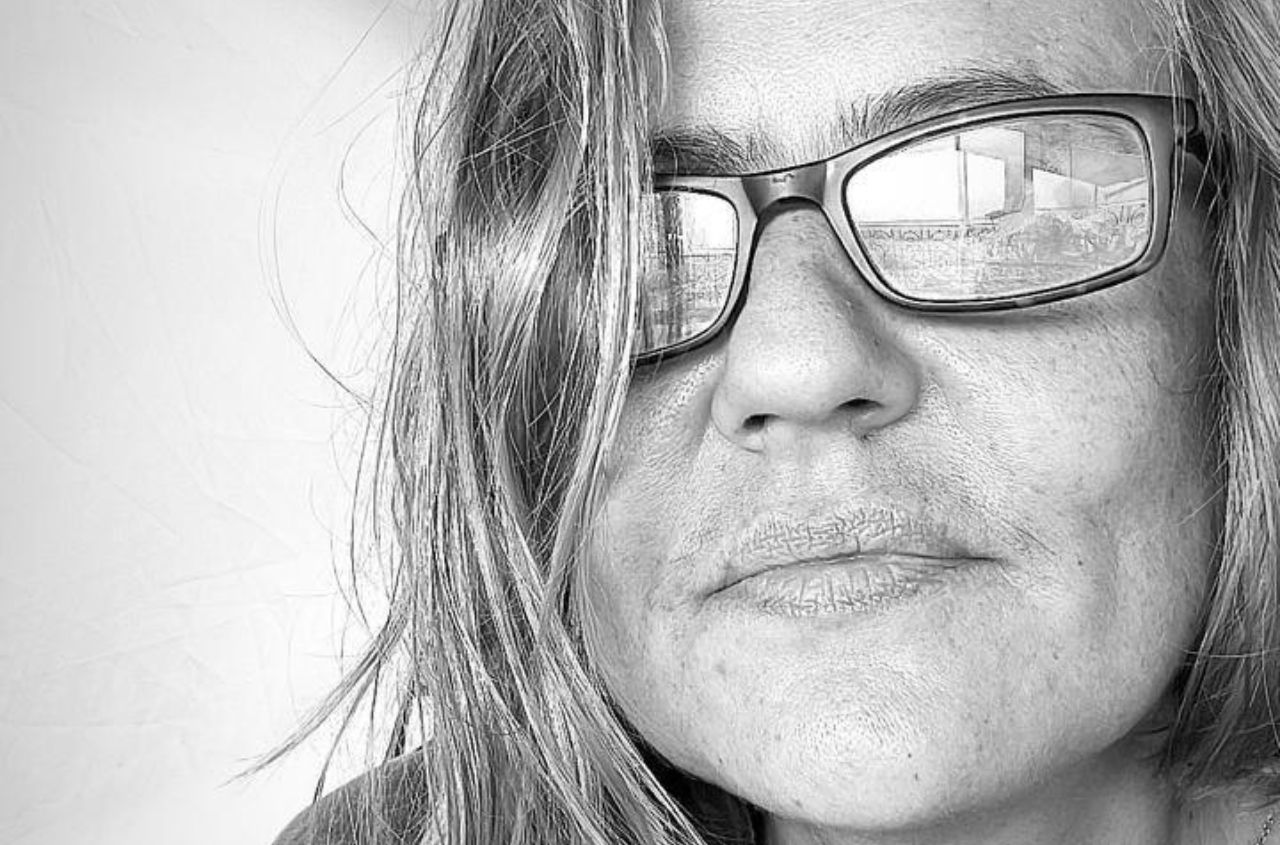

Main image: Natalia Marynenko
The forty-fifth interview through images by Andrey Sheptunov
Ceramics in the public consciousness is often associated with something archaic, cozy, or exclusively decorative. But in the hands of Natalia Marynenko, clay, chamotte, and stoneware turn into a sharp instrument for opening social abscesses and existential fears. Her sculptures do not try to please the viewer or decorate an interior; they speak the language of irony, the grotesque, and paradoxical sincerity, where a rigid conceptual framework always hides behind the fragility of the material.
Her creative path is a continuous experiment that began in the mid-nineties at a factory in Slavuta. It was there, amidst industrial scenery, that her first landmark work appeared—becoming a Pandora's box for the artist that could no longer be closed. Since then, Marynenko has not just been sculpting volumes; she has been creating complex, multi-layered worlds where mythology intertwines with harsh reality, and fairy-tale characters lose their glossy innocence, exposing the neuroses of modern humanity.
In the context of contemporary Ukrainian art, Natalia's voice stands completely apart. Many well remember her project "Wicked Tales" presented at the Hudpromo gallery—a landmark exhibition for which the prominent Odessa conceptualist Leonid Voitsekhov specially wrote a poem. In these works, familiar childhood plots were turned inside out: Little Red Riding Hood grew old waiting for love, and fairy-tale attributes acquired terrifyingly realistic, sometimes grim outlines, forcing the viewer to reconsider deeply ingrained cultural codes.
Marynenko is one of those artists who allows the material to dictate its conditions, finding a special freedom in this co-authorship. The transition from pliable Ukrainian chamotte to strict stoneware while working in India did not just change her technical approach, but transformed the very stylistics of her pieces. This sensitivity to the environment and texture allows the artist to find meaning in accidents—a lump of clay tossed aside suddenly becomes the center of a sarcastic composition, and material scraps give birth to new, unexpected metaphors.
However, traditional plastic arts have never been a closed cage for her. When physical form became insufficient, Natalia boldly stepped into the digital space, beginning to integrate classical sculpture into video art, augmented, and virtual reality. Scanned objects, virtual exhibitions, and applications—which today have turned into what the author herself calls "digital antiques"—prove her constant desire to destroy the boundaries between the material and the illusory. The digital projects were created in collaboration with programmer Dmitry Dokunov.
For all the apparent visual rigidity and sarcasm—whether it's copulating doves of peace or a severed cow's head in video art symbolizing a torn country—the foundation of Marynenko's art is always the search for empathy. Interactive installations that urge the viewer to step over disgust and show compassion for ugly old age, or new street art projects offering a gesture of unconditional support, speak of profound humanism. This is art that demands from us not just detached contemplation, but direct internal participation.
One could write voluminous art history texts about Natalia Marynenko's work, analyzing her transitions from classical ceramics to new media and social critique. However, an artist is always best spoken for by their own works, revealing the essence without unnecessary introductions. We invited Natalia to forgo a standard text interview and answer our questions not with words, but with visual images—the very works that encode her personal crises, epiphanies, and creative anger.
In this section, there are no random items or passing subjects. Each object presented here is a documented emotion, be it the very first portrait sculpted from chamotte, a mascaron with the face of a homeless person, or a goddess consecrated in an Indian temple. Before you are the artist's candid visual diary, where form, texture, and context become the most honest answers to complex questions.
1. Which of your early works defined that unique signature style we recognize today?
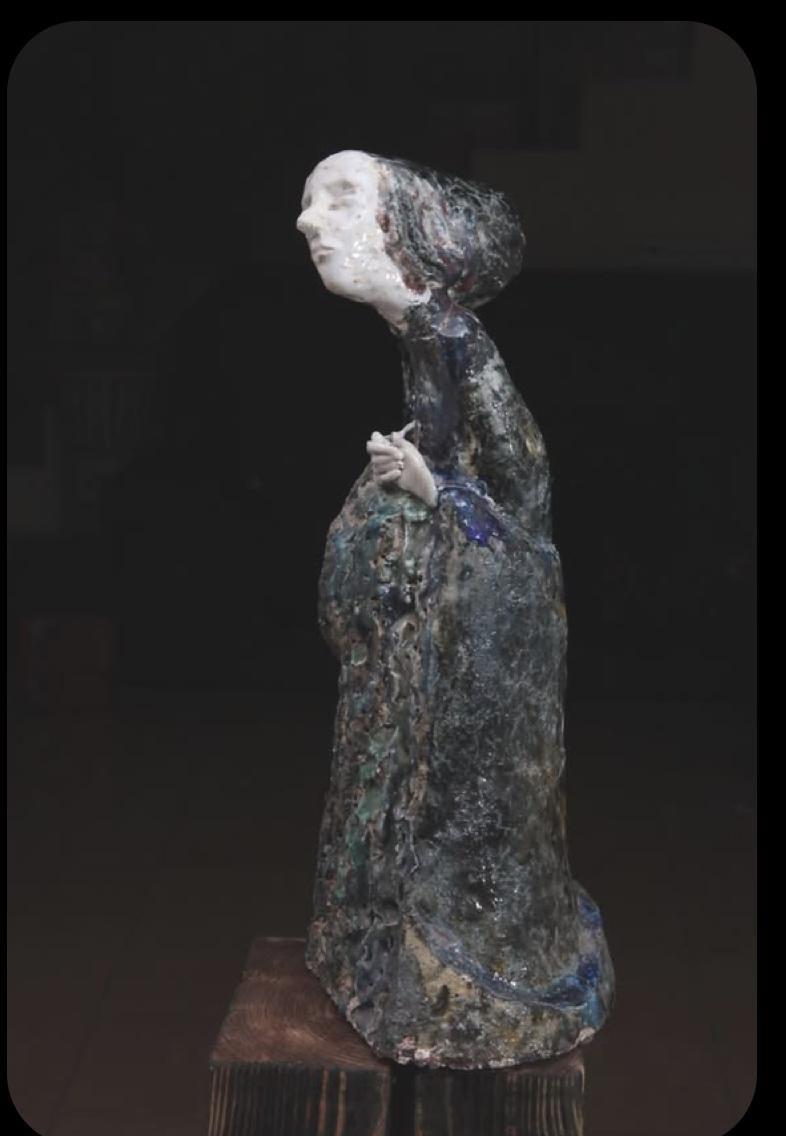
My first work, "Old Age on the Threshold" (chamotte, 1995, ~50 cm), was sculpted in one day during an internship at the factory in Slavuta. In the image of the woman, there is a silent question: "What for, Lord?". Everything started with this piece. It became a point of no return for me—and I clung to the factory with a death grip: without my own studio in Odessa, I traveled to the Slavuta porcelain factory for many years and sculpted over and over again.
2. Show a sculpture that hides the most veiled irony or even creative anger.
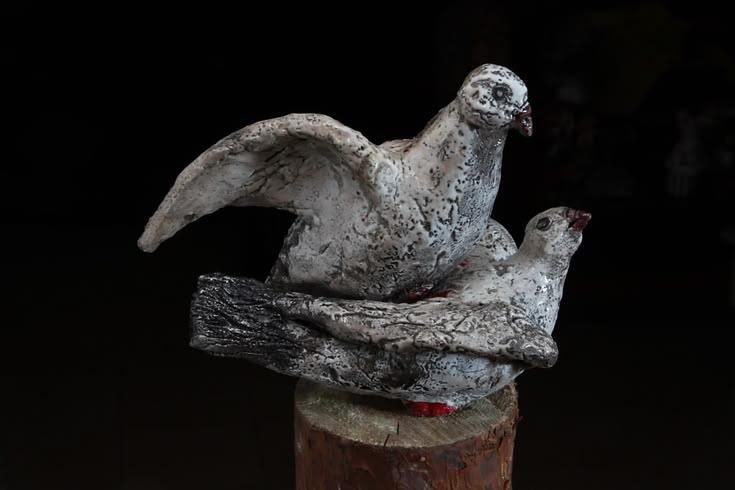
Doves of peace copulating with one another, offspring will appear and there will be even more peace in the world. (Chamotte, life-size doves, 2014).
3. Has it ever happened that the clay itself dictated the form contrary to your idea, and which work was the result of such disobedience?
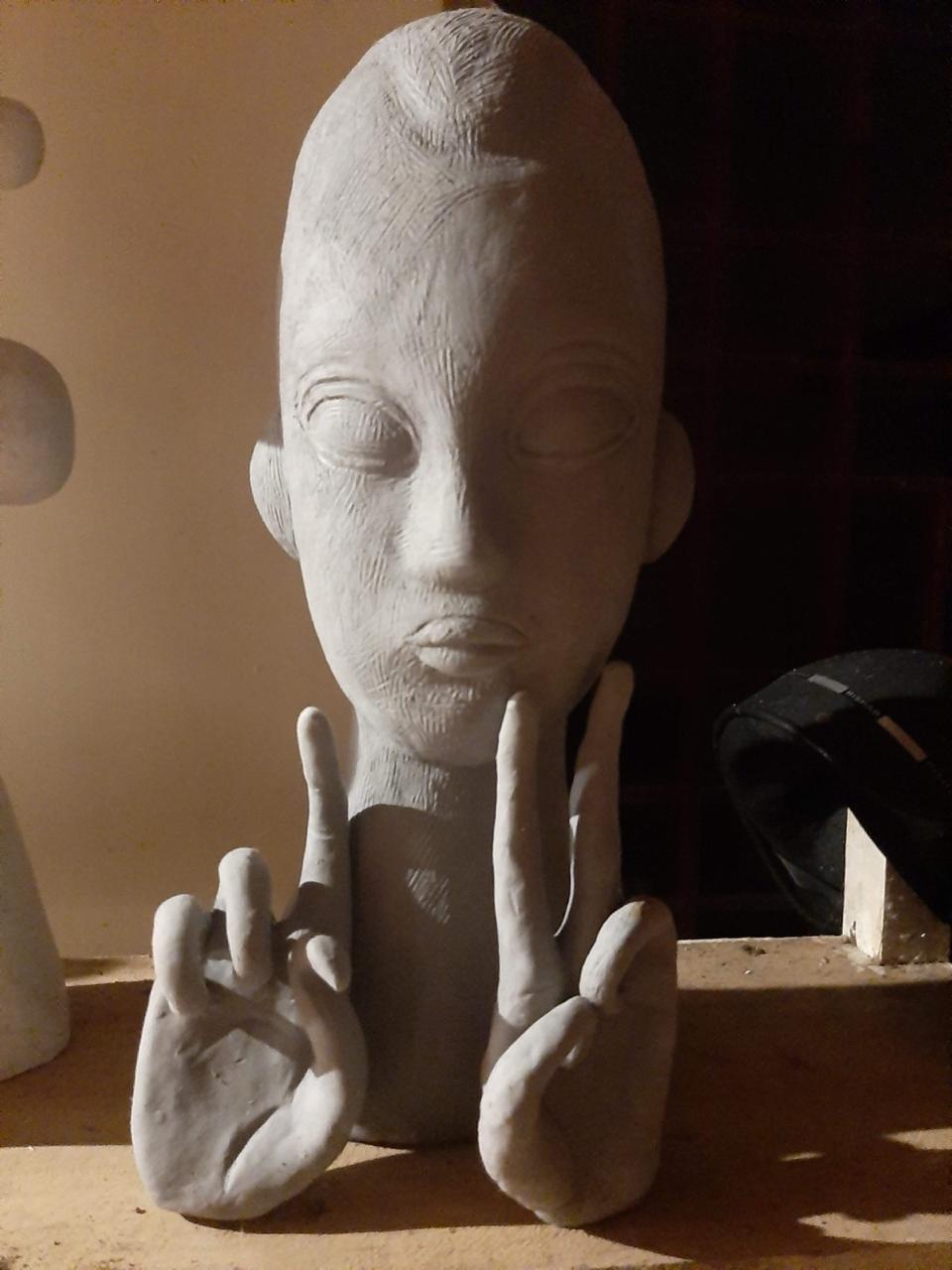
The material dictates the character of the work: porcelain, chamotte, and stoneware offer different plastic possibilities. In India, stoneware is used, which requires a different working technique, especially in a hot climate, compared to pliable chamotte. This influenced a change in style. (Stoneware, 2023, 48 cm).
4. Show a piece that arose from an absolute accident, a shard, or a fragment originally considered a production flaw.
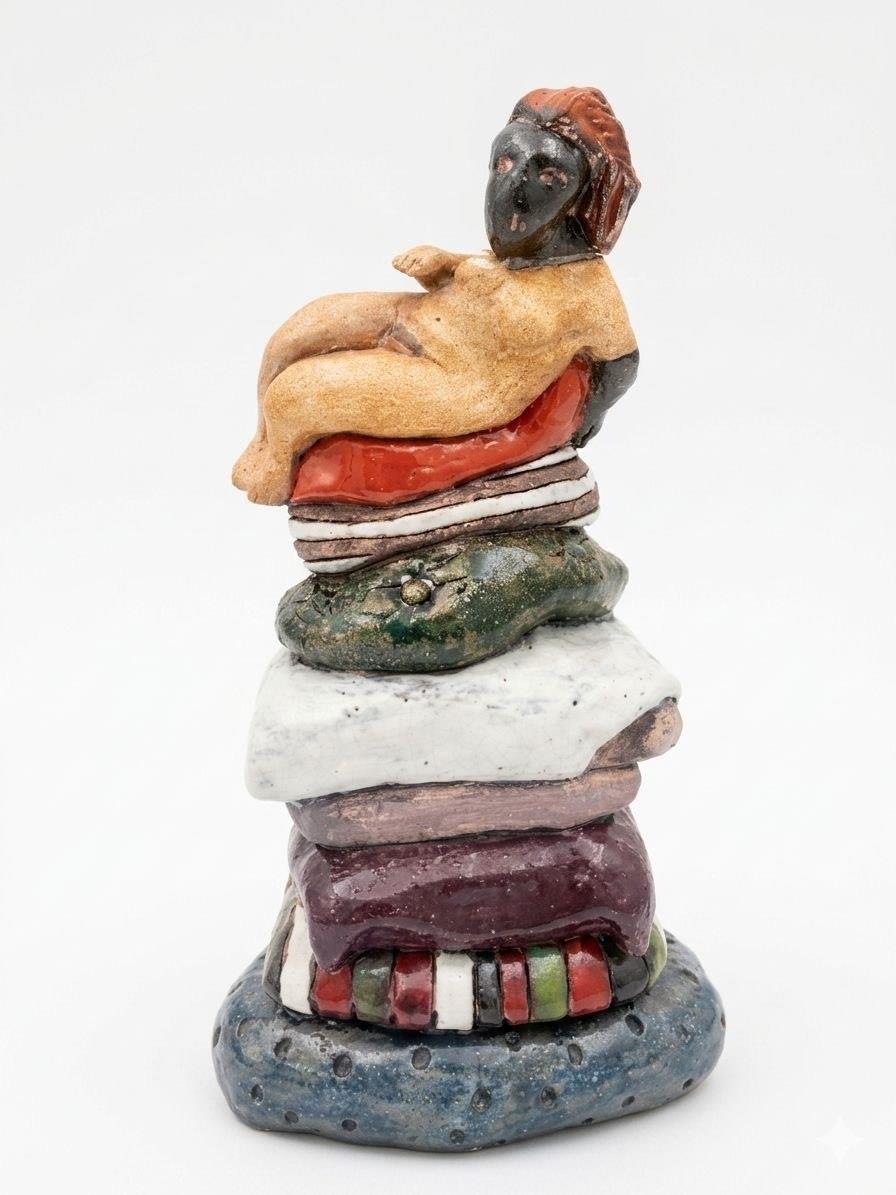
"The Princess and the Pea" (S&M version). While working on another sculpture, I tossed unused pieces of clay into a single pile without looking. As a result, a stack formed resembling featherbeds with a body lying on them. I refined the shapes and details—and thus "The Princess and the Pea" appeared.
5. Which installation most accurately illustrates your inner feeling of modern society and its hidden laws?
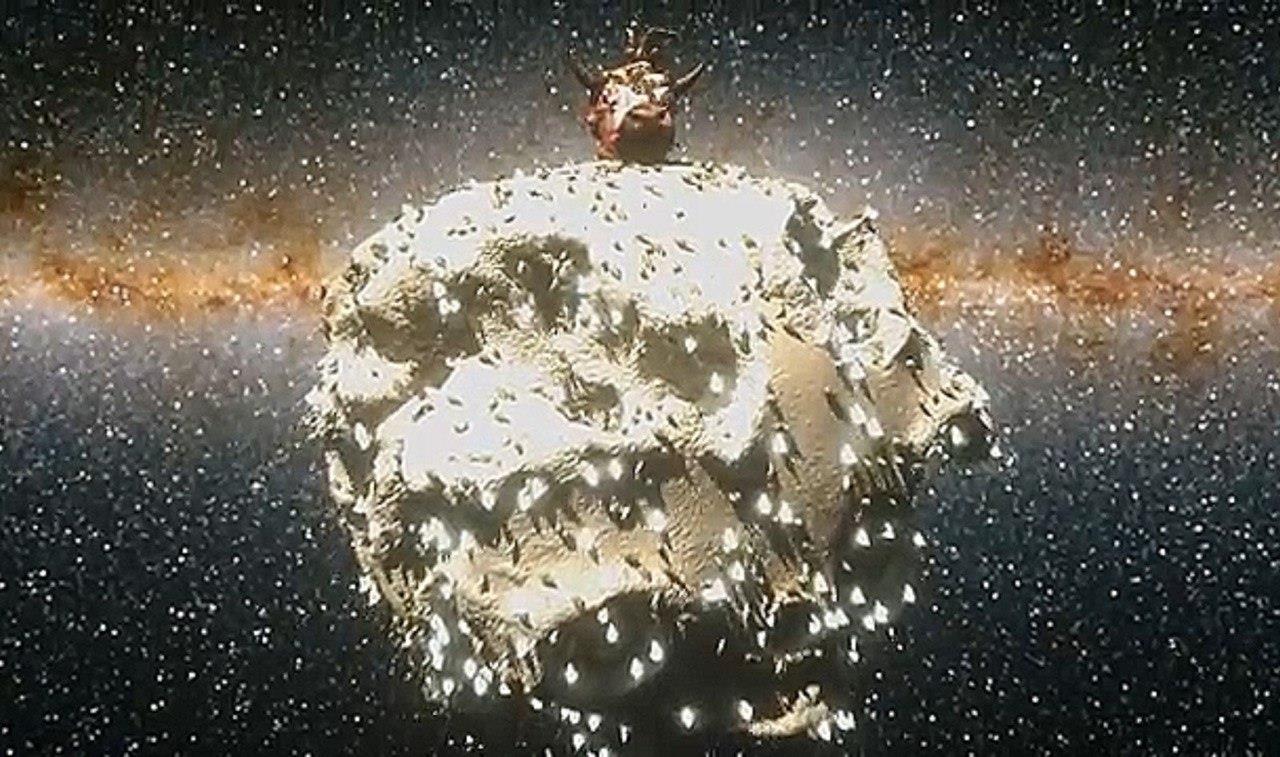
The video art "Bird Bizarre," 2015, based on my sculptures, where a severed cow's head symbolizes Ukraine, while pigeons sit, eat, drink blood, and multiply on the head.
6. Show a work that could become an illustration for the darkest fairy tale, not meant for children.
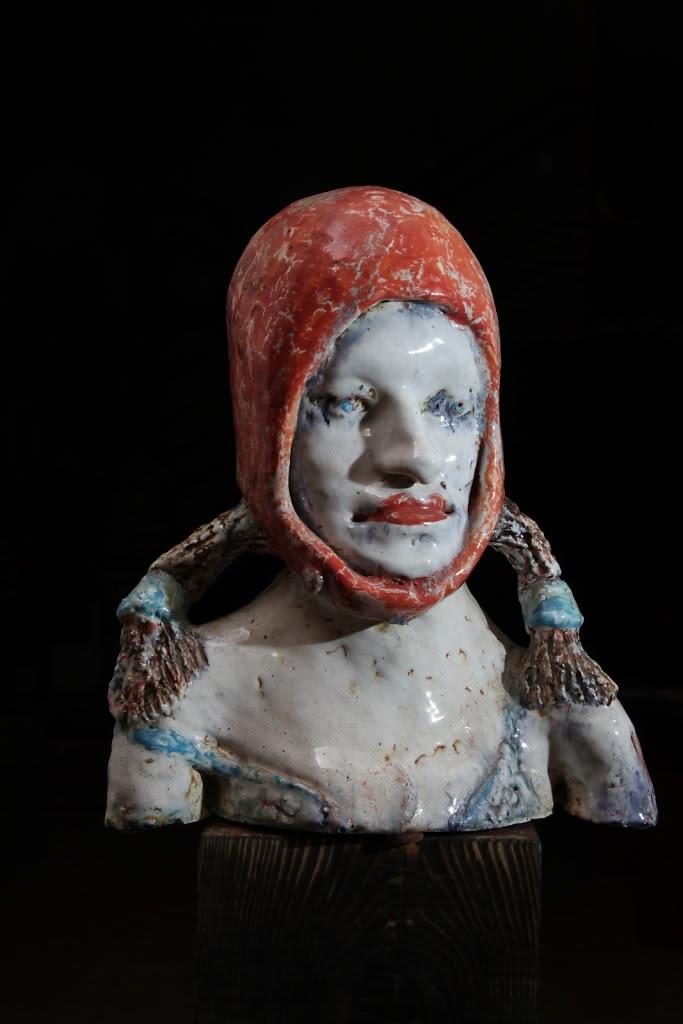
"Little Red Riding Hood 45, Who Loved but Did Not Marry" (chamotte, 48 cm, 2012). My fairy tales become more realistic—like life itself, with irony and bitterness. There is also the "Dead Old Woman in a Trough" based on "The Golden Fish" (no photo survived). For the "Natasha's Tales" exhibition at the Hudpromo gallery, Lyonya Voitsekhov wrote a poem.
7. Which of your creations metaphorically reflects an attempt to restore what is lost or glue together what seemed broken forever?
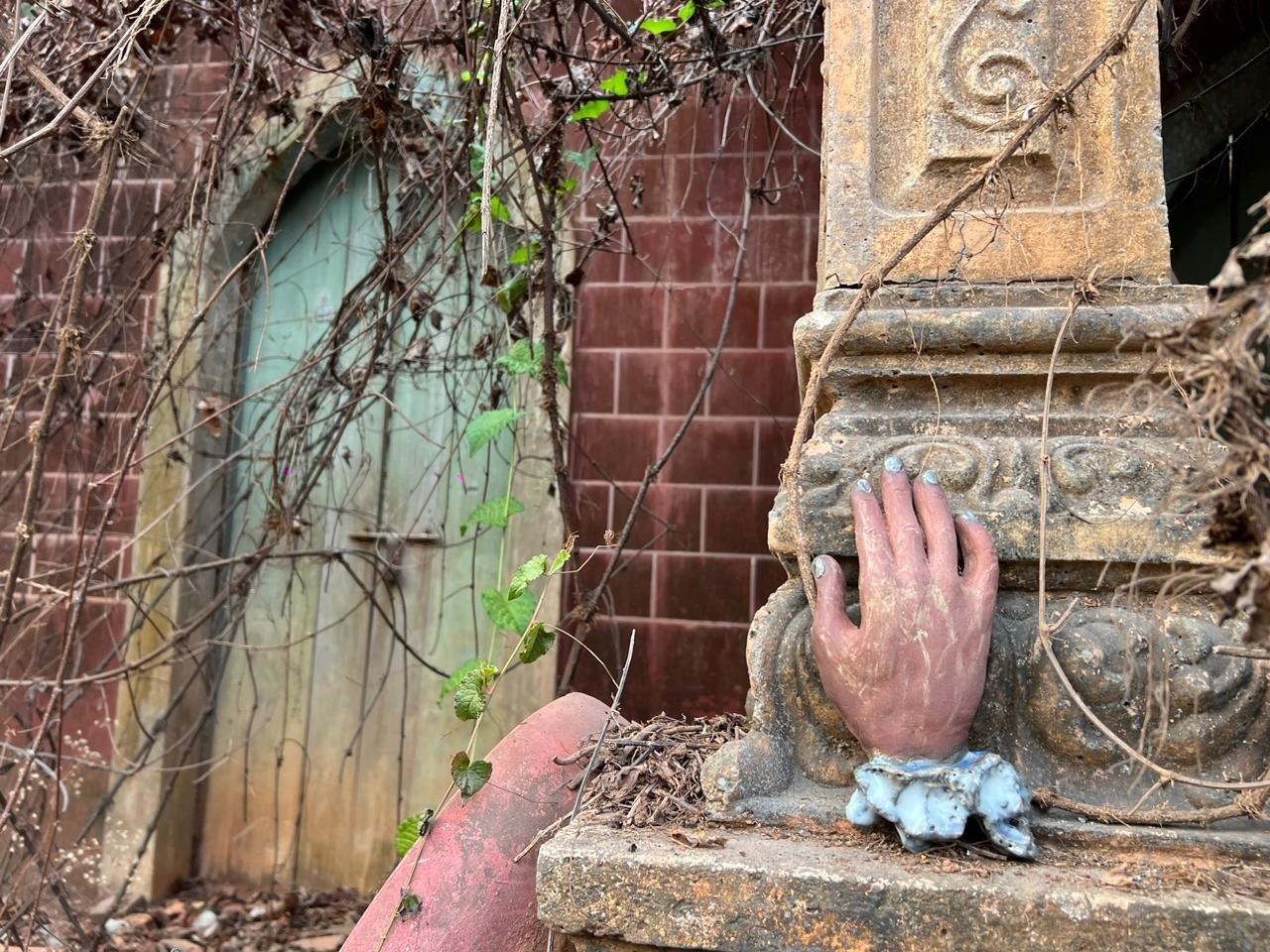
The site-specific project "Hand of Fatima"—ceramic reliefs of supporting hands on the ruins of Portuguese houses in Goa. This is a palliative gesture: when it is no longer possible to save, what remains is presence, a touch, and an attempt to hold onto what is vanishing.
8. Share a work that logically concluded a difficult creative stage for you, allowing you to move to new experiments with a light heart.
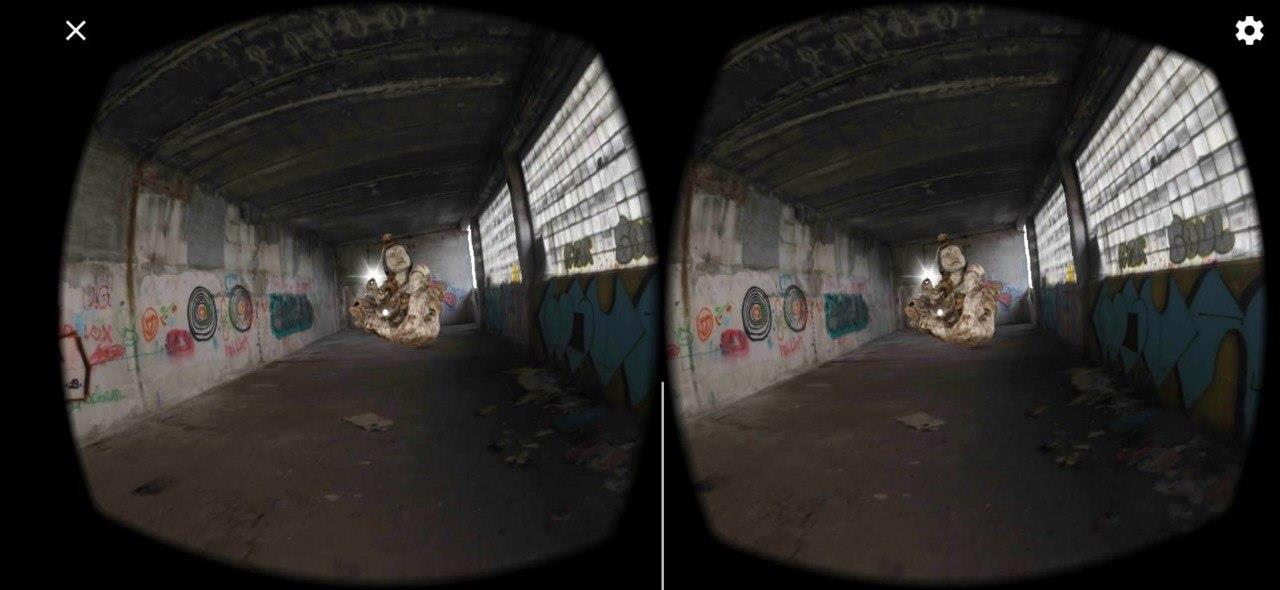
The scanned sculpture of Saraswati became the basis for AR and VR projects shown in India and at the GOA OPEN ARTS 2024 festival. The sculpture was consecrated in a temple and became a murti (A murti is a consecrated image of a deity in Hinduism, into which, according to belief, the divine presence "enters" and through which one interacts with it).
I traveled with it and its virtual image across India—Varanasi, Delhi, Bangalore...—showing the project in art universities. Through interaction with the digital sculpture, an act of blessing for creativity arose, and students observed a living connection from ceramics to digital technologies in a single artistic statement.
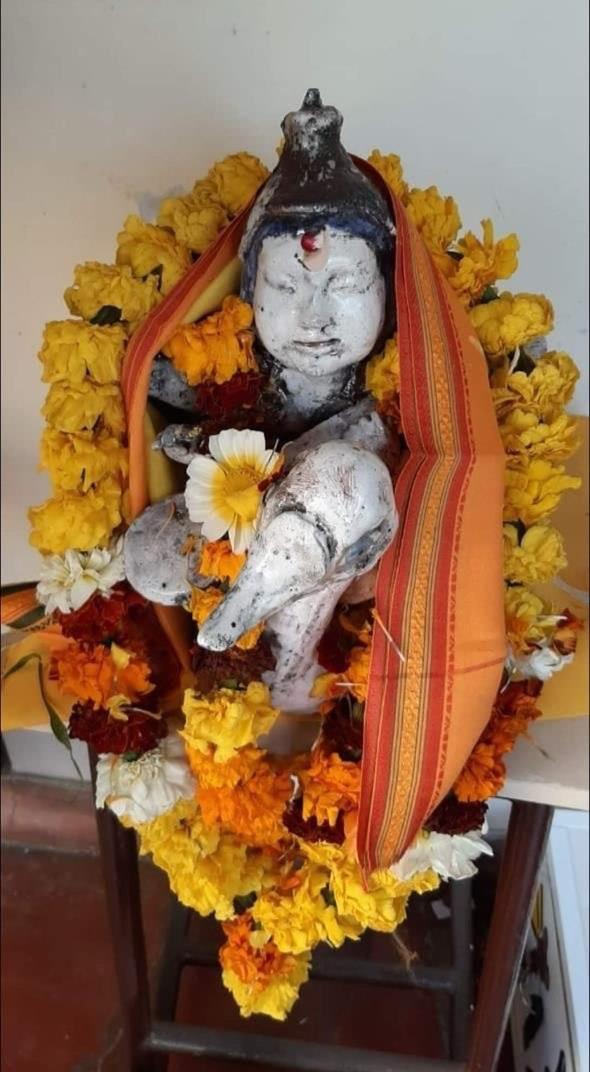
AR — Magic Murti Lila (2017) / VR — "The Apparition of Saraswati" (2020). Co-author: programmer Dmitry Dokunov. The project can be seen as a modern virtual temple—a space of Apparition and the transmission of a creative impulse. Today, the digital part is lost without app updates—like abandoned ruins in the jungle. The practice continues in the physical space through modeling workshops called "Clay Babbling".
9. Which piece is built on the sharpest physical or visual contrast of textures, forcing the viewer to mentally touch the surface?
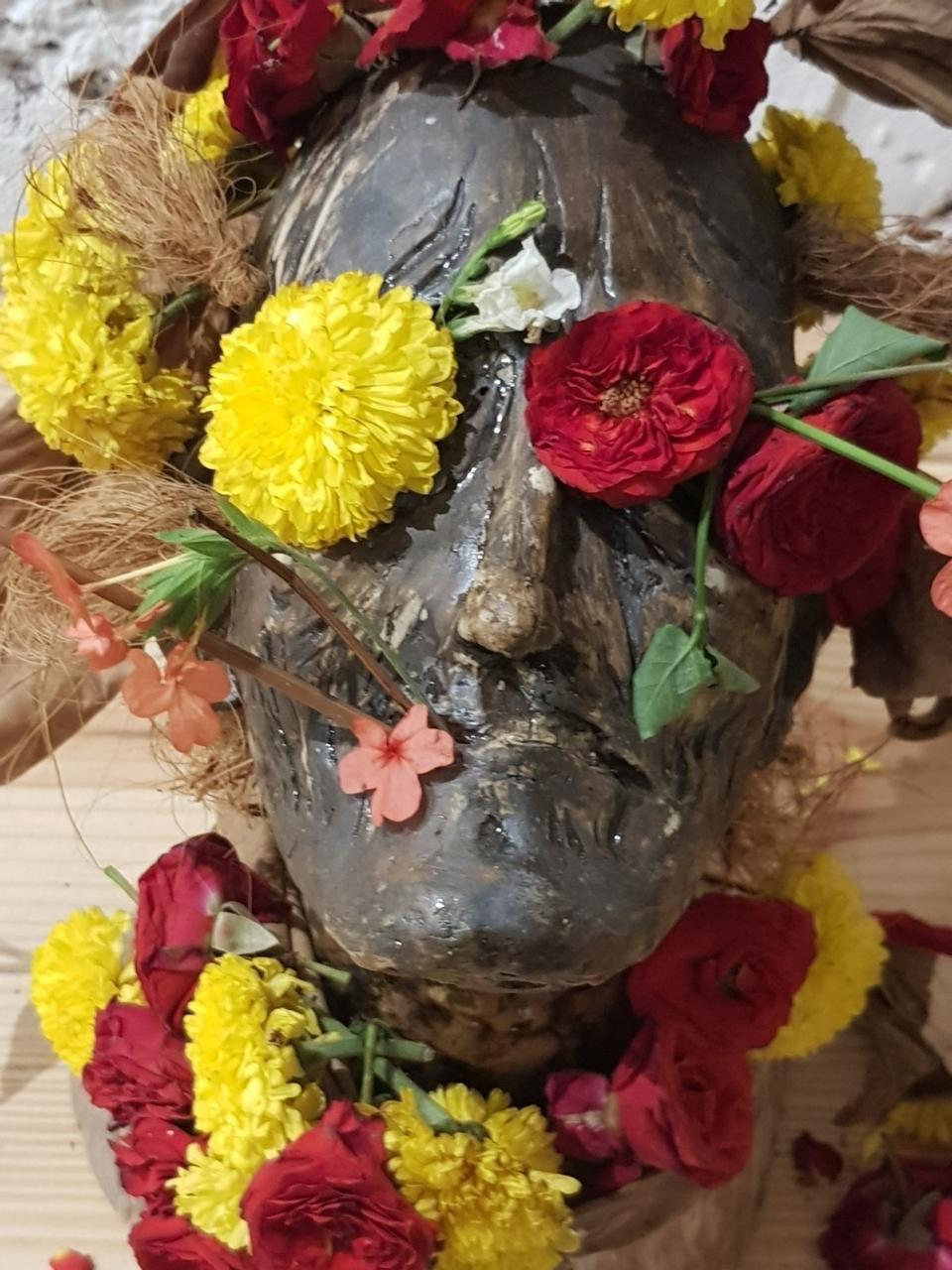
The interactive work "I beg your compassion" (stoneware, 2022): a life-size ceramic head of an old woman and fresh flowers. The contrast between the repulsive, ugly, rigid form and the fragile, living flowers forces the viewer to "touch"—through action. By decorating the head with flowers, the viewer experiences an act of compassion.
https://youtube.com/watch?v=K5kONL761b0&feature=shared
10. In which of your figures is a message encoded that the public almost always reads completely differently than you intended?
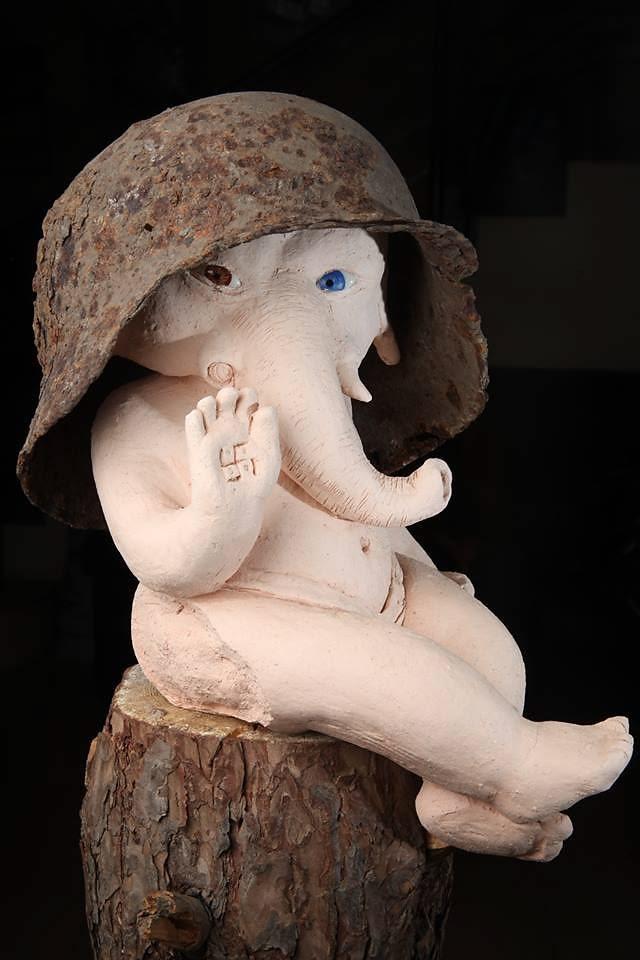
The figure of Ganesha in the pose of the infant Christ, wearing a panama hat-fascist helmet. The work was conceived as an ironic statement about the difference in the perception of symbols: an innocent image "blesses" the viewer with a swastika, which has one meaning in Eastern tradition and a completely different one in the West. However, viewers more often read the work literally, failing to catch this cultural divergence.
11. Show a form that became too cramped in its original boundaries during creation and demanded a radical expansion of scale?
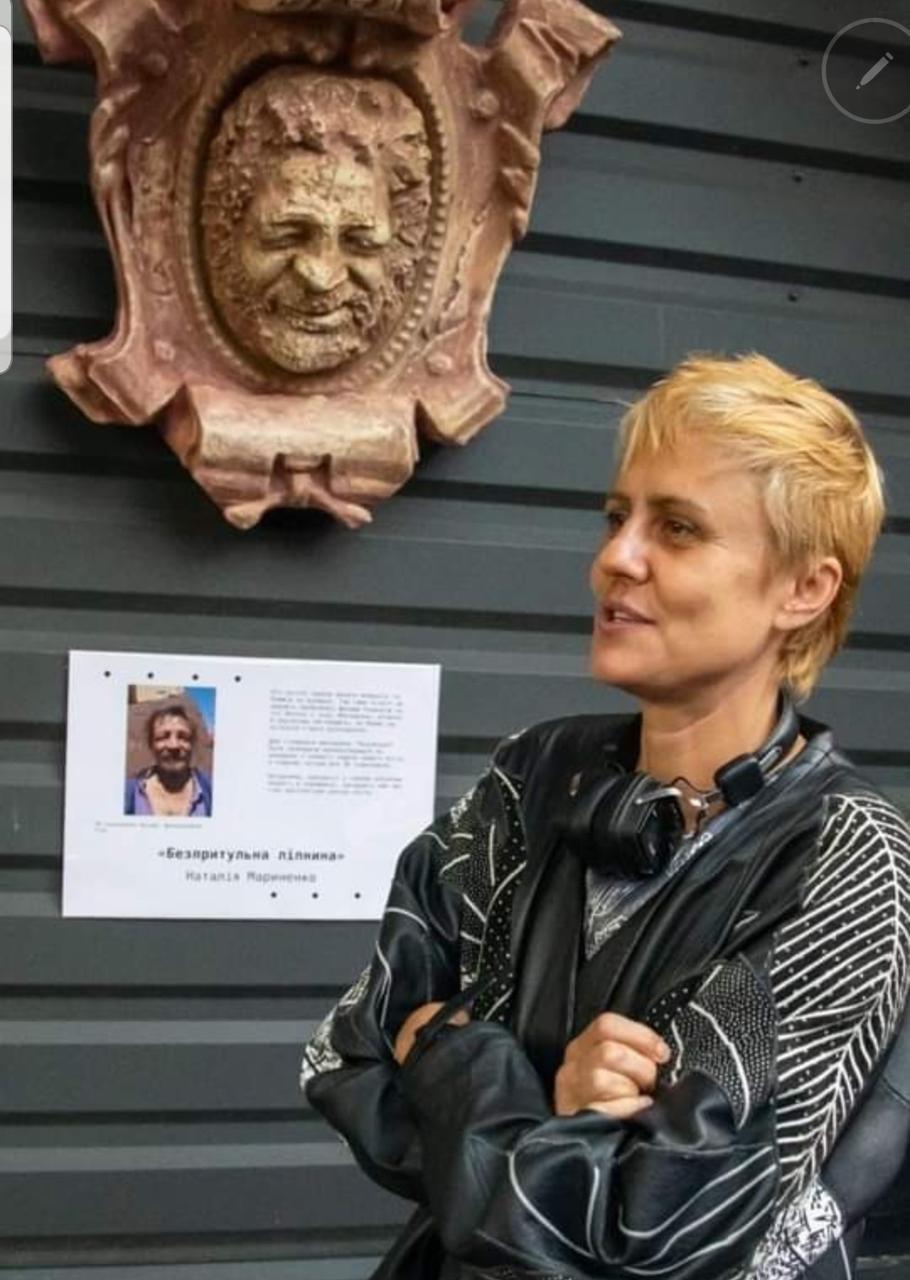
"Homeless Architecture" (2021), realized within the framework of the "Very Digital Residency" (organized by Pixelated Realities). I scanned a homeless person and used the 3D model to create an architectural mascaron element, carved on a CNC machine. The figure stepped out of sculpture and into architecture, drawing a parallel between human decay, degradation, and the crumbling, neglected architecture of the city of Odessa
12. Which sculpture is your personal anchor that you would not let go into other collections under any circumstances?
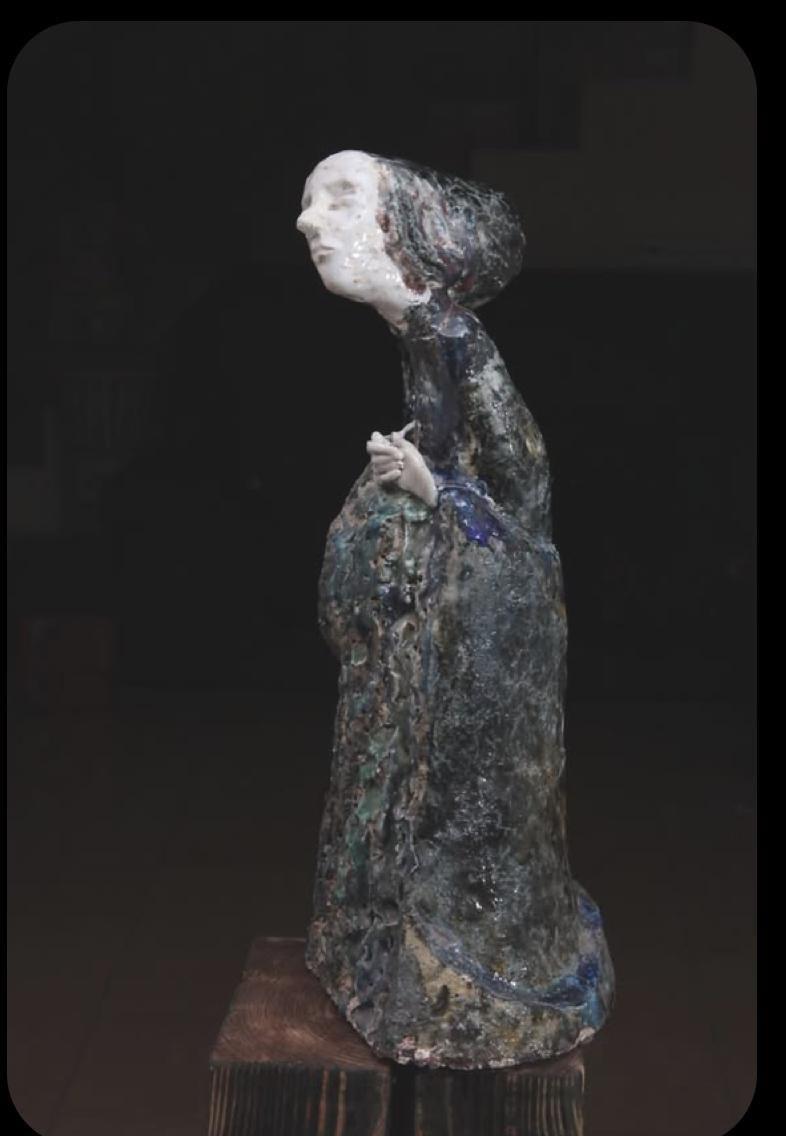
"Old Age on the Threshold" (chamotte, 1995, ~50 cm). This is my first work, made during a difficult period. I am not ready to part with it—everything started for me from there: through this piece, sublimation occurred, and the vector shifted from personal drama to creation.
The frankness with which Natalia Marynenko answers questions through her works leaves no room for indifference. Her art operates like a magnifying glass focused on the absurdities of society, hidden neuroses, and our own illusions. In these ceramic and digital objects, there is not a drop of fawning over the public or attempting to adapt to market trends. Instead, there is a saving irony, a rigid conceptual base, and deep empathy, albeit sometimes disguised as sarcasm.
The artist's creative journey proves that a truly large-scale creator always feels cramped within once-found boundaries. Stepping beyond traditional materials, from gallery spaces to the streets of Indian cities and virtual reality, Marynenko continues to search for new ways to interact with the surrounding world. Her shift to street art and projects like the "Hand of Fatima" is a logical progression of the need for direct contact with the audience, unmediated by exhibition hall walls, where art becomes a gesture of support.
Keeping track of where Natalia's further experiments and material transformations will lead is best done in real-time. Her work is a living, continuous process in which street interventions are replaced by new ceramic forms, and old meanings acquire new interpretations.
To avoid missing the development of new projects, visit the artist's official website at nataliamarynenko.com and be sure to follow her Instagram pages: