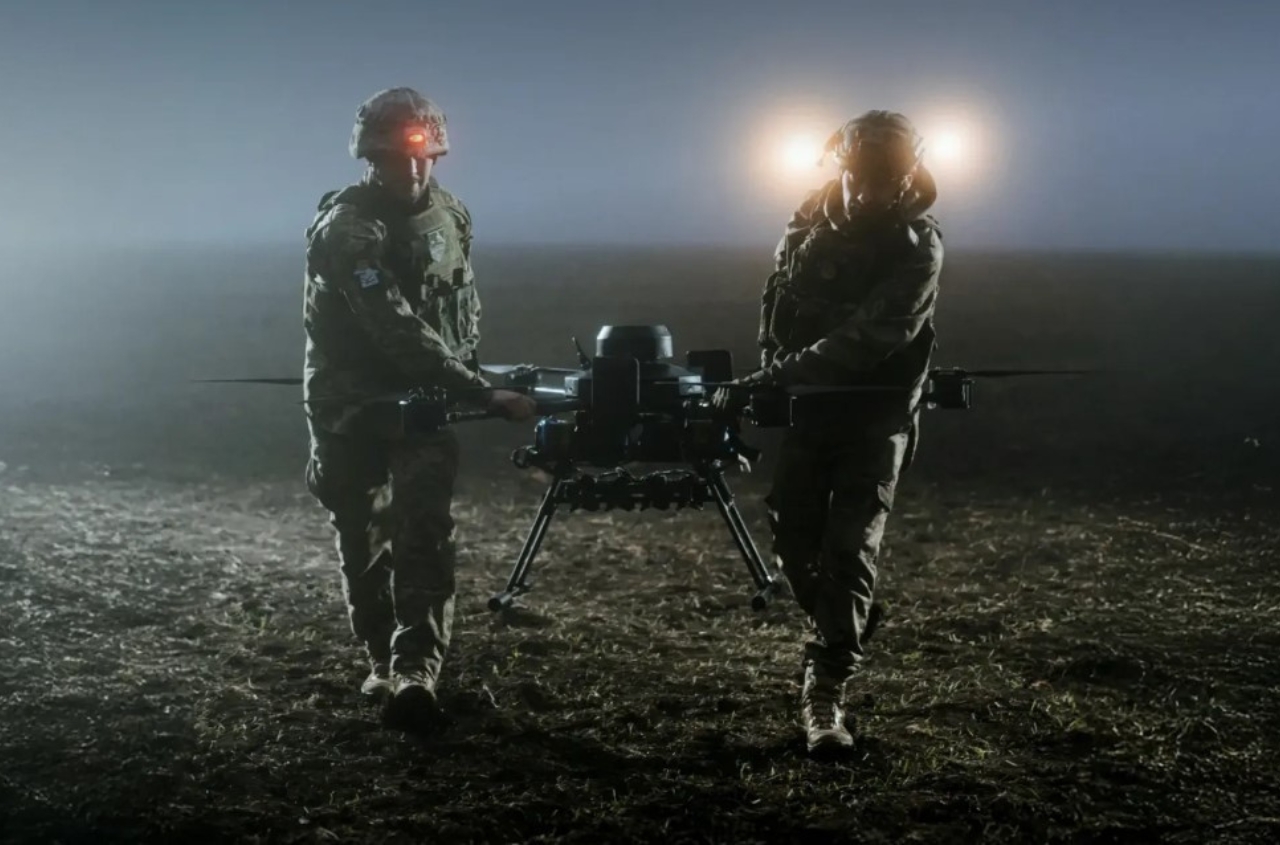

On the battlefield, they appear mostly at night, and the enemy terrifyingly calls them “Baba Yaga.” Heavy multirotor drones have become one of the most effective means of destroying Russian armored vehicles, ammunition depots, and logistics routes. This aerial artillery is operated by a UAV operator (heavy bomber) with the military occupational specialty VOS 217.
High-stakes gaming: specifics of the crew’s work
A heavy bomber operator is a specialist who pilots a large strike drone from a safe distance from the front line. The process of controlling such a system is often compared to a computer game: the crew works with specialized software, navigates via cameras (most often thermal), and conducts precision payload drops in real time.
However, behind this analogy lies enormous responsibility and high risk. The crew’s tasks:
- covertly bring the heavy drone to enemy positions;
- detect camouflaged equipment, bunkers, or logistics hubs;
- execute precise bomb drops and safely return the drone to base for reloading.
These specialists inflict maximum damage on the enemy while preserving the most valuable assets—their own lives and the lives of infantry units they provide aerial fire support to.
Technological arsenal: from Vampire to Nemesis
Ukraine is an undisputed global leader in the development and use of heavy copters. The Defense Forces actively operate domestic systems: Vampire, Kazhan, and Nemesis.
The systems are massive hexa- or octocopters (with 6 or 8 rotors), capable of carrying 10 to 40 kilograms of payload. This allows them to carry anti-tank mines or specially designed high-explosive fragmentation munitions.
Crew equipment, besides the drone itself, includes:
- a protected ground control station (tablet/laptop with control panels);
- satellite communication terminals (Starlink) and external antennas;
- powerful autonomous power systems (generators, charging stations, large UAV batteries);
- a transport vehicle (most often a pickup) for rapid deployment and evacuation of the system.
For personal protection, the crew is armed with standard firearms, critically important when guarding launch positions.
Specialist training: night navigation and explosives handling
Operating a heavy bomber requires precision, as this massive machine has significant air resistance and carries heavy loads. A specialist’s training always begins with basic military training (BMT), which lays the foundational knowledge in tactics, medicine, and firearms. After this, an intensive specialized piloting course begins. At this stage, specialists learn to control the large drone in the air, maneuver with cargo, and perform complex calculations for drop ballistics.
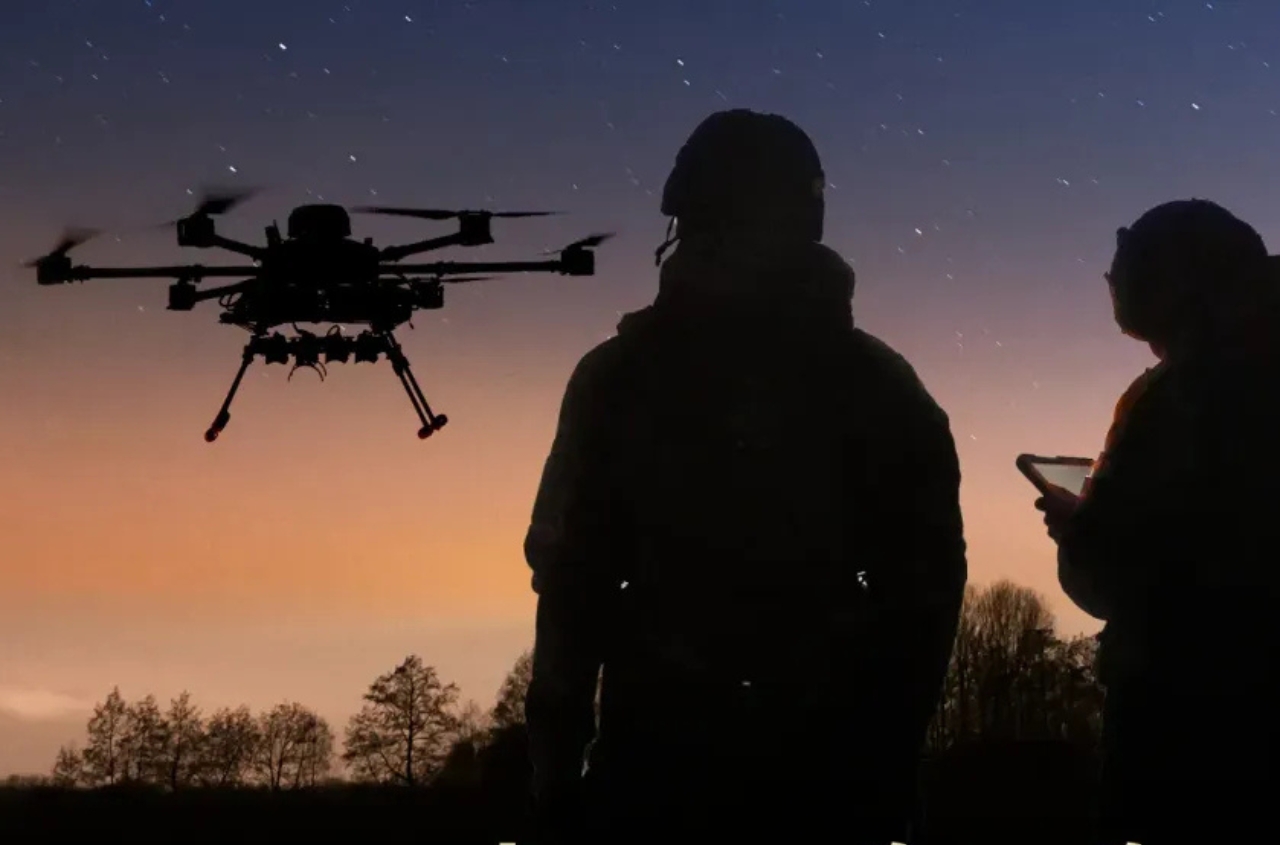
Since most combat missions are carried out at night, special emphasis during training is placed on working with optics—future operators practice quickly and accurately identifying enemy targets via thermal imagers and night vision devices. Additionally, explosives handling and safety are integral parts of training. The bomber crew constantly works with powerful explosives, so soldiers undergo thorough instruction on proper handling of munitions and their secure attachment to the drone’s drop system.
The heavy drone operator specialty develops advanced competencies in cargo UAV management. This field is rapidly growing worldwide. After completing service, such specialists become highly sought after in several well-paid civilian sectors, primarily in agriculture and logistics.