

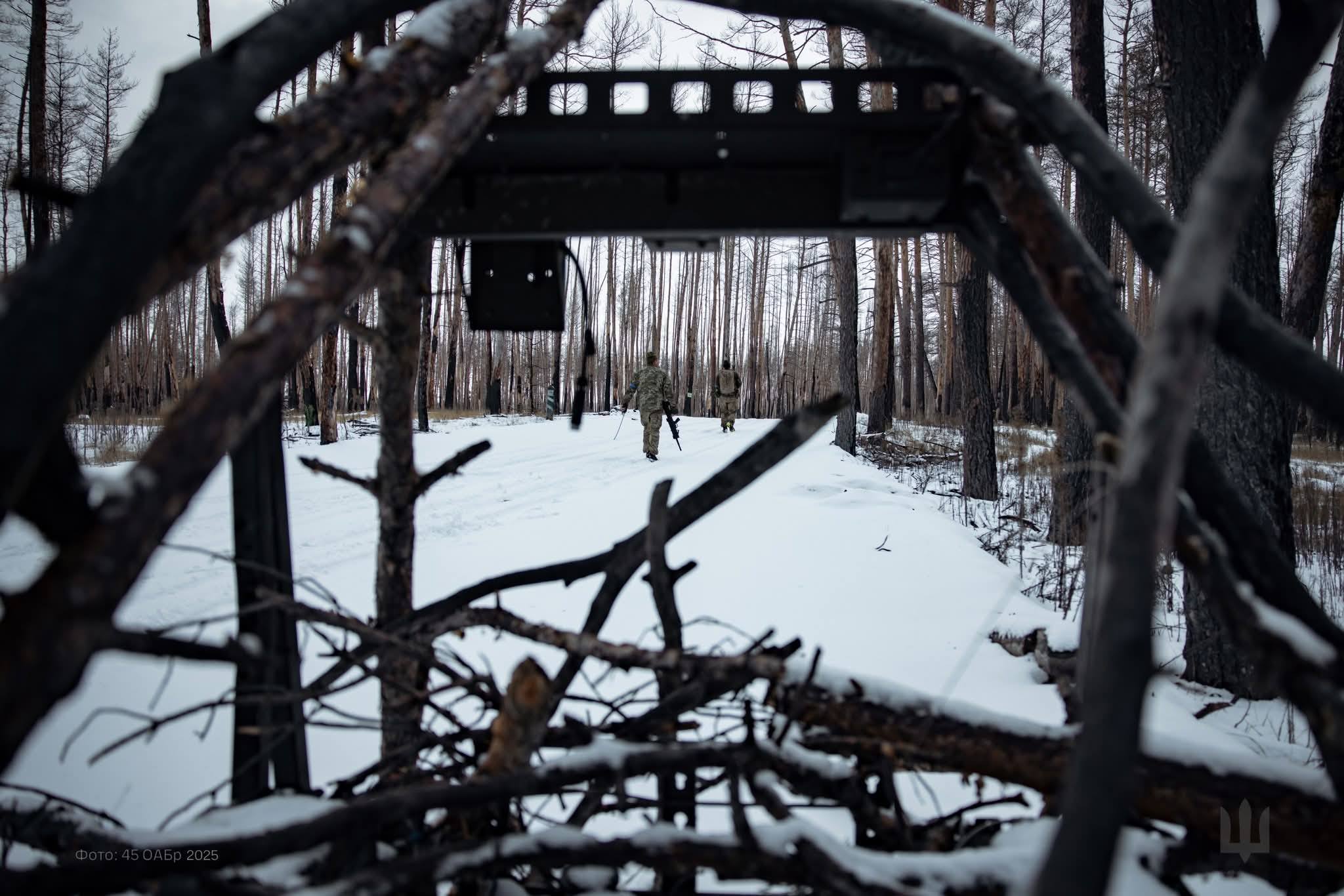

Some domestic and Russian experts have already been quick to label these actions of the Ukrainian Armed Forces as a “counteroffensive.” However, I would not rush to use such definitions. Judging by the situation, we are most likely dealing with certain stabilizing actions, limited strictly to tactical zones. It would be premature to claim that anyone is “flanking” the other, “encircling formations,” or “breaking through to the rear,” etc.
The main purpose and content of these, let me emphasize again, “stabilizing” actions by the Ukrainian Armed Forces in the Huliaipole and, to some extent, Zaporizhzhia directions, appears to be an effort to slow down the Russian advance. This is not about deep operational-tactical breakthroughs or envelopments.
Naturally, if units of the Russian 5th, 36th, and 58th Combined Arms Armies, already weakened by previous two-month-long offensive battles, significantly collapse in defense, the Ukrainian Armed Forces may try to exploit this, developing their successes in certain tactical sectors and directions into a full-fledged operational-tactical offensive. But at this moment, in my view, such a scenario is clearly not emerging, for a number of reasons, including:
- Limitations of the Ukrainian command in forces and means on these directions (in other words, even the already modest success needs resources to develop and consolidate, which are limited).
- The presence of combat-ready Russian operational reserves in these directions, mostly still unused. For example, in the Eastern Operational Zone (including the 5th and 36th Combined Arms Armies), this amounts to at least two brigades.
- The Ukrainian Armed Forces do not hold air or artillery superiority on these directions, which is critically necessary for such developments. The situation with UAVs in tactical and operational-tactical zones is also mixed, providing no clearly overwhelming advantage to either side.
- The Russian command can, to counter such efforts by the Ukrainian Armed Forces, use a full range of ADDITIONAL forces and assets from relatively “stabilized” sectors and directions in the Dnipro and East Operational Zones. For example, the 18th Combined Arms Army from the Dnipro Zone, or the 41st Combined Arms Army and 90th Tank Division from the Center Operational Zone. All are deployed in neighboring operational zones and adjacent directions, so moving them to the Huliaipole and Zaporizhzhia directions would be straightforward and not time-consuming.
In this context, there are a number of other factors to consider…
In short, at present we can only speak of certain counterattacking actions by the Ukrainian Armed Forces in SELECTED sectors and directions of the Southern Operational Zone, whose maximum operational-tactical significance lies solely in disrupting the Russian command’s plans and timelines for the hypothetical Orekhove–Zaporizhzhia operational offensive in the near future.
Moreover, my assessment of these Ukrainian actions is based exclusively on one already evident result: the disruption of the plans and schedules for the deployment of the Russian vanguard units of the Dnipro and East Operational Zones into the necessary initial areas and lines for such an operation.