


Day twenty-one of Operation “Roar of the Lion.”
Continued strikes in central and western Iran targeting launch sites, missile depots and production facilities, and military bases. After the weakening of missile capabilities in western Iran, launches are shifting further east, and so are air force strikes. Mehdi Shamastan, responsible within the Ministry of Intelligence for attacks against Jewish and Israeli targets abroad, was eliminated. Yesterday, Netanyahu stated that Iran is currently unable to produce ballistic missiles; IRGC spokesperson Mohammad Naini objected, saying it could. Overnight, Naini was killed in an airstrike. And you ask why I immediately ban comments that go against the grain. “That’s the current environmental situation.”
IRGC Quds Force commander Ismail Qaani issued a statement for the first time since the start of the war, though he did not appear personally. He called for continued “glorious resistance” and said the Islamic Revolution would continue under the leadership of Mojtaba Khamenei. “Only Stierlitz understood that this meant he had been awarded the title Hero of the Soviet Union.”
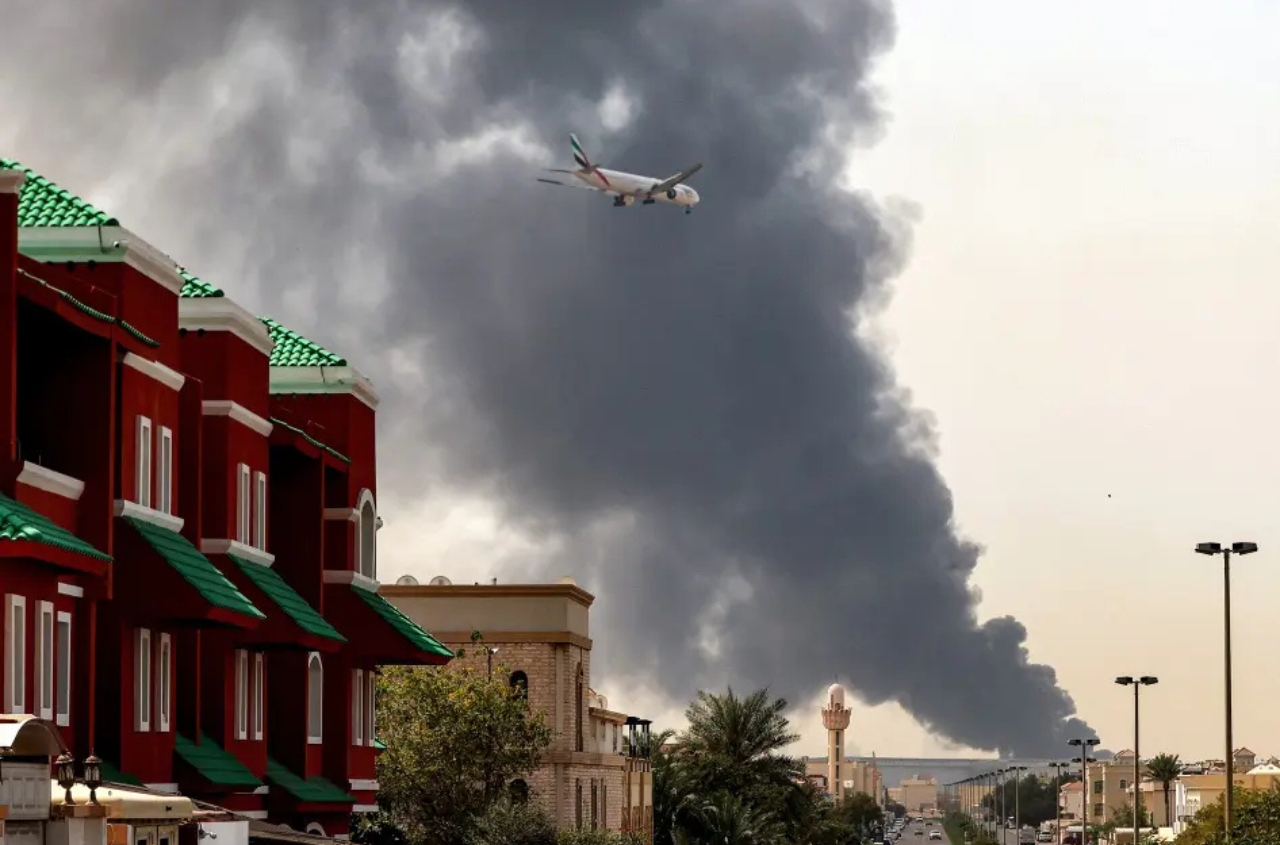
The volume of Iranian missile launches remains low—up to 20 per day, usually 1–2 missiles per salvo. They are again attempting “bursts” of up to five missiles with short intervals, targeting the north, center, and south. For a couple of days, the Iranians used cloud cover, which made it harder to detect and strike launchers; from tomorrow, the weather in Iran is expected to improve. In recent days, there has been a particular focus on Jerusalem, with impacts including the Old City. It is worth noting that before the war, intelligence warned that while Jerusalem had been targeted relatively little in previous rounds, this time it would be on Iran’s priority target list. As we can see, the intelligence was accurate. Most missiles still carry cluster warheads. It is worth recalling that a reinforced safe room (“mamad”) protects almost completely against submunitions—there’s no reason not to use it. Follow Home Front Command instructions.
The Americans continue strikes on missile bases, military industry, and coastal areas—Bandar Abbas, Bandar Lengeh, and others. In addition to the 31st Marine Expeditionary Unit already at sea, the 11th unit has departed from San Diego. Gradually, this will provide forces capable of seizing coasts and islands. Operation “Chunga-Changa.” Preparations to deploy the 82nd Airborne Division have not been confirmed at this time.
Regarding the attack the day before yesterday on Bandar Anzali on the Caspian Sea, the IDF emphasizes strikes on ships, headquarters, and a shipyard, while officially remaining silent about military supplies moving along that route from Russia to Iran. However, the Russian Foreign Ministry is well aware of this and today issued a statement about an important trade and logistics hub actively used to support Russian-Iranian trade, and about a US-Israeli coalition that continues to pour fuel on the fire of war they themselves ignited. “Don’t misunderstand me.”
In Iraq, mutual strikes between militias and US forces continue; the Houthis keep issuing threats, and strikes continue to hit various Arab countries.
In Lebanon, airstrikes continue—targeting headquarters, launch sites, and depots. Hezbollah is attempting to increase shelling but is currently unable to significantly intensify it. Ground operations are gradually expanding, with additional forces being deployed. The immediate objective is to seize, clear, and destroy frontline villages. Estimates suggest fewer than a thousand Hezbollah fighters remain south of the Litani River, mostly waiting in second- and third-line villages. Direct engagements are still limited—mostly long-range fire, anti-tank guided missiles, mortars, and rockets.
As I wrote on March 4, the Syrian regime of al-Sharaa had been redeploying forces to the Lebanese border in case of fighting with Hezbollah either on the border or inside Lebanon, as well as to the south, and we warned them not to consider using the situation to strike the Druze. Yesterday, they carried out strikes against Druze in Suwayda; in response, we struck regime forces and again warned: do not touch the Druze. At the same time, intervention by al-Sharaa in Lebanon—or at least the threat of it—is, for now, viewed rather positively. “That’s what happens when you send fools on foreign tours.”
Trump’s statements remain as before—two contradictory ones a day: “we’ve already finished,” “we haven’t even started,” and so on in a loop. When he actually decides to give the signal, no one knows. But on the ground, the Americans are intensifying strikes and moving in additional forces. So we keep digging from the fence to lunchtime—the more military and regime targets we take out before the signal, the better.
People ask: what if Trump stops but Iran does not? I’ve already addressed this. The scenario in which Iran refuses a ceasefire and continues a low-intensity war of attrition—even with a small number of launches—has always existed, including during previous operations. However, the likelihood of such a scenario is still assessed as lower than that of a ceasefire, because Iran wants one—the only question is on what terms. But if Iran continues, then we will continue as well; that’s how it goes. “Agreement is the product of the complete non-resistance of the parties.”