

By Sergiy Korsunsky for Yuriy Romanenko YouTube channel
Iran is at least a member of BRICS and the Shanghai Cooperation Organization. It was pulled into both by China on one side and Russia on the other. It received full membership just shortly before the current events. Back in 2021, China signed a 25-year agreement with Iran worth $400 billion in investments, just to give perspective. Russia also signed an agreement with Iran — I don’t exactly recall if it was in 2024 or 2025, I think it was 2024 — very similar to the one they signed with North Korea. But with North Korea, it’s essentially a military alliance. With Iran, there’s no military alliance; there are no such obligations. However, there are very strict obligations for mutual assistance and support. Considering that Russia is at war and Iran was under immense pressure from the hostile West, all their excuses about not being able or willing to help are complete nonsense for internal consumption.
Undoubtedly, this affects their image… Well, Russia’s image — there’s no need to talk about it; it has long been lost. As for China, the other Global South countries that were considering switching from the American umbrella to the Chinese one are now thinking seriously. First, the weapons turned out to be ineffective, for the second time — first in Venezuela, now in Iran. Second, they saw that even Xi Jinping didn’t say anything. At the level of foreign ministers, he made a phone call, expressed concern, and told Iran not to close the Strait of Hormuz. I understand China, but it’s hard to assess the feelings of the late Iranian leaders. The IRGC, of course, strongly promised to block the strait. I think neither the Chinese nor the Americans will allow them to do it. In this case, their interests coincide. But in reality, their image has suffered greatly.
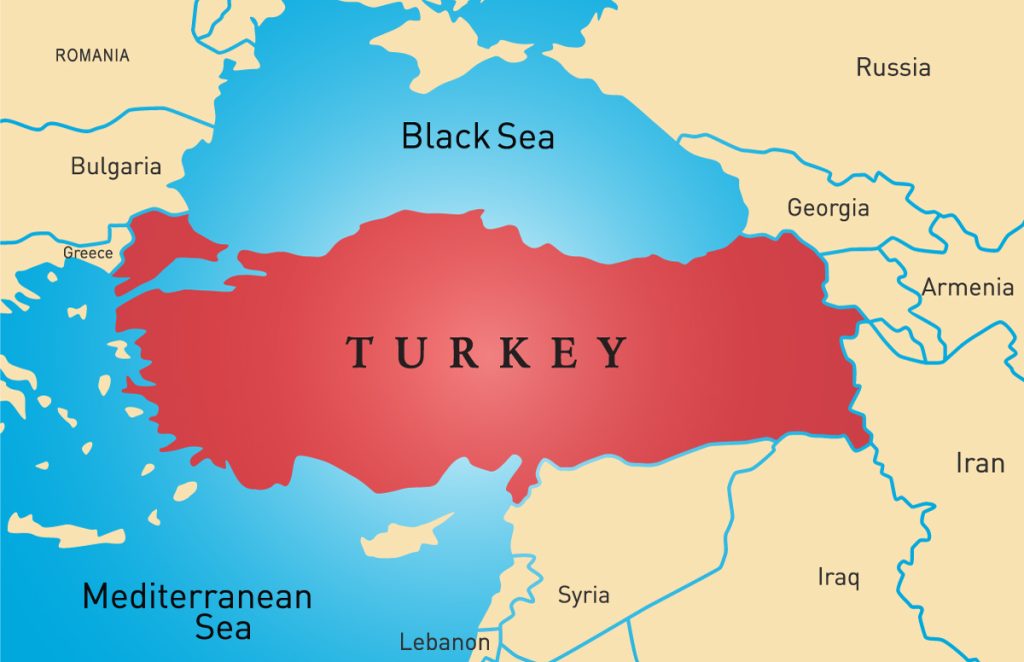
Regarding Turkey and its position, you need to understand that there are fundamental things in Turkey you cannot change. The fundamental points are that it is a country that, first, controls the Bosporus, and second, is a NATO member — a key factor for Turkey’s security. Turkey has a strong interest in preventing the Black Sea from becoming a Russian sea. Therefore, it has always supported Ukraine’s NATO membership and will continue to support it to the last drop of blood. They would be happy if Georgia joined NATO as well, because unfortunately none of our countries have a full-fledged navy, although I understand we are working on it. Nevertheless, the fact that this is a positive factor for Turkey’s northern border security is undeniable. Turks remember seventeen lost wars, but they also understand that Crimea must be part of Ukraine, that it must remain the land of the Crimean Tatars, whom they call Crimean Turks in Turkey. This cannot be changed.
Therefore, Erdogan has always maintained a position: we may quarrel, but we do not sever relations with the EU. There’s a customs union, a huge market, and investments. Turkey develops relations with everyone it can reach, including Japan — they have special relations, Toyota invests there, cars are produced, etc. The largest Japanese companies all invest in Turkey’s major construction companies, participating in projects in Ukraine, Russia, and other countries. This is a fact.
But Turkey has always pursued flexible policies. Remember the story when a plane flew into Turkish airspace and they shot it down? We all celebrated. But afterwards, Turkey apologized because Russia imposed harsh sanctions, and they eventually reconciled. But deep down, at the DNA level, they hate Russia, hate Russians, and deeply despise them, especially when they see them in Antalya. There isn’t a hotel in Turkey whose manager hasn’t told me that they pray for reasonable, calm, family-friendly Ukrainian tourists who don’t steal toilet paper. And what they told me about Russians — you can imagine. Theft, alcohol, falling from the fifth floor, bringing soup to the room at midnight after a sauna with alcohol — the same story in every hotel. They understand perfectly. But geopolitically, they cannot afford to openly antagonize Russia. They believe in acting indirectly.
The situation around the Azerbaijan-Armenia conflict was one of these tests, as was the test in Syria before that, when they participated alongside Iran and Russia without forming any alliances or joint units. Turkey has always tried to navigate carefully. This is their strength. Erdogan may be viewed differently, but he is a natural politician capable of such navigation. Right now, if it weren’t for the current escalation, the Karabakh problem would be solved, and relations with Armenia normalized. This is very important for Turkey, and Russia dislikes it because for as long as the empire has existed, it has viewed the Caucasus as a crucial region. They prevented the resolution of the Karabakh problem, invaded Georgia, and leveled Chechnya. All of this is not simple. The fact that Armenia and Azerbaijan are now somewhat separated and able to pursue tougher policies is a fact. Naturally, the Russians don’t like it. If Georgia finally replaced its pro-Russian government, that would be great too. But let’s wait. Recall the Transcaucasian republic in 1922: RSFSR, Ukraine, Belarus, and the Transcaucasian republic formed the USSR. That delusional idea still lives in Putin’s mind; he can only think of one thing — restoring the empire whose collapse was a terrible tragedy. Therefore, Turkey is the strongest player in the Caucasus, and globally.
There is also the organization of Turkic states, headquartered in Ankara. Look at the list: Uzbekistan, Kyrgyzstan, Kazakhstan, Turkmenistan. This all relates to the Silk Road, energy resources, Baku-Tbilisi-Ceyhan, the Blue Stream, and the Turkish Stream. Turkey has actively pursued this direction, while also building the Akkuyu nuclear plant with the Russians. This is a very multifaceted policy.