

The Czech Republic does not plan to return to the use of Russian energy resources, regardless of how the situation in the Middle East develops.
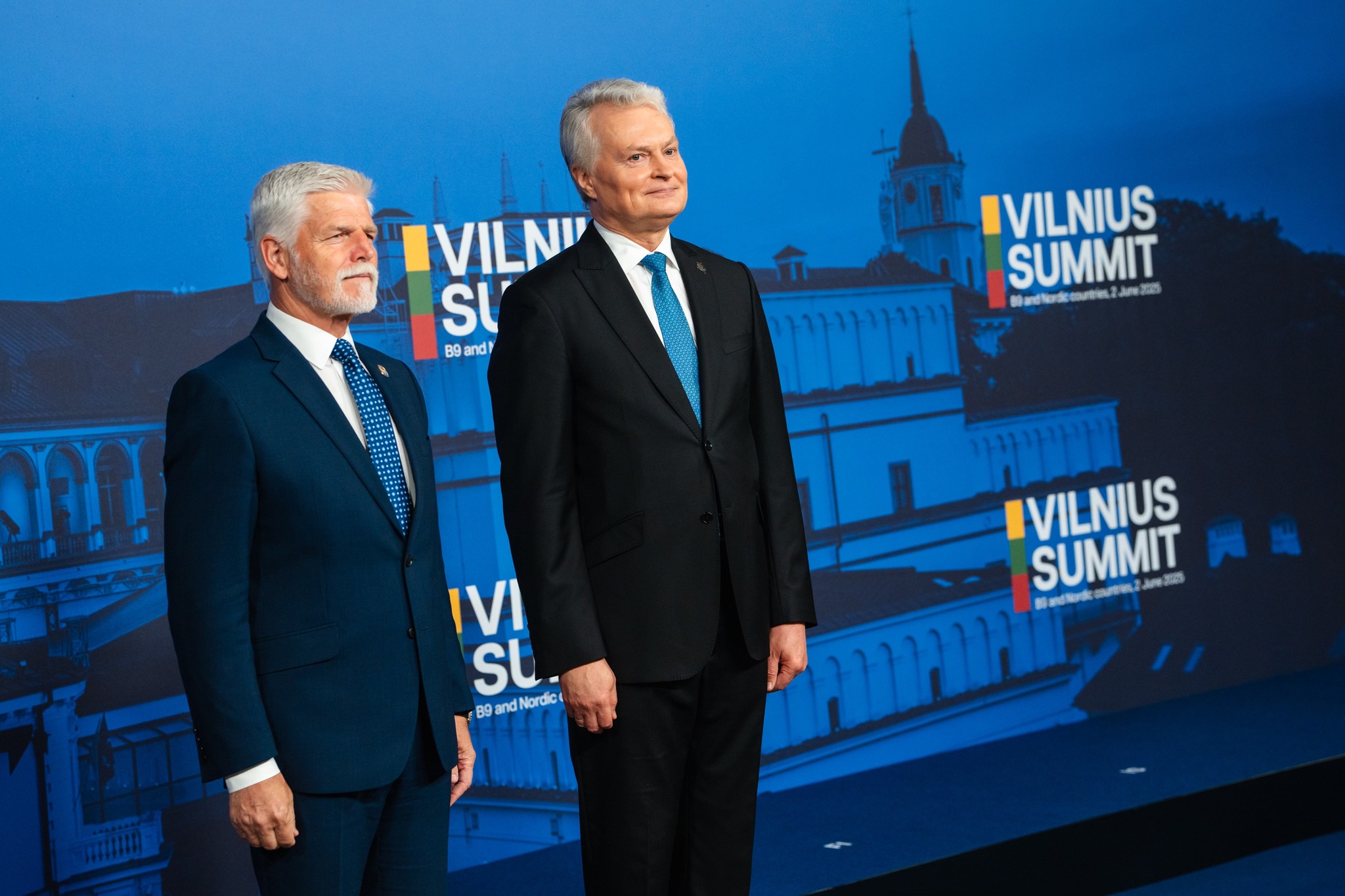
This was stated by the President of the Czech Republic, Petr Pavel, in Vilnius during a joint press conference with the President of Lithuania, Gitanas Nausėda.
“We are not considering a return to Russian energy resources, regardless of how the situation in the Middle East develops. We have abandoned Russian resources — and that is a fact. Technically, it is already impossible to reverse everything. We now rely on resources that come to us from the south and west, and this is sufficient to cover all our energy needs,” the head of state assured.
Pavel discussed possible cooperation in the energy sector with his Lithuanian counterpart, particularly regarding the highly promising technology of modular nuclear reactors.
Other projects, including in the fields of defense and security — such as drones, counter-drone defense, and the use of surveillance systems to protect the region’s airspace — are being discussed during the visit not only by politicians but also by more than 100 representatives of nearly 60 companies accompanying the official delegation. Pavel announced that a business forum would be held during the visit and that memorandums of cooperation would be signed, “especially in the fields of security, defense, and biotechnology.” The former military officer also said that the Czech Republic is open to cooperation in the modernization of Lithuania’s armed forces, where Czech companies have much to offer.
Pavel emphasized that the Czech Republic and Lithuania share common values, including support for Ukraine. He thanked Lithuania for being such a generous supporter and partner, particularly in the context of the “shell initiative,” which covers about 45% of Ukraine’s current demand for ammunition of the relevant calibers.
The Czech president particularly praised Lithuania, where people do not need to be convinced about where the threat originates, for its very responsible approach to collective defense.
“Here we see almost one hundred percent support for increasing defense spending, supporting Ukraine, and fulfilling joint commitments within the framework of collective defense. This approach should serve as a source of inspiration for us,” Pavel said.
He stressed that he personally views defense spending as a sign of responsibility and reliability, because if any country wants to rely on a collective defense system, it must first contribute to that collective defense itself in accordance with established rules.
“When someone fails to fulfill their obligations and the level of funding is lower, it certainly jeopardizes the successful defense of the entire alliance. Therefore, from this perspective, I must be critical of the approved size of the defense budget in the Czech Republic… So far, this government has not taken on the commitment adopted by the previous government,” Pavel said.
He plans to discuss the issue with Prime Minister Andrej Babiš next week. Pavel acknowledged that this will likely have no impact on the size of the defense budget, but expressed confidence that the need to increase it is understood in the Czech Republic and that defense spending will begin to rise as early as next year.