

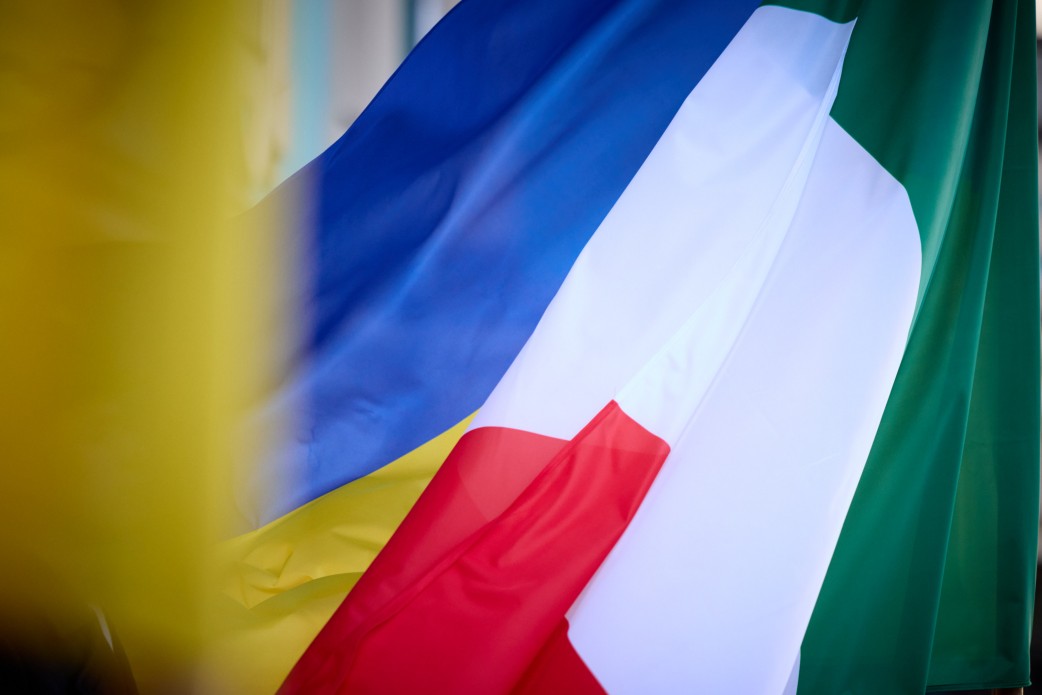

Italy has funded the enhancement of cybersecurity resilience in the Ternopil region with approximately €900,000, the Italian Ministry of Foreign Affairs reported.
The ministry emphasized that these projects will be implemented under the Tallinn Mechanism, an international initiative supporting Ukraine in countering cyber threats. An additional €100,000 from Italy will support the Tallinn Mechanism Project Office operating in Kyiv, bringing the total Italian support for Ukraine’s cyber sector to €1 million.
"Regarding the security of Europe and Ukraine, cybersecurity cannot be ignored, as it is key to maintaining societal stability and resilience. That is why Italy is firmly committed to supporting Ukraine through the Tallinn Mechanism, strengthening its cyber capabilities. This assistance not only addresses immediate challenges but also lays the foundation for Ukraine’s full recovery and long-term resilience after the current conflict," said Italy’s Deputy Prime Minister and Minister of Foreign Affairs and International Cooperation, Antonio Tajani.
Through cooperation with Italy, two major cyber projects will be implemented in Ternopil. The first involves updating network and server equipment. The second focuses on building a secure network with automated security tools and includes training personnel to use new systems, including advanced automated threat detection and response (EDR) solutions.
"These projects are an important step toward strengthening Ternopil’s cyber resilience. They will modernize the digital infrastructure of government bodies, increase the protection of public services, and ensure their uninterrupted operation amid rising cyber threats. Such international support at the regional level directly enhances Ukraine’s national cybersecurity," noted Pavlo Zhurba, Deputy Head of the Ternopil Regional State Administration.
Part of Italy’s contribution will be directed by the Tallinn Mechanism Project Office to initiatives that strengthen Ukraine’s cyber ecosystem at both national and international levels. The Tallinn Mechanism will also serve as a Global Resilience Partner for the Kyiv International Cyber Resilience Forum.
Additionally, Italy will support the annual review of Ukraine’s national cybersecurity system under the Tallinn Mechanism. Conducted by the National Cybersecurity Coordination Center under the NSDC of Ukraine, this review provides a comprehensive assessment of the country’s cyber defenses, identifies key risks, and includes recommendations for mitigation.
In 2026, Italy plans to further deepen cooperation with Ukraine in the digital sphere, including initiatives to strengthen the cybersecurity of central government bodies, including the Ministry of Economy of Ukraine.
Italy joined the Tallinn Mechanism in 2024. During the Ukraine Recovery Conference held in Rome in July 2025, Ukraine’s Foreign Minister Andrii Sybiha and Italy’s Foreign Minister Antonio Tajani signed a declaration of intent to develop long-term initiatives to enhance Ukraine’s cyber capabilities and digital infrastructure.
The Tallinn Mechanism, established in 2023, has already implemented dozens of initiatives to strengthen Ukraine’s cyber resilience. Countries participating include the United Kingdom, Denmark, Estonia, Italy, Canada, the Netherlands, Germany, Norway, Poland, the United States, France, Sweden, and Finland. The European Union, NATO, and the World Bank participate as official observers.
The Tallinn Mechanism Project Office (TMPO) coordinates implementation activities and promotes cooperation between Ukrainian institutions and international partners. Its creation was initiated by Ukraine’s Ministry of Digital Transformation and it works closely with the State Service of Special Communications, Ministry of Foreign Affairs, SBU, and the National Cybersecurity Coordination Center.