


Russia has scaled up the use of Starlink satellite communications on reconnaissance and strike drones, circumventing sanctions through third countries, including states in Central Asia, according to an investigation based on OSINT analysis and materials from Western and Ukrainian sources, InformNapalm reports.
As early as 2024, Russia began experimentally installing Starlink terminals on its reconnaissance and strike UAVs to bypass Ukrainian electronic warfare systems. By late 2025–early 2026, this evolved into a systemic practice that directly affects the effectiveness of Russian strikes on civilian infrastructure. Starlink satellite connectivity provides drones with stable control under active electronic warfare conditions, real-time data transmission, and increased range and strike accuracy. In effect, this technology has become a force multiplier for Russian drone units.
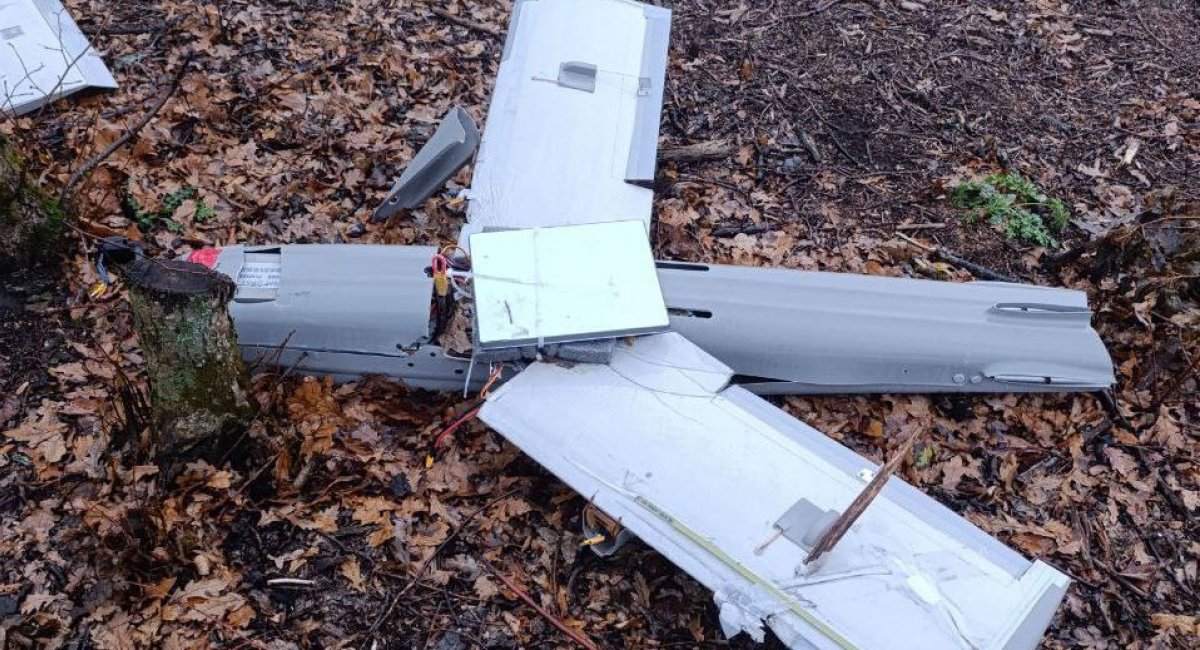
Documented cases confirm the use of Starlink on various types of Russian UAVs. Terminals have been recorded on long-range Shahed kamikaze drones (known in Russia as “Geran”) with ranges of up to 2,000 km; on tactical FPV drones of the Molniya series, including the Molniya-2 and Molniya-2R variants, actively used since December 2025 by the Rubikon unit; and on the long-range BM-35 drone, recorded with Starlink in January 2026 during strikes on Dnipro and Odessa. The use of these systems has been confirmed by investigations by Western and Ukrainian media, including Der Spiegel citing Ukraine’s Main Intelligence Directorate, as well as analyses by Defense Express, the Institute for the Study of War, and electronic warfare expert Serhii Beskrestnov.
Despite sanctions and public statements by SpaceX denying deliveries to Russia, Starlink terminals continue to enter the country via parallel import schemes using third states. An OSINT investigation by Nordsint showed that these schemes involve Middle Eastern, Central Asian, and Asian countries as transit hubs; activation of terminals through accounts registered outside Russia; and the legalization of equipment through fictitious or falsified customs declarations.
The author of the Nordsint investigation provided the international intelligence community InformNapalm with a copy of an air waybill obtained in response to a request from Emaross Group FZE. The document confirms the shipment of a batch of equipment from Dubai World Central in the United Arab Emirates to Bishkek, Kyrgyzstan, in May 2024—a route that has repeatedly appeared in re-export schemes to Russia.
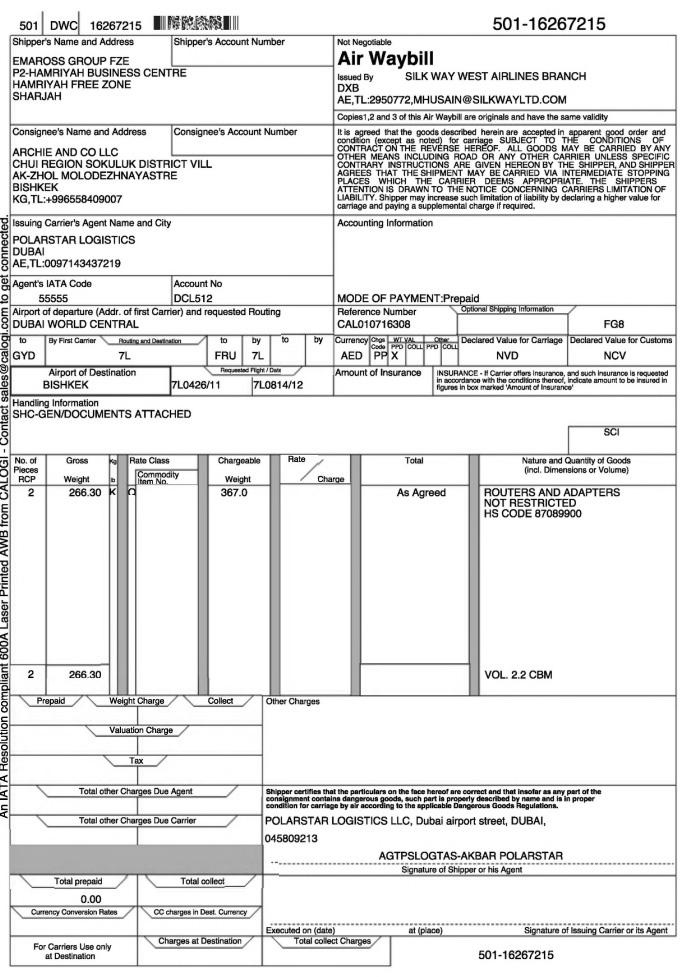
A characteristic feature of such deliveries is manipulation of customs classification. In the air waybill, Starlink equipment was declared as “routers and adapters” under HS code 87089900, which corresponds to automotive parts rather than telecommunications equipment. This practice is used to reduce scrutiny by customs and regulatory authorities when transporting sensitive technologies.
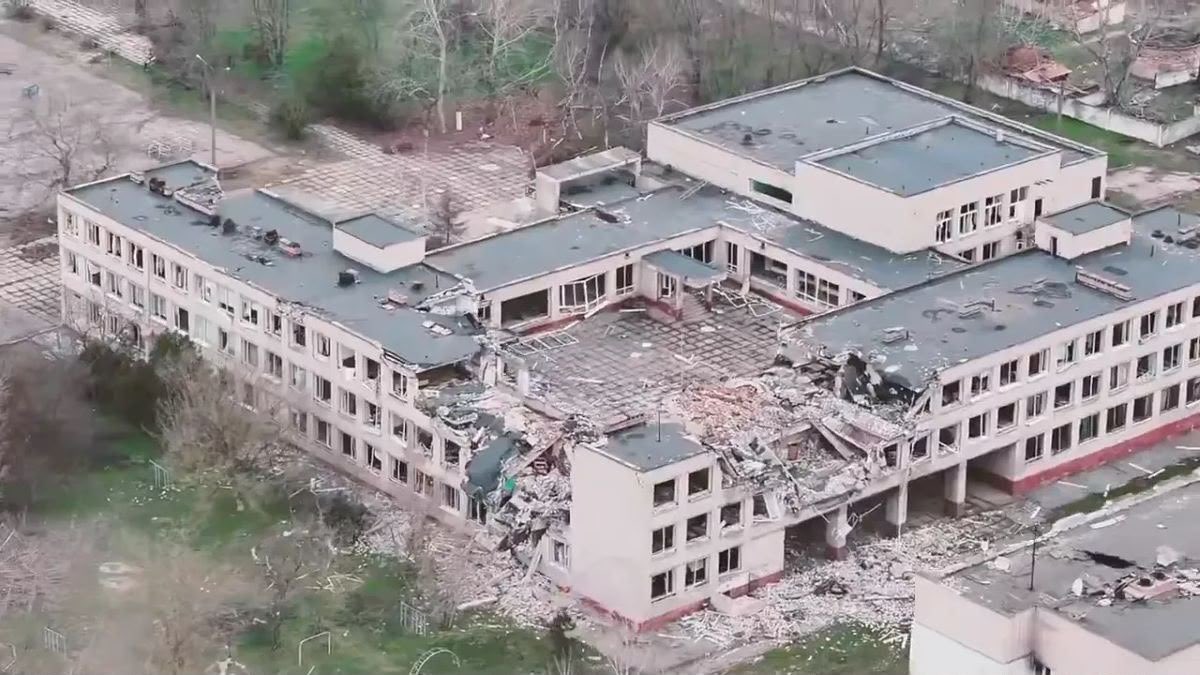
Taken together, these data point not to isolated violations but to the systematic accumulation of Starlink terminal shipments that subsequently reach Russia and are used for military purposes. The investigation notes that the scale of the problem goes beyond the formal sanctions regime and has direct military and humanitarian consequences for Ukraine, as Russian drone strikes are primarily directed at civilian infrastructure.
After the publication of the investigation, a terrorist attack by Russian strike drones on the civilian passenger train Barvinkove–Chop became known. The train was carrying 291 passengers when, near the settlement of Yazykove—about 77 km from the front line—three Shahed drones attacked it: one struck the tracks in front of the locomotive, while two others hit a passenger carriage. Radio engineering expert and adviser to Ukraine’s Minister of Defense Serhii Beskrestnov reported that the drones that attacked the train were equipped with Starlink satellite communication systems.
Polish Foreign Minister Radosław Sikorski publicly called on Elon Musk to restrict the use of Starlink by the Russian army. In response, the head of SpaceX refused to take any action. At the same time, it has previously been reported that the company technically has the capability to selectively disable terminals. In September 2023, media reported that in 2022 Elon Musk ordered Starlink to be disabled in the area of temporarily occupied Crimea, which disrupted a Ukrainian operation against Black Sea Fleet vessels.