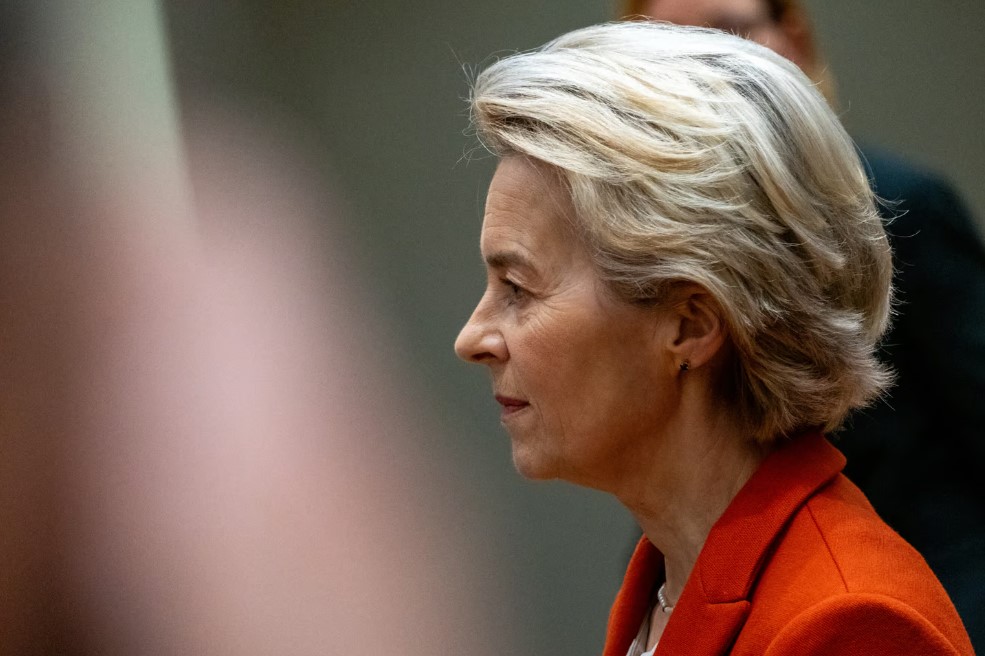




The new Hungarian government led by Péter Magyar reportedly intends to shut down the so-called “logistics hub” of Russian intelligence in Budapest and will soon receive a classified list of Russian undercover agents for their subsequent expulsion.
According to investigative journalist Szabolcs Panyi, local counterintelligence has prepared an updated document containing the names of more than a dozen identified officers of Russia’s Foreign Intelligence Service (SVR) and the Main Directorate of the General Staff (GRU), who are still operating in the Hungarian capital under diplomatic cover.
This decisive move by the new administration is aimed at closing a long-standing counterintelligence gap in the European Union and NATO security system, eliminating a convenient operational base that Russian intelligence services have reportedly used for subversive operations across the Schengen area, according to Dailynewshungary.
According to sources in security services, Hungarian counterintelligence agencies had already attempted similar measures and submitted a comparable list to the government of Viktor Orbán shortly after Russia’s full-scale invasion of Ukraine in February 2022. However, at that time, proposals for mass expulsions of Russian diplomats were rejected by the country’s leadership, leaving Hungary as one of the few EU and NATO member states that did not participate in coordinated expulsions of Russian agents across Europe.
Instead, under the previous government, counterintelligence operations relied on so-called “quiet expulsions,” where suspected Russian spies were discreetly sent back to Moscow without public statements, in order to avoid provoking the Kremlin. Because of this policy, SVR and GRU residencies based in the Russian embassy on Bajza Street in Budapest remained largely intact and retained significant operational capacity.
With the arrival of the new administration of Péter Magyar, the situation has reportedly begun to shift toward a tougher stance on Russian influence. The previous pragmatic approach based on energy and diplomatic ties is being replaced by a policy of open confrontation with intelligence networks.
As evidence of this shift, it is noted that in its first days, the new Hungarian government formally summoned the Russian ambassador to explain a Russian drone strike in Transcarpathia. It is now preparing to strike directly at the GRU and SVR logistical hub, ending the practice of discreet diplomatic cleanups.
As part of his investigation, Szabolcs Panyi also revealed details of two previously unpublicized “quiet expulsions.” The first involved Arthur Sushkov, identified as a career SVR officer, who was dismissed and quietly expelled on May 4, 2026. He was allegedly involved in intelligence operations targeting institutions such as the Mathias Corvinus Collegium, the Hungarian Institute of Foreign Affairs, and the National University of Public Service.
The second expelled agent was Andrei Tarakanov, a GRU officer operating under diplomatic cover as a third secretary at the embassy, who was secretly sent back to Moscow on June 20, 2024. He reportedly focused on coordinating Russian influence operations across EU member states rather than domestic Hungarian affairs.
As of now, Hungarian authorities have not issued a formal statement regarding the reported transfer of the secret list to the press or the exact timeline for further expulsions, but counterintelligence pressure on the alleged espionage hub in Budapest is reportedly increasing rapidly.