

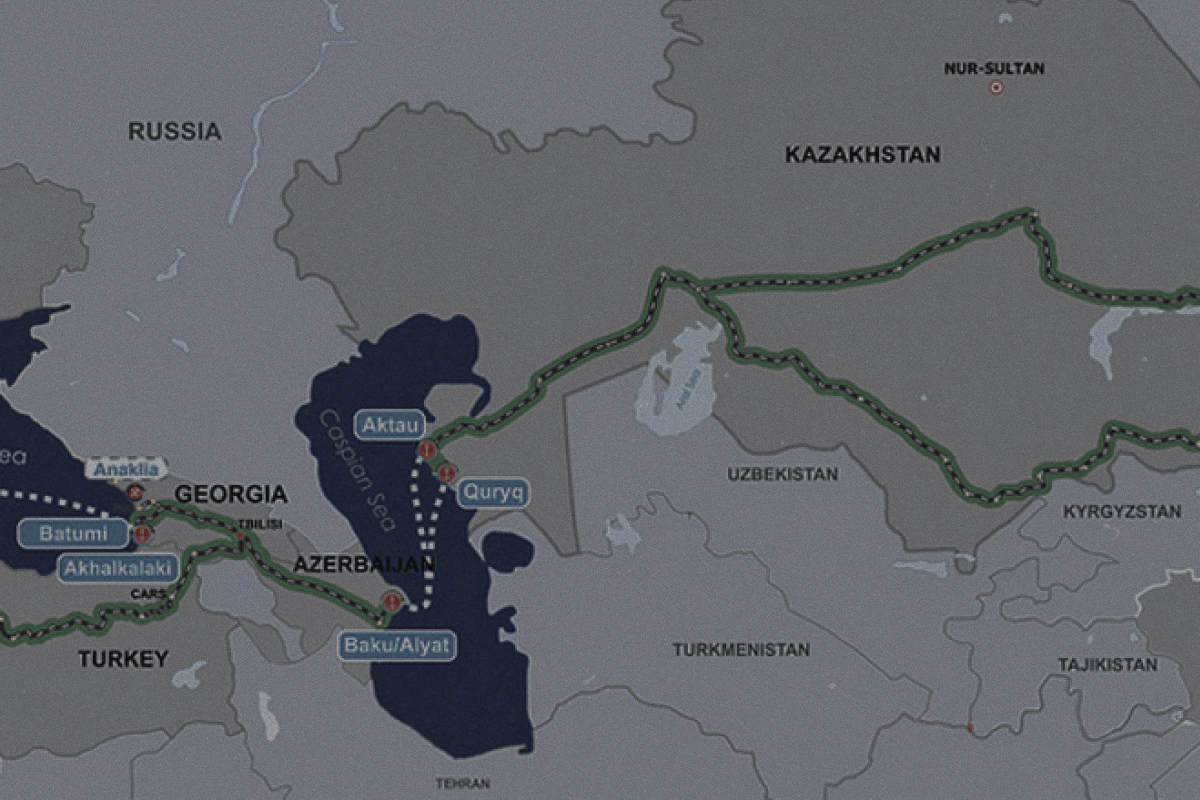

Russia has definitively lost its role as the sole external arbiter in the South Caucasus. In the first ten days of August, US Secretary of State Marco Rubio officially announced the launch of the Trans-Caspian Enterprise Fund. Through private American investment, the fund is intended to become the financial engine for major infrastructure projects surrounding the Trans-Caspian Trade Route, known as the “Middle Corridor.”
It took Yerevan, Baku and Washington exactly one year to implement their earlier diplomatic agreements. At the same time, the parties have fundamentally changed the role of the United States in the region: Washington is moving from being a mediator in peace negotiations to becoming a co-founder of a new economic environment. The mechanism behind this process is based on the development of the Middle Corridor — an alternative to Russian transport routes that connects the markets of China and Central Asia with Europe while bypassing traditional Russian routes.
The unique feature of this global project is that each of its participants, despite pursuing different geopolitical objectives, stands to gain significant economic and political benefits.
The United States is strengthening its role in the region, helping reinforce the independence of the countries of Central Asia and the South Caucasus, preventing China from establishing full control over Eurasian logistics and, ultimately, generating returns on its own investments.
Along with revenues from new infrastructure, Armenia gains new transport links and an opportunity to diversify its foreign policy, reduce its dependence on individual external partners, and better protect the country from various shocks and crises.
Azerbaijan stands to gain significant dividends from consolidating its status as an external hub, giving the country an opportunity to shape its own rules of engagement in foreign markets.
Ultimately, the citizens of the South Caucasus countries gain an opportunity to break free from Russia’s monopoly on influence in the region. The fear of various forms of isolation and blockades should finally disappear. This model of “multipolarity” neutralizes Russia’s traditional instruments of pressure, which for decades have been based on control over transport and trade links.
At the same time, international businesses gain reliable and uninterrupted channels for the supply of goods and services, increasing the resilience of the entire Eurasian trade and economic system.