

Due to systematic Russian attacks on port and logistics infrastructure, Ukraine is working to maximize the use of alternative export routes, including routes through EU countries. These include rail and road border crossings, as well as the use of port infrastructure in European countries. At the same time, disruptions to maritime logistics are creating additional risks for crop storage and farmers’ access to working capital.
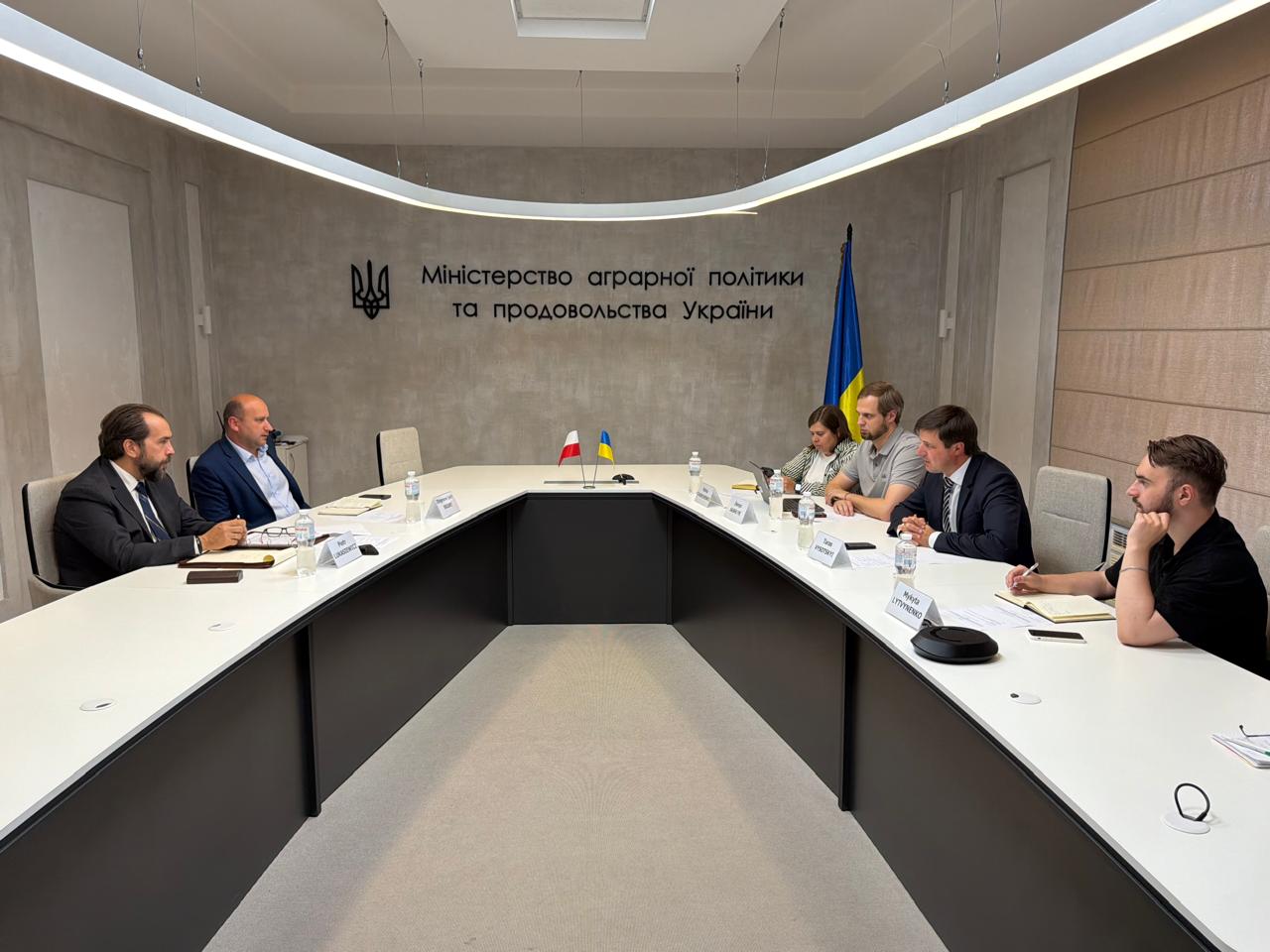
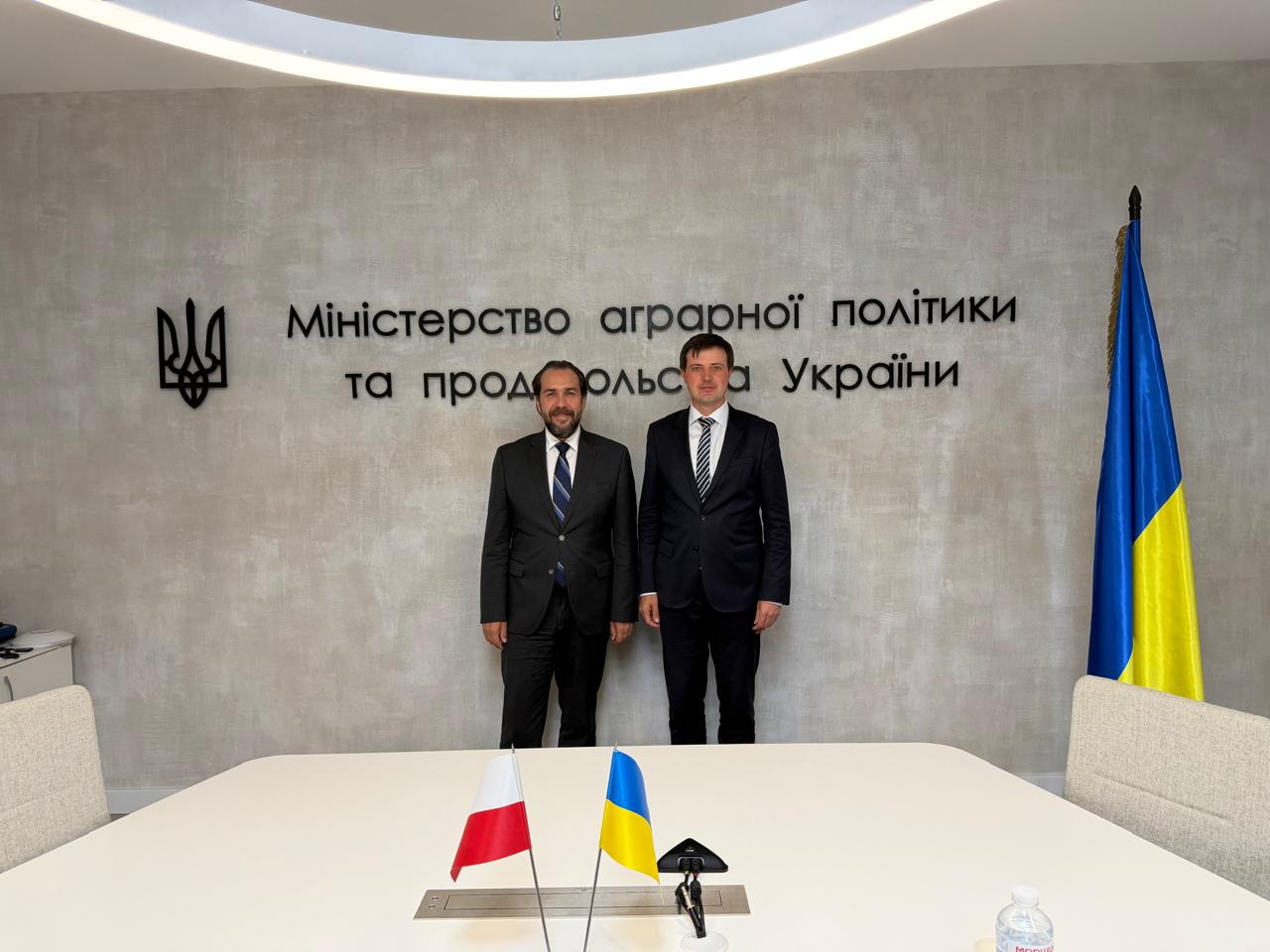
Ukraine’s Minister of Agrarian Policy and Food, Taras Vysotsky, emphasized this during a meeting with representatives of the Embassy of the Republic of Poland in Ukraine.
The meeting was also attended by Deputy Minister Denys Bashlyk. The Polish side was represented by Chargé d’Affaires of the Republic of Poland in Ukraine Piotr Łukasiewicz and Embassy adviser Zbigniew Ekiert.
The parties discussed the consequences of Russian attacks on the Odessa region ports and agricultural infrastructure, opportunities to expand alternative routes for Ukrainian agricultural exports, as well as further Ukrainian-Polish cooperation on agricultural recovery, investment and joint projects.
“Our main goal is to make maximum use of available logistics capacity for the transit of Ukrainian agricultural products. Transit will benefit everyone, especially under the current conditions, when Russian attacks have made maritime logistics significantly more difficult and expensive. It is important to jointly identify where transit capacity can be increased, involving Ukrzaliznytsia, customs, border guards, veterinary and phytosanitary services,” Vysotsky said.
According to Denys Bashlyk, the main objective now is to do everything possible to restore the operation of the humanitarian maritime corridor and help Ukrainian farmers withstand the current difficulties. One of the key priorities is therefore to establish alternative export routes, including through the EU Solidarity Lanes and ports in other countries.
One option could be the Polish ports of Gdańsk, Szczecin, Świnoujście and Gdynia. At the same time, the cost of such routes and their economic viability for Ukrainian exports need to be assessed.
“The immediate priority is to preserve the ability to export to third countries. If Ukrainian farmers cannot sell their products, they will not have the funds for the next sowing season. That is why we are simultaneously working on alternative logistics, crop storage and ensuring farmers have access to financing,” Bashlyk said.
The parties also discussed providing Ukrainian farmers with sufficient crop storage capacity. According to estimates by the Ministry of Agrarian Policy and Food, the storage capacity deficit could reach between 7.5–8 million tonnes and 11 million tonnes by November.
Another topic of discussion was providing farmers with working capital. Due to export disruptions, Ukrainian producers could face a shortage of financing for autumn fieldwork and the spring sowing campaign. The Ukrainian government is expanding lending programs for farmers and working with international partners on possible interest-rate compensation for such loans.