

Recent European intelligence reports indicate a noticeable strengthening of personal security around Vladimir Putin and growing friction within Russian security services. Taken together, these signals suggest that the regime is increasingly concerned about internal threats and is adjusting its security policy accordingly. This trend reflects a shift from external risk to internal consolidation, where the primary concern is no longer an outside attack but elite defection, intra-agency rivalry, and the prevention of coups, according to the Robert Lansing Institute .
According to reports, the Federal Protective Service has significantly upgraded its protection protocols since early 2026. The practical effect has been a sharp reduction in the president’s mobility and a transition to tightly controlled conditions: a narrower circle of locations deemed safe for his presence, reduced use of traditional residences, increased reliance on secured facilities, and broader use of pre-recorded or strictly managed public appearances. This evolution is typical of late-stage personalist regimes facing external pressure. Limiting contact reduces vulnerability not only to kinetic threats, including drones, but also to internal risks. The shift toward bunker-style governance indicates that continuity of command is being prioritized over political signaling and public visibility.
A second layer of changes reflects deepening mistrust within the system: multi-level screening of all visitors, restrictions on digital communication among staff, expanded surveillance of personnel in close proximity to the president, and broader authority for security personnel in Moscow. These measures suggest the Kremlin is moving from standard protection to pervasive counterintelligence control, treating even routine interactions as potential sources of compromise. Elevating the security service to a more influential role points to a redistribution of power within the security apparatus.
A key intelligence conclusion is that Putin is more concerned about internal conspiracy than external attacks. This aligns with weakening elite cohesion amid a prolonged war, rising costs, and precedents of successful attacks on high-ranking officers, which undermine confidence in internal security. References to assassination scenarios involving drones are notable, as they imply the possibility of combining external methods with internal assistance.
Reports of tensions between Valery Gerasimov, Alexander Bortnikov, and Viktor Zolotov indicate that institutional rivalry has reached a visible level. Russian governance has long relied on overlapping authority and competition among security agencies to prevent any single actor from dominating. However, under wartime conditions, this system may shift from controlled competition to destabilizing conflict—especially as blame for failures becomes politicized, resources tighten, and personal loyalties diverge. The decision to assign additional protective duties to the Federal Protective Service underscores the Kremlin’s concern about threats within the elite and the need to restore trust between agencies.
Current signals correspond to risk scenarios including a palace coup, fragmentation of the security apparatus, and defensive consolidation along a “fortress” model, analysts note. While available reports do not confirm an imminent coup, they point to a system under pressure, where trust is narrowing and leadership prioritizes survival over openness. The probability of a serious coup attempt or forced leadership change within the next 12–18 months is estimated at 20–30%, with the likelihood of a successful coup at 10–15%. A more probable scenario is not an uprising but an elite-driven transition of power under the pretext of medical reasons or following a security incident.
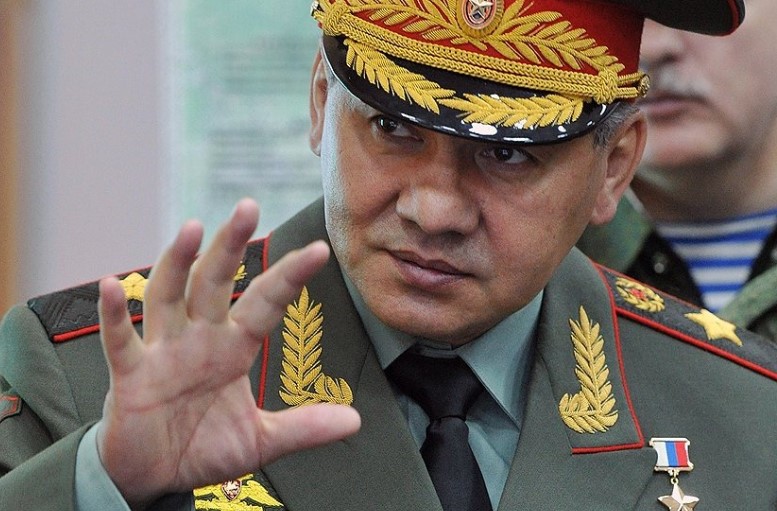
The most likely actors in potential change are identified as security structures (FSB, FSO, Rosgvardiya), the influence network of Sergei Shoigu, the General Staff under Gerasimov, and the technocratic-economic elite, whose motivation is economic survival under sanctions. Russia is entering a phase of coup anxiety, where the system remains institutionally strong but elite trust is eroding. This fragility is a logical consequence of excessive personalization of power combined with wartime pressure, undermining the very mechanisms that previously ensured the system’s stability.