

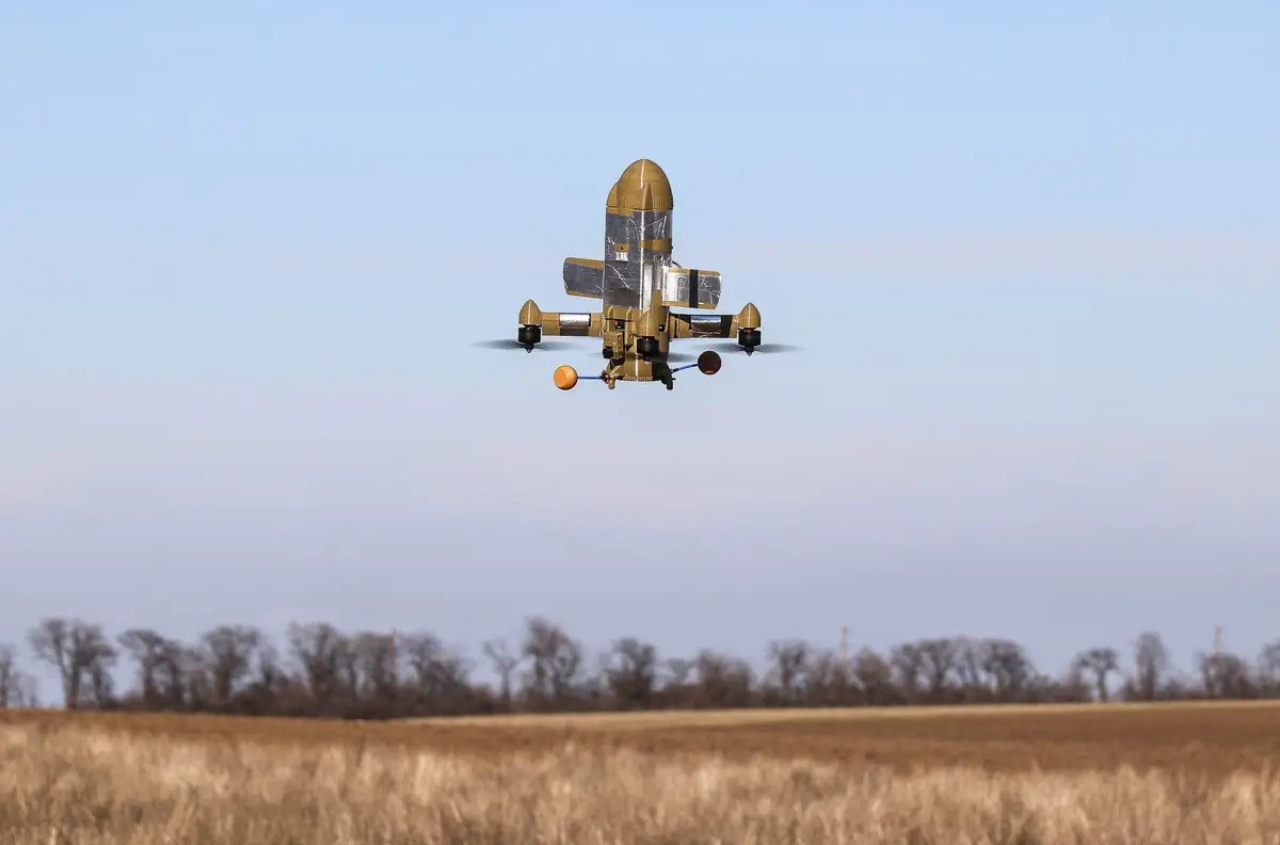

In March 2026, Ukrainian interceptor drones destroyed more than 33,000 Russian unmanned aerial vehicles of various types, which is twice as many as in the previous month.
This was reported by Minister of Defense Mykhailo Fedorov.
“I met with manufacturers of interceptor drones to get feedback from the market and determine the next steps to protect the sky. Interceptor drones are a Ukrainian innovation that has already become a key part of our air defense. In March alone, interceptors shot down more than 33,000 enemy UAVs of various types, including Shaheds, Gerberas, Molniyas, Zala, Orlans, and others. This is twice as many as in the previous month,” Fedorov noted.
According to him, the key challenge is jet-powered Shahed drones. Russia is scaling up their use, their speed is increasing, and interception is becoming more difficult.
“Our task is to find a technological solution. Together with manufacturers, we analyzed products and their readiness, identified bottlenecks, and synchronized actions for rapid scaling,” the minister emphasized.
At the same time, he informed that Brave1 recently supported 12 technologies within the EU4UA Defence Tech grant program, jointly implemented with the EU. Companies will receive up to €150,000 for the development of high-speed interceptors (450+ km/h) and modern systems for countering aerial targets.
“Separately, on the President’s instructions, we discussed systemic issues: contracting for 2026, pilot training, testing ranges, the shortage of ground stations, exports, and updating performance evaluation criteria in the Army of Drones. Bonus program. We are preparing solutions for each issue,” Fedorov added.
The minister also reminded that, to create and develop the interceptor drone market, the Ministry of Defense team has taken a number of systemic steps. In particular, they launched a unique model of rewarding companies for intercepting Shahed drones. It was within this experiment that a Shahed was first shot down by an interceptor drone.
Since 2024, Brave1 has issued more than 40 grants to manufacturers, and today the cluster includes about 100 interceptor drone producers.
They also launched Brave1 Dataroom—a platform for training and validating artificial intelligence models. Currently, more than 30 companies are testing, validating, and training over 50 AI models for detecting and intercepting aerial targets at different times of day and in various weather conditions.
“During the meeting, I set two key tasks for manufacturers: to develop and scale technologies for jet-powered interceptor drones to counter jet-powered Shaheds, and to develop alternative guidance systems for operation in difficult weather conditions,” he said.
Fedorov emphasized that the state, under conditions of a transparent market, is ready to quickly purchase new technologies from manufacturers that effectively fulfill these tasks and protect Ukrainian skies.