

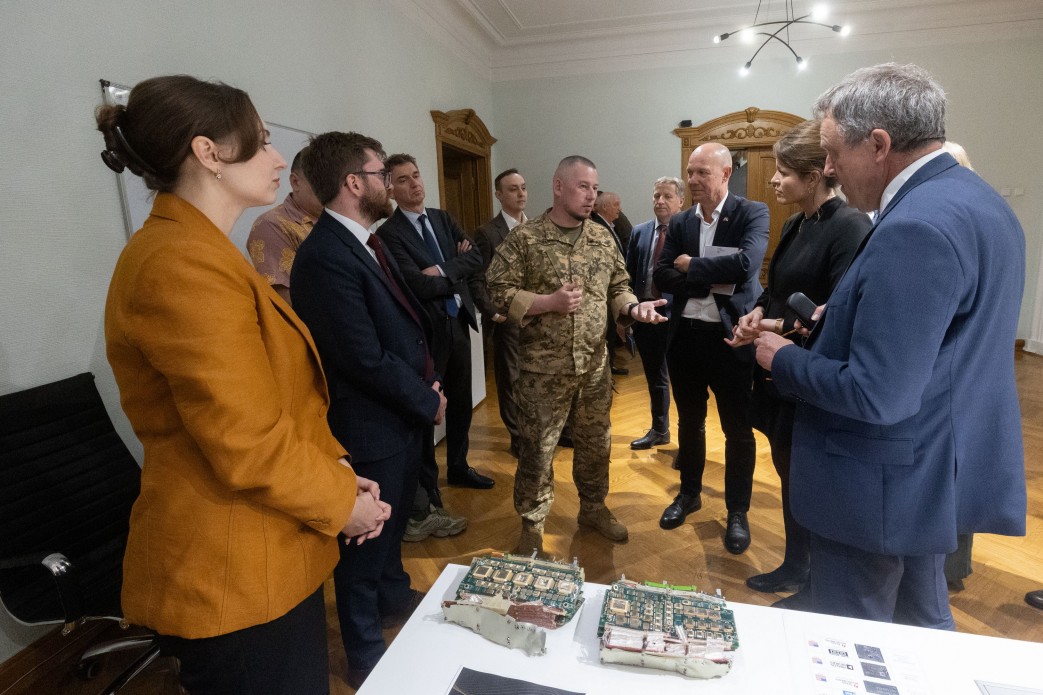
Deputy Head of the Office of the President of Ukraine Pavlo Palisa, Advisor – Commissioner of the President of Ukraine for Sanctions Policy Vladyslav Vlasiuk, and representatives of the Security Service of Ukraine and the Office of the Prosecutor General held a meeting with ambassadors of European countries on strengthening sanctions pressure on Russia.
Representatives of European states were shown parts from Russian Zircon, Kalibr, and Kh-101 missiles, as well as Geran-2 drones, with which Russia attacked Ukraine on the night of May 24. They contained foreign-made components – specifically from Switzerland, Germany, the United States, the United Kingdom, Japan, China, and other countries – manufactured, in particular, this year. Separate circuit boards from an Oreshnik missile were also shown; they contained exclusively Russian and Belarusian components manufactured between 2004 and 2014.
“We need to focus and actually stop the supply of parts going to Russia. This will deal a significant blow to Russia’s military production capabilities,” Vladyslav Vlasiuk said.
According to the Advisor – Commissioner of the President of Ukraine for Sanctions Policy, it is also important to tighten control over Belarus’ access to foreign electronics. Some of the components found in Russian missiles were manufactured at the Integral plant in Minsk, including microchips and circuit boards for cruise missiles and the Oreshnik.
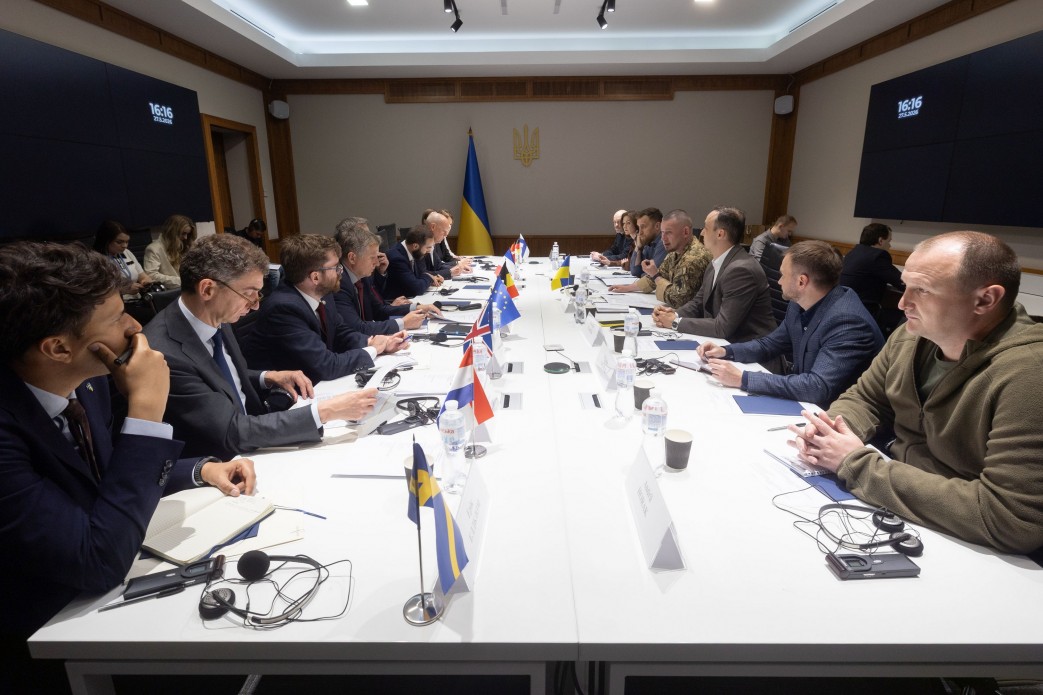
Deputy Head of the Office of the President Pavlo Palisa called on representatives of European states to step up work on existing sanctions restrictions and accelerate work on new sanctions packages.
“You know that Russia is saying they are ready to launch more missiles to strike targets in Ukraine, especially in Kyiv. Everyone has seen the results. This is not about any so-called ‘decision-making centers,’ as they claim; this is about civilians, about civilian casualties. They are not capable of carrying out such strikes on their own, without assistance or an industrial base from other countries,” he emphasized.
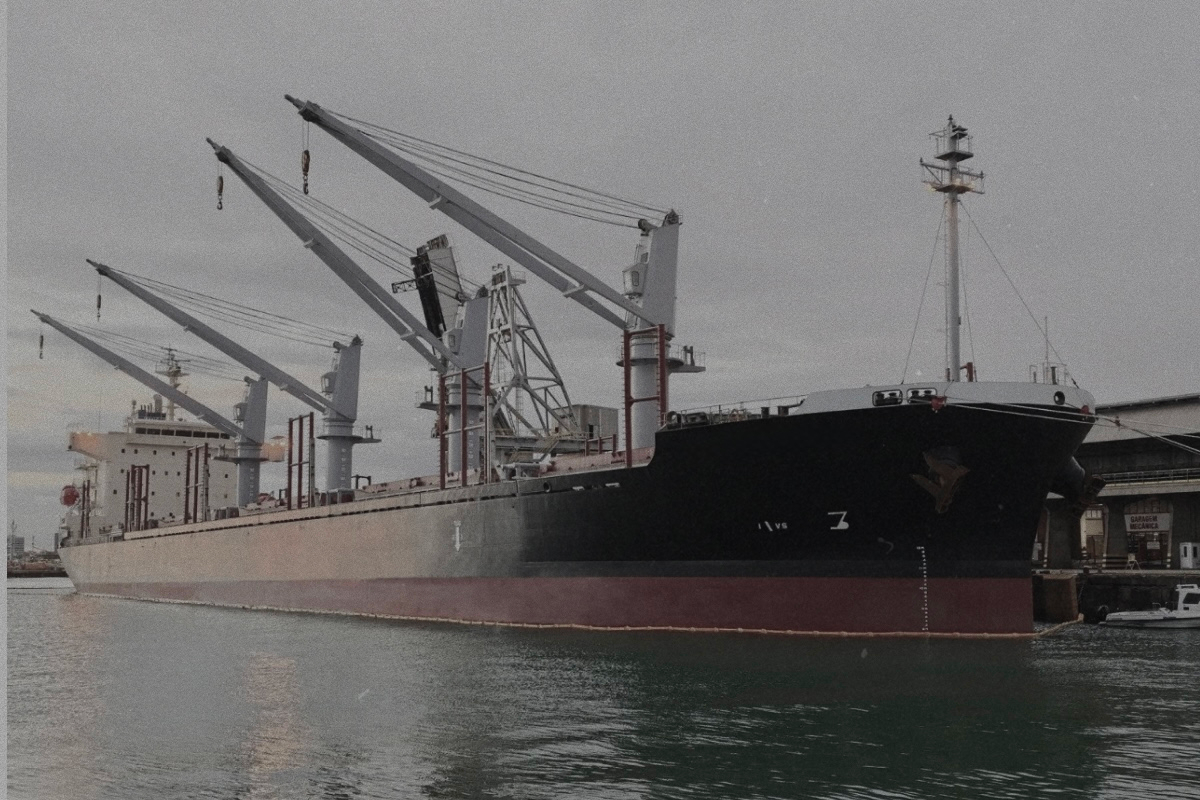
The Ukrainian side called on European partners to strengthen coordination in countering the shadow fleet. In particular, it called for stopping and seizing vessels based on materials collected by the Security Service of Ukraine, the Office of the Prosecutor General, the Foreign Intelligence Service, and the Defense Intelligence of Ukraine. Thanks to the shadow fleet, the aggressor state was able to earn more than $101 billion in 2025, most of which it directed toward arms production.
The participants discussed the threats Russia’s shadow fleet poses to European security as a whole, including in terms of espionage, intelligence gathering, and the environment. According to Vladyslav Vlasiuk, the number of personal sanctions against ship captains and companies that agree to do this work for Russia should be increased.
The ambassadors of foreign states expressed support for Ukraine’s proposals. The parties agreed to continue working to strengthen inspections and impose additional sanctions on the Russian shadow fleet.