

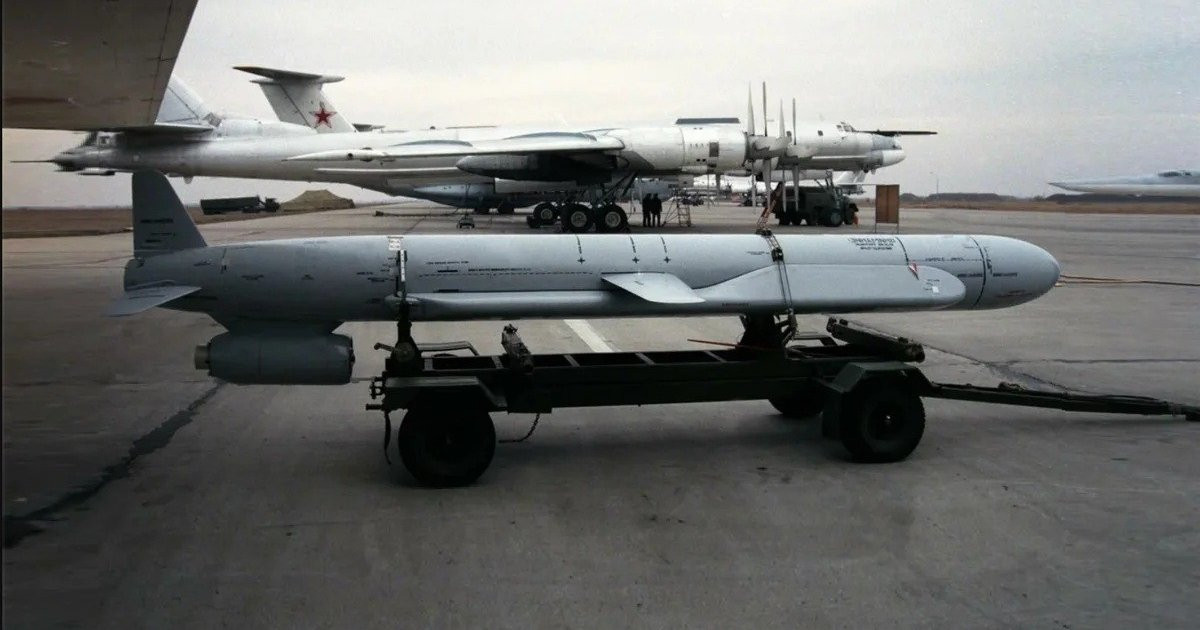

The missile that violated Polish airspace on the night of July 30 was a Russian Kh-101 cruise missile.
Polish Deputy Minister of National Defence Cezary Tomczyk said this, according to RMF24.
"I spoke with Operational Commander General Nowak, and we can confirm with full certainty that it was a Russian Kh-101 missile (…) — a cruise missile capable of carrying even nuclear warheads — which exploded upon impact with the ground. It is a potentially very dangerous missile," he stressed.
Tomczyk noted that Russia usually launches 10 or 20 missiles at Ukraine, but this time around 70 missiles were involved. He said that at 3:00 a.m., 20 missiles were flying in the direction of Poland.
The deputy minister added that a Ukrainian pilot tracked the missile all the way to the state border and then changed course 20 seconds before potentially entering Polish airspace in order to avoid being shot down by Polish F-16s.
Asked whether the missile launch by Russia was deliberate, Tomczyk replied that "every scenario is possible."
Marcin Kozak, spokesperson for the District Prosecutor’s Office in Lublin, said that the Russian cruise missile that fell in Poland was a Kh-101 manufactured in the second quarter of 2026.
"Preliminary examination of the site and the traces discovered there, namely elements of the aerial object, allows us to state unequivocally what kind of object we are dealing with. It is a Kh-101 missile manufactured in the second quarter of 2026 at one of the facilities in the Moscow region," he said.
On the night of July 30, an air alert was declared in eastern Poland amid a large-scale Russian attack on western regions of Ukraine. Shortly afterward, reports emerged that one or two missiles may have briefly violated Polish airspace.
Residents of the Lublin Voivodeship later reported explosions. A large crater was subsequently discovered in a field near the village of Tarnawa-Kolonia.