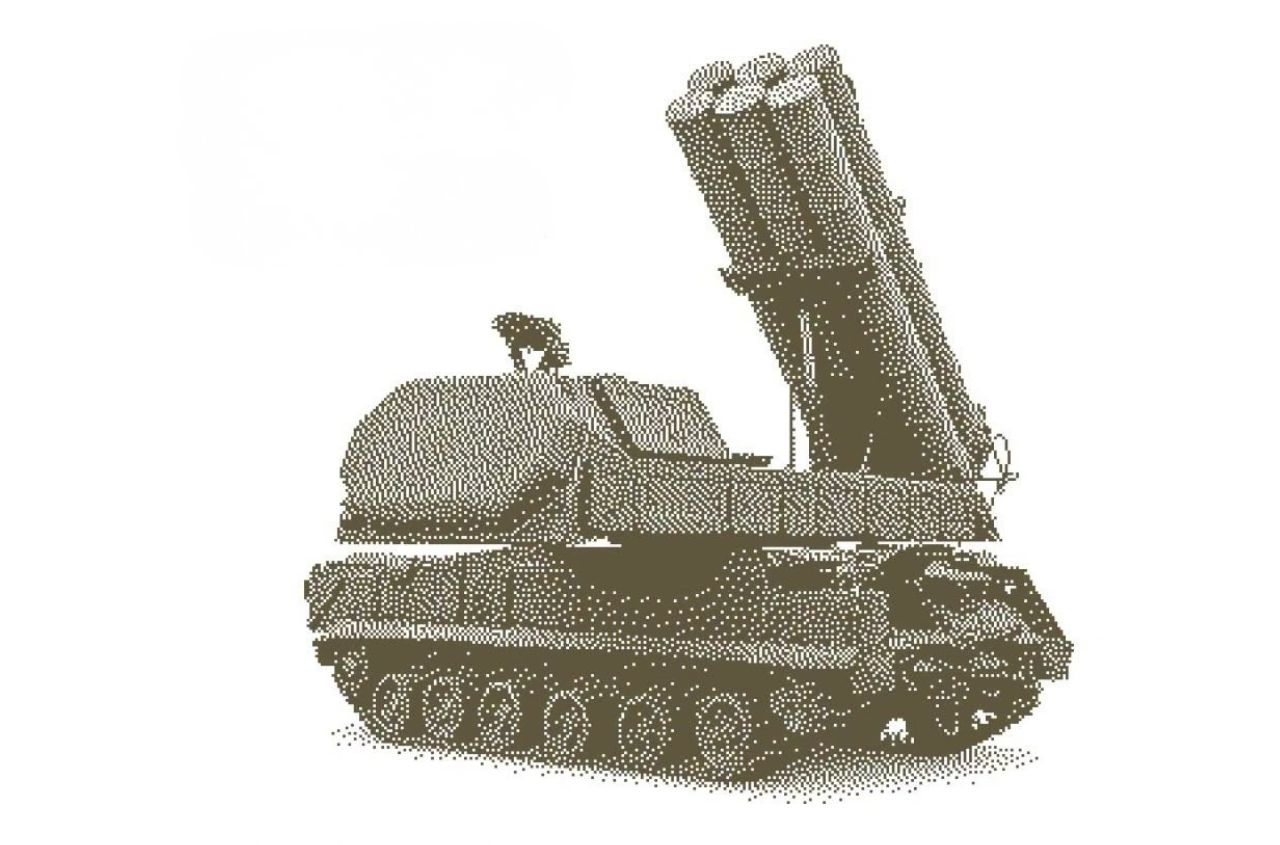


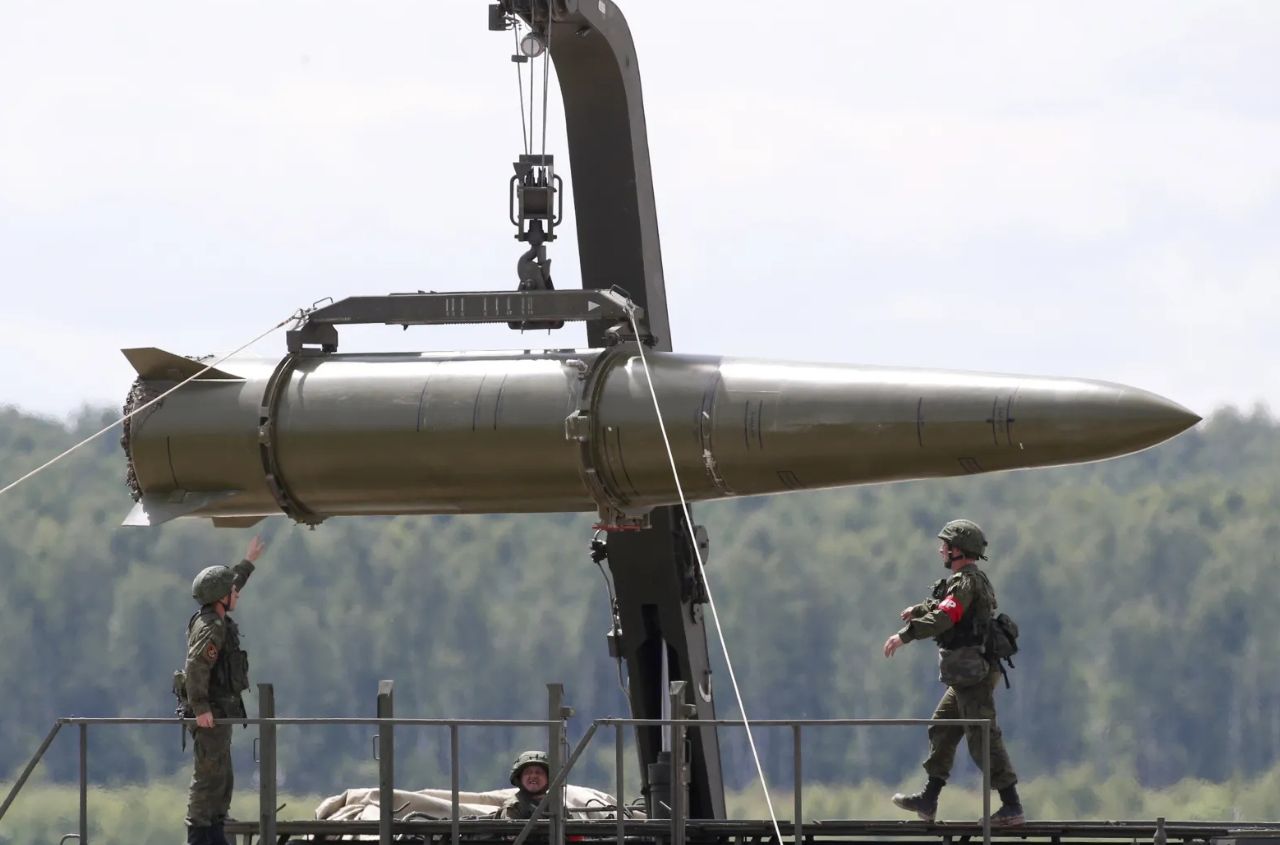
Main image: Russian service members equip an Iskander tactical missile system at the Army-2015 international military-technical forum in Kubinka, outside Moscow, Russia, June 17, 2015 [File: Sergei Karpukhin/ Reuters]
After strikes on Kyiv—especially when people are killed—it is always harder.
When the Russians attack Kharkiv, Sumy, Zaporizhzhia, or Kherson, the pain is felt in Kharkiv, Sumy, Zaporizhzhia, or Kherson, as well as by the most sensitive and empathetic people in other regions. Isn't that true? It is.
But when Russia attacks Kyiv, everyone feels it. The entire country seems to collapse into a single point.
That is understandable and appropriate. Because Kyiv is not Moscow. It is not just the capital—it is the true heart of the country. And, by and large, Kyiv is holding up with dignity. The people of Kyiv—both natives and those who moved there—are fighting to a far greater extent than the residents of Moscow. And they are dying as well.
So our capital is holding.
What is not holding are the flocks of emotionally unstable fellow citizens flooding the public space with anxious, unfocused cries and demands to "do something," to "talk to us like adults" (before immediately running away), and to perform miracles overnight. I am not talking about those who have genuinely suffered, but about those who live in a constant state of anxiety and simply want someone to comfort them.
Talking like adults is the easiest thing in the world.
In Kyiv and the surrounding region, 17 people have been killed and 44 injured in a concentrated missile attack.
Meanwhile, in Kharkiv, it was another ordinary morning—only 11 people wounded. Two Banderol missiles. Just because.
Yesterday in the region, Russia routinely killed two more people. A Banderol missile struck Balakliia, injuring three women aged 87, 79, and 82. In one community north of Kharkiv, the last three remaining residents left today. There used to be more than a thousand people living there. And so it goes.
In the Sumy region, Russian strikes injured 12 people, including four children. Early this morning, two FPV drones hit the center of Putyvl, just 26 kilometers from the border, injuring two people.
Yesterday evening, Russia routinely attacked the Zaporizhzhia Regional Children's Hospital. Fortunately, no one was hurt.
Can anything be done quickly? Of course. Ukraine could simply accept all of Russia's terms unconditionally.
Everyone can already see where that path begins—in Donbas. But where does it end? That is just as obvious: Ukrainian troops at the forefront of a joint army alongside Buryat soldiers, explaining to Poland how wrong it had been.
If you believe otherwise, you are deceiving yourself. Unconditional acceptance and quick solutions end exactly there.
And do you know what? You do not have to believe it. Europeans readily do. Because retreating and surrendering under overwhelming force is regarded as a civilized European response—the reaction of normal people. They did exactly that, on a large scale, not so long ago.
Fighting to the death against a stronger enemy, on the other hand, is seen as a form of East Slavic stubbornness and barbarism—traits that, for better or worse, have become an inseparable part of our national mentality.
That is why we are still here. And why, for 400 years, we managed to hold the most fertile plain in Eurasia despite having no naturally defensible borders.
The road that ends with Ukrainian troops invading Poland alongside Buryat soldiers begins with a cultivated sense of hopelessness—something Russia is patiently trying to create.
I—and many people far smarter and more influential than I am—have spent a great deal of time trying to explain one simple idea wherever we could: the moment your inaction pushes Ukrainians into hopelessness, expect visitors. Fortunately, President Trump helped make that point by demonstrating that Americans might step aside and choose not to protect Europe from such a scenario.
And Europe deserves credit. Enormous work has been done. It has taken time, and there is still much more to do.
So yes, there is a quick solution. Do you dislike it? Then the only alternative is to fight for acceptable terms of peace—terms under which it is the aggressor, not the victim, that is forced to retreat.
But that comes at a price.
I have spoken many times about the price Ukraine—and especially the frontline regions—must pay, and I remind people of it every day.
The price is horrific.
That is why I am an outspoken supporter of the "party of peace." Peace yesterday, on acceptable terms followed by diplomacy—that is what I want. And I am far from alone. It is what almost everyone I know wants. It would save lives.
But Russia does not want that. Which means that option simply does not exist.
It may become possible only when Russia has no other choice.
It can only be forced into that position.
What does that mean?
There should be no illusions. This means that Ukraine itself will suffer terribly, but in doing so it will also inflict enormous damage on Russia—likely damage incompatible with the survival of the empire in its current form, unless Putin stops or is stopped.
As for the specific issue of defending against ballistic missiles, I have written about it before. Under current real-world conditions, there is simply no technical means of intercepting the number of ballistic missiles Russia is capable of launching. Such a capability does not exist and will not exist in the foreseeable future.
The pressure from ballistic missile attacks can only be reduced through three avenues: (1) targeting launchers, (2) targeting production facilities, and (3) sanctions. Work is underway on all three fronts.
But first, this is genuinely difficult. Even the United States and Israel, despite overwhelming air superiority, have not been able to fully neutralize Iran's ballistic missile capability. Second, not everything depends on Ukraine. That means progress will inevitably take longer than we would like.
So the missiles will continue to come. There will continue to be casualties—I even gave an estimated figure a month ago—and there will continue to be destruction. Demands directed at both the national and local authorities to do more to protect civilians are fair and justified. Far from the maximum possible is currently being done.
One possible way to reduce the pressure would be through a political arrangement: Ukraine refrains from striking Russia, while Russia stops attacking certain categories of targets in Ukraine. Work on such options is also ongoing.
For example, for almost a week now Ukraine has maintained a pattern of striking "one oil refinery and one Wildberries warehouse every night." Today, a logistics center in Russia's Tula region burned. A strike on a warehouse in Tatarstan failed to achieve its objective. No matter—today or tomorrow.
Another strike on the oil refinery in Ufa, however, proved successful. Open-source intelligence analysts have preliminarily identified the burning facilities as the L-35-11/1000 catalytic reforming unit and the combined GEXA processing unit.
This equipment was purchased from France in the 1970s and was considered revolutionary at the time. French specialists continued servicing it until 2022, and the facility underwent several modernization phases between the 1990s and the 2010s. Without going into technical details, it produces about one million tonnes of high-octane gasoline—including AI-100 fuel—per year. It is a painful and costly loss for Russia, especially since the French technicians will not be coming back.
Ukraine's "good drones" previously focused on cutting electricity supplies to occupied Crimea. They have now shifted their emphasis to the Russian-occupied parts of the Zaporizhzhia and Donetsk regions, among other things disrupting air defense operations and making it more difficult to recharge drones.
So, proceed on the assumption that the worst is possible, and prepare as best you can. Because illusions are only slightly better than despair.