

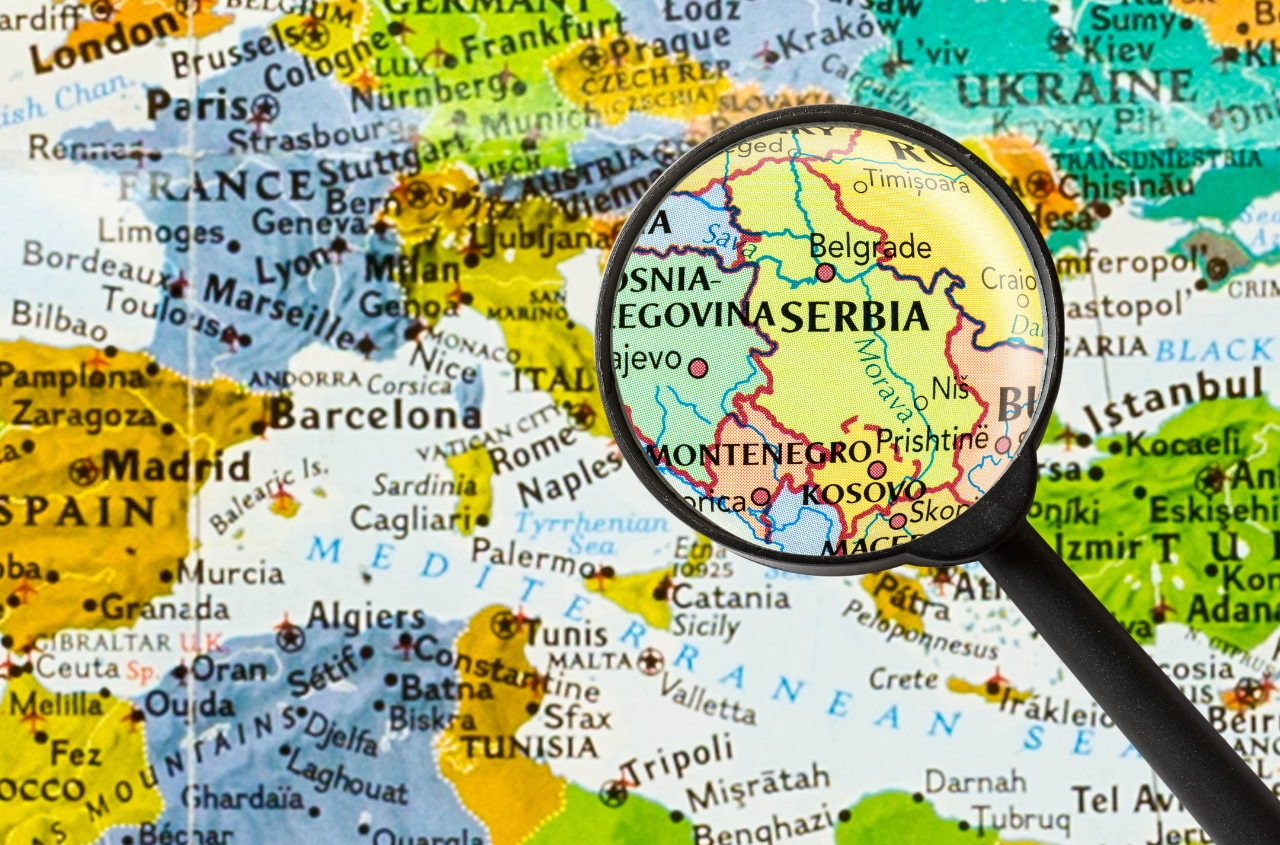

Despite official statements from Belgrade that the country should not be used as a platform to circumvent restrictions, local firms continue to supply dual-use goods to Russia. Radio Free Europe/Radio Liberty (RFE/RL) conducted an investigation into the activities of several Serbian companies included on Western “blacklists” for exporting goods to Russia that are subject to sanctions.
Currently, eleven Serbian companies are on Western blacklists, accused of exporting electronics and high-tech equipment needed for the Russian military industry. While some of these firms have formally closed or fallen into debt, others successfully adapt to pressure by changing names and using convoluted logistics chains. At the same time, Serbian authorities effectively ignore requests to curb such activity, citing the absence of legal barriers to trade, since the country has not joined EU sanctions.
The company TR Industries, which after being sanctioned by the U.S. in February 2024 changed its name to Onderon Systems, is registered in a regular Belgrade apartment and has only one employee. In 2024, it exported goods to Russia worth almost €750,000. Before the restrictions, its turnover was in the millions of euros, with primary destinations being Russia, Hong Kong, and India. This scheme — offices at fictitious addresses, a sharp revenue increase after the start of the full-scale invasion of Ukraine, and minimal charter capital — is a typical indicator of front companies acting as intermediaries. Nevertheless, the Serbian Customs Administration openly states that it has not conducted inspections of firms on the sanctions list, because their activities do not violate domestic law.
In addition to direct exports, the Serbian route actively uses gray zones through Central Asian countries. Statistical data shows an abnormal rise in shipments of machinery and electronics from Serbia to Kyrgyzstan, Uzbekistan, Turkmenistan, and Tajikistan — regions with little prior cooperation before the war. Experts call this a classic indicator of re-export, where goods are officially sent to permitted countries but ultimately end up in the Russian market. Through such chains, Russia continues to receive Western-produced aircraft parts and microchips. For example, the company Sprocure, sanctioned by the EU in 2025, shipped 170 batches of aviation equipment to Russia worth over $9.7 million in just the first year and a half of operation.
Western pressure forces some companies to try to challenge sanctions or conceal activity by changing ownership. The director of MCI Trading, Ivan Cvetich, also on the sanctions list, claims that his company merely supplied components to Russian partners and allegedly did not know about concealing end users in the defense sector. At the same time, other companies, such as Kominvex, saw legal profits drop sharply from €127 million to a few thousand after sanctions, which may indicate that operations moved deep underground.
Experts emphasize that, although sanctions block specific accounts and channels, it is extremely difficult to eliminate the entire circumvention ecosystem: the infrastructure is often simply transferred to new legal entities registered to related persons, requiring international regulators to constantly monitor flexible networks of intermediaries.