


Today, it is Europe, not the United States, that is financially supporting Ukraine and deserves to be at the negotiating table. The main issue in the war is whose resources will run out first.
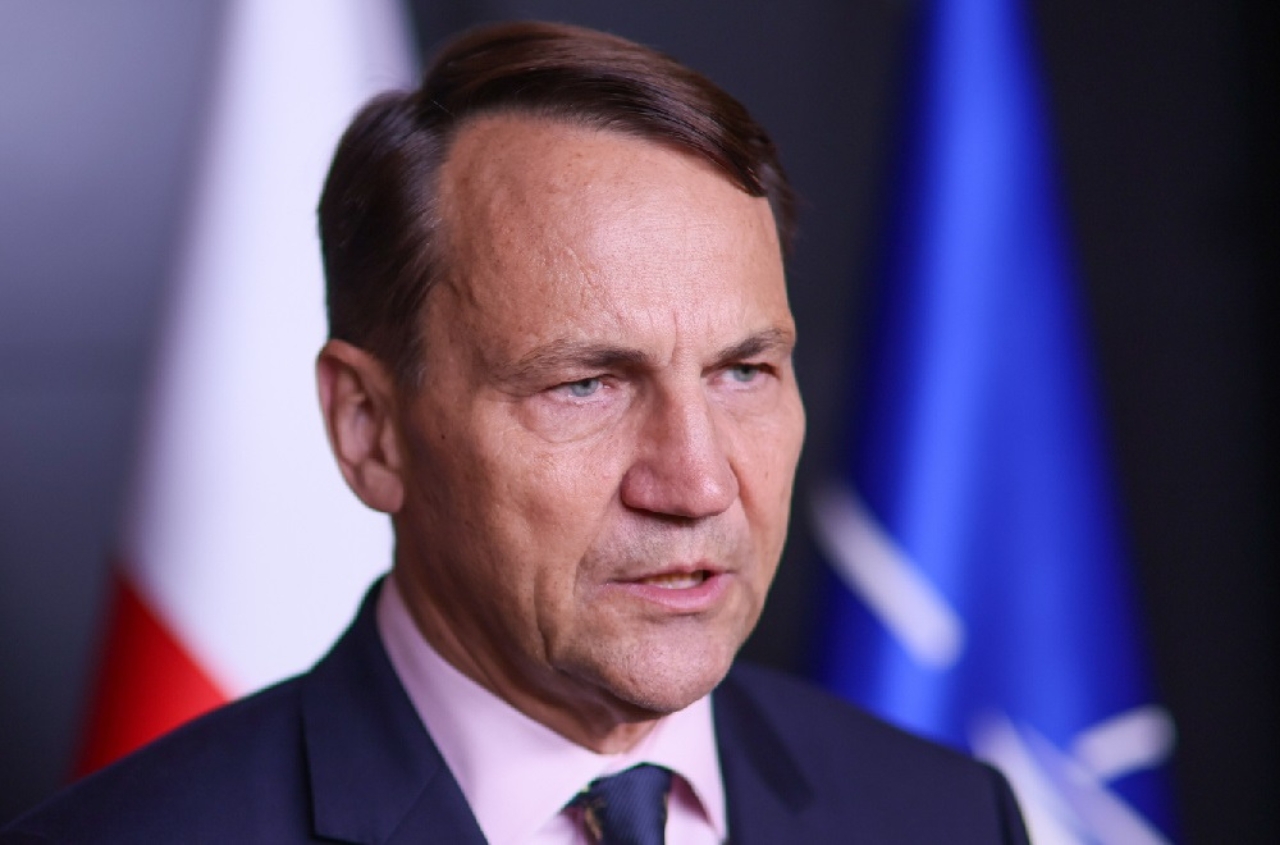
This was stated by Polish Foreign Minister Radosław Sikorski during the Munich Security Conference.
“I would like our American guests to know—because this is not fully reflected in the American media space—that it is the Europeans who are paying for this war right now. Last year, U.S. spending on the war was close to zero. We buy American weapons to transfer to Ukraine. There is no aid package in the U.S. Congress, and no prospect of one being approved. If we are paying, if this affects our security and not just Ukraine’s security, then we deserve a seat at the negotiating table, because the outcome of this war will directly affect us,” Sikorski emphasized.
The Polish minister stressed that Europe must be at the negotiating table because “the stakes are very high.”
“This is not just about the future of Ukraine. It’s not just about the security of the eastern flank. It’s about Europe’s place in the future distribution of power in the world. In other words, who will be the third pillar of the global balance—the United States, China, and Russia, or the European Union,” Sikorski said.
He highlighted that the key question of this war is “who will break first.” In this context, he noted that the Ukrainians “are not breaking on the front line; Russian advances are minimal,” and the bombardment of Ukrainian cities only strengthens the resolve of the Ukrainian people.
“The real question is when Putin’s resources for waging this war will run out. Cracks are already beginning to appear in the Russian economy. We have provided Ukraine with €90 billion, which should last for two years. If we added another €10–20 billion, they could have brought their defense industry to full capacity, and then the fight would have been more balanced,” the Polish foreign minister said.
He also emphasized that throughout the war, Putin has used pseudo-arguments about “brotherly” Ukrainians, who are a “rural version of Russians,” about “the Russian city of Kyiv,” and so on—but now he is bombing his “brothers” and the “Russian” city of Kyiv.
“This shows that, in reality, this is a colonial war. He simply wants to conquer Ukraine again. This is already the third attempt: in the 19th century, the Russians banned the printing of Ukrainian books; in the 20th century, they organized an artificial famine in which five million people were killed and destroyed an entire cultural layer of Ukrainian society in the 1930s; and now—the third attempt,” Sikorski stated.
He added that Russia may perceive Ukraine as its province, but it cannot tolerate Ukraine as a nation with its own identity, history, security interests, and its own aspiration to integrate into organizations to which Russia does not belong.