

Modern warfare is not only about artillery duels and assaults, but also a continuous invisible battle in the radio spectrum. With the mass deployment of unmanned aerial vehicles (both reconnaissance drones and FPV strike drones), electronic warfare (EW) systems have become the main tool for protecting infantry and armored vehicles.
Specialists who create this invisible protective “dome” directly on the front line are operators of short-range EW systems (Military Occupational Specialty VOS 545 — specialist in electronic suppression of UAVs).
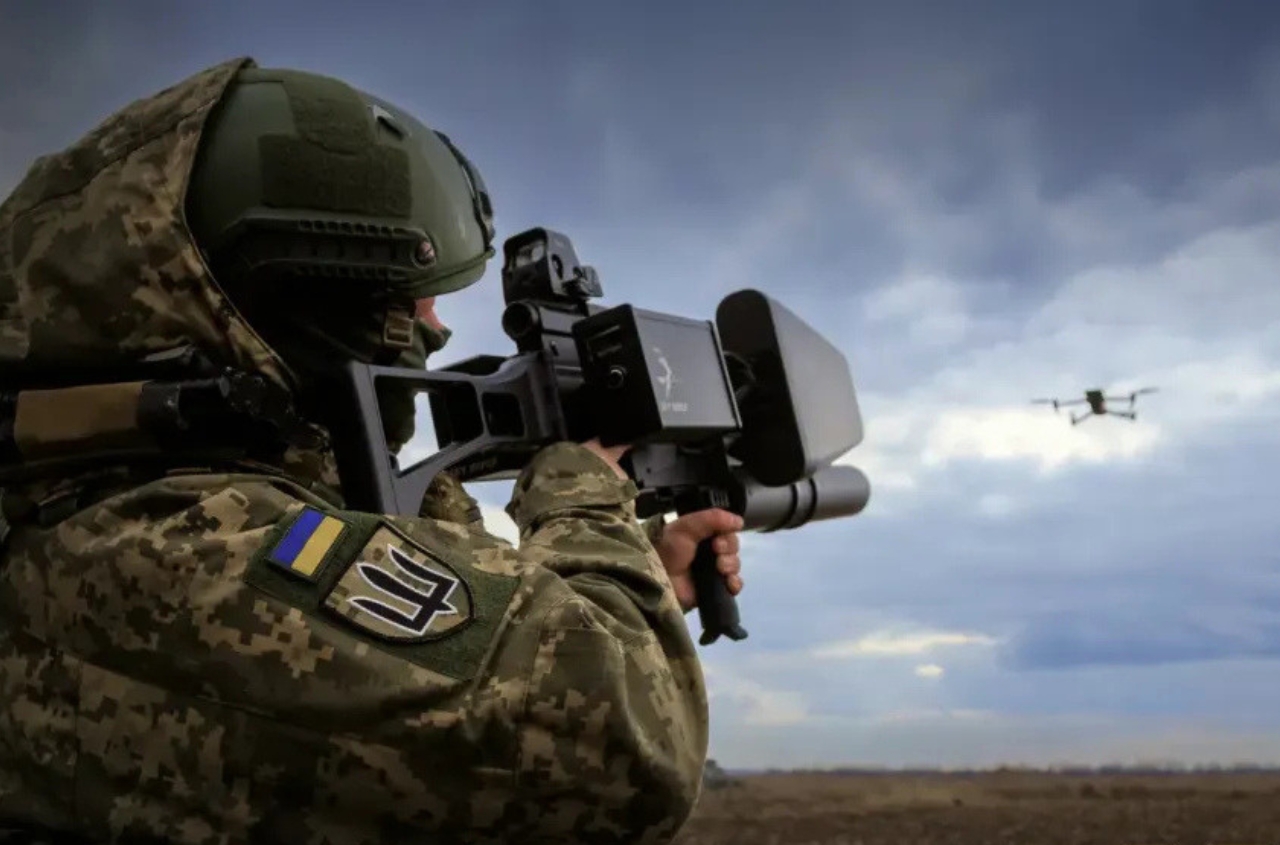
The main task of a short-range EW crew is to create a “dead zone” for enemy drones and communication systems around their own positions. Operators work with portable (trench-based) systems, anti-drone rifles, or vehicle-mounted mobile systems based on pickup trucks.
Their duties include:
- Continuous monitoring of the radio frequency spectrum and detection of approaching enemy drone signals
- Analysis of enemy operating frequencies
- Immediate activation of jamming systems on required bands to disrupt the connection between enemy drones and their operators
- Protection of their own communication channels from enemy electronic suppression
This is a constant intellectual duel. The enemy continuously changes frequencies, so EW crews must analyze the spectrum and reconfigure equipment within seconds.
Ukrainian EW operators use a wide range of systems. Among domestic developments are portable and vehicle-mounted systems such as Omni Max, Boombox, Kvertus, EPAM “Synytsia,” as well as various other codified and volunteer solutions.
At the tactical level, a typical EW operator’s equipment includes:
- a portable drone detector and video signal interceptor (for real-time detection and identification of signals)
- an EW system with a built-in jamming generator
- an autonomous power source — a high-capacity battery, since EW systems consume a significant amount of energy
An important nuance of this specialty: an active high-power EW system “lights up” on enemy electronic intelligence like a beacon in the dark. As a result, the operator’s position immediately becomes a priority target for enemy artillery and FPV drones. Therefore, crews must master camouflage techniques, remote antenna control, and rapid relocation.
Working with tactical EW does not require exceptional physical strength. Intellectual ability, technical literacy, patience, and analytical skills are most important.
The following civilian specialists adapt best and fastest to this role:
- IT specialists and system administrators, accustomed to working with complex software, monitoring networks, and analyzing data
- radio engineers and telecom specialists, who understand antenna systems and radio wave propagation
- electricians and electronics repair technicians — skills in soldering, circuit understanding, and power systems are critical for field repairs and battery management
- sound engineers and audio equipment specialists — those used to reading audio spectrograms quickly learn to interpret radio spectrum analysis charts
The EW operator specialty requires strong technical literacy and analytical thinking. After basic military training (BZT), specialized training includes:
- Radio physics fundamentals: understanding radio wave propagation, frequency bands, and antenna principles
- Software tools: working with specialized software for spectrum analysis and equipment firmware
- Tactical deployment: proper antenna placement considering terrain, vegetation, and buildings to maximize jamming effectiveness while avoiding interference with friendly drones and communications
Experience with radio signals, spectrum analyzers, and complex hardware makes EW veterans highly valuable in the civilian labor market.
After the war, their skills can be applied in:
- telecommunications — as engineers for planning and optimizing mobile radio networks
- cybersecurity and radio monitoring — as specialists in network protection, vulnerability detection, and state frequency monitoring
- IT and hardware engineering — as system administrators, testers, and developers of UAV and radio systems