


Here’s a brief overview of the general situation today, because the pieces are now clearly coming together into a single picture. With the spring and summer campaigns approaching, which are already inevitable. The “military operation” in Iran has indeed played into Russia’s hands—both in terms of diverting the attention of the U.S. and Europe, and as an opportunity to make money on oil, which they are desperately short of.
But Ukraine is actively striking not only Russian refineries and oil storage facilities. Very often, the hits are precisely on defense industry enterprises, like “Kremniy El” in Bryansk just last night. Money alone doesn’t help much in this war; production does. And production under sanctions cannot be quickly restored.
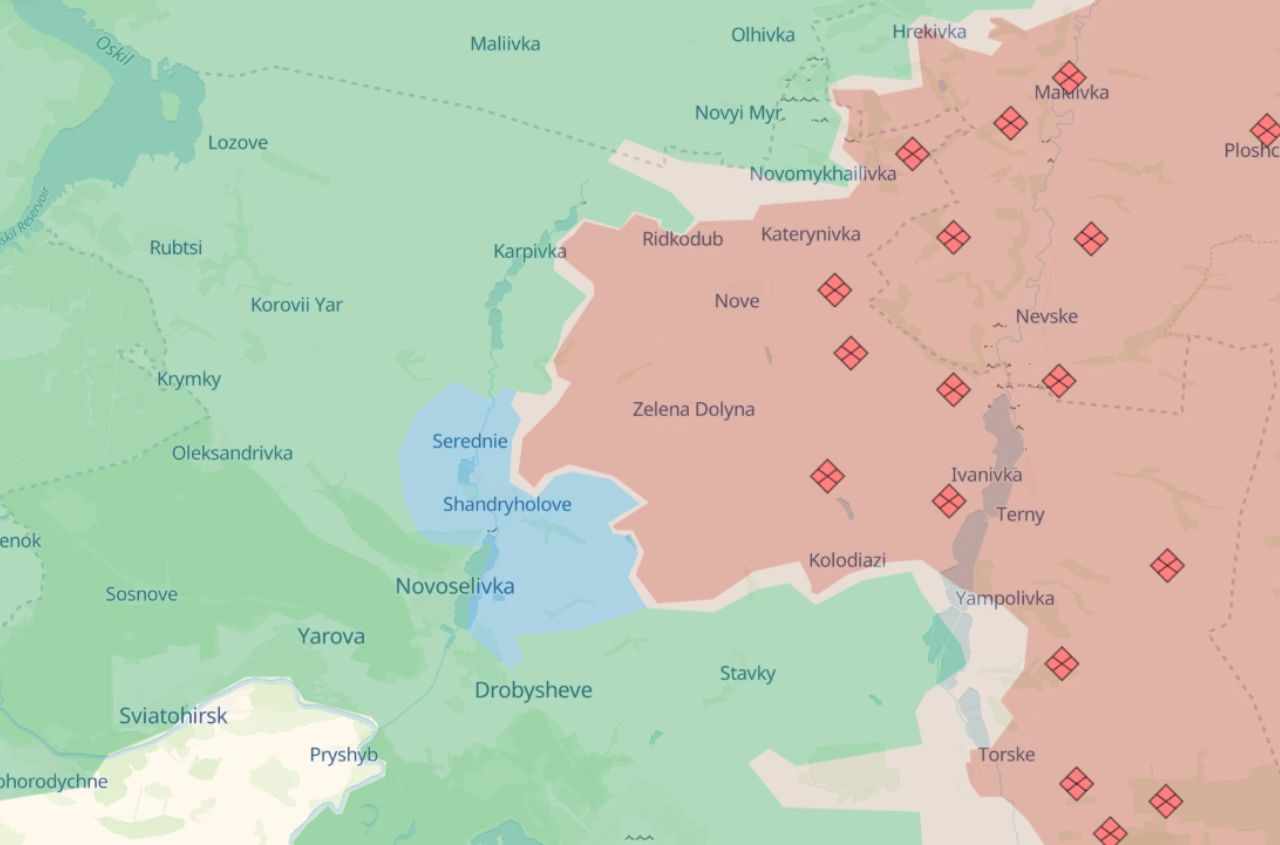
The situation on the ground is not promising for the enemy either. Dnipropetrovsk region is practically liberated. Where will the Ukrainian Armed Forces go next, or will Russia redeploy its reserves elsewhere? The General Staff in Russia is currently scratching its head over this. All options are bad, because in other directions there is no progress—only stagnation while daily losses continue. Local successes at Huliaipole look modest at best, and they came at a very high cost.
Yes, stagnation has its price too. And while we are not yet reaching the minister’s stated target of reducing 50,000 per month, it’s simply because that many are not available. They issued an order to recruit 400,000 over the year and bring the grouping up to 800,000. The question is—why? To allow Fedorov to finally reach 50,000 losses per month? But then the overall size of the occupier’s forces in Ukraine won’t grow—it will shrink. And will they even manage to recruit 400,000, equip, feed, and deliver them alive for an assault? That’s a big question.
The enemy is increasing pressure on Sumy region, but with small forces. Local border crossings, raids with quick retreats. Yes, they want to create a buffer zone, but they simply don’t have the resources for such tasks. So these raids are mostly aimed at unsettling us. In the battle for Huliaipole and the Orikhiv bridgehead, forces that should have gone to Zaporizhzhia are being consumed. In the battle for Pokrovsk and Myrnohrad, forces that should have gone to Dobropillia, Druzhkivka, and Kramatorsk are being used up. Only in Kostiantynivka is military logic and order maintained: the forces used in assaults there are exactly what should be assaulting Kostiantynivka.
What’s next? In Kherson region, the occupiers quietly pulled out all their reserves—brigades from that group of troops are now fighting at Huliaipole and Kostiantynivka. It’s already clear that the military campaign to occupy Kherson region is being postponed indefinitely. The same will likely happen with their dreams for Zaporizhzhia. But in Donetsk, the enemy will have to make decisions. Otherwise, the bunker leadership will have nothing to show the population as a “success” of the so-called “special military operation.” All they could say is something like: “If we hadn’t struck first, Ukraine would have attacked us herself.” But that narrative has long been monopolized by another actor—a crazy one, and a sack of potatoes…
Speaking of another actor, the attempt to advance from Belarusian territory, with their army, toward Kyiv is a logical gesture of desperation. Their last bet. An attempt to fundamentally change the situation. But… the “Purer” is flailing like a kitten over a sink, resisting with all limbs. Maybe they could try persuading Orbán to cross the border? But that would be ridiculous, extremely costly, and fast—and painful…