

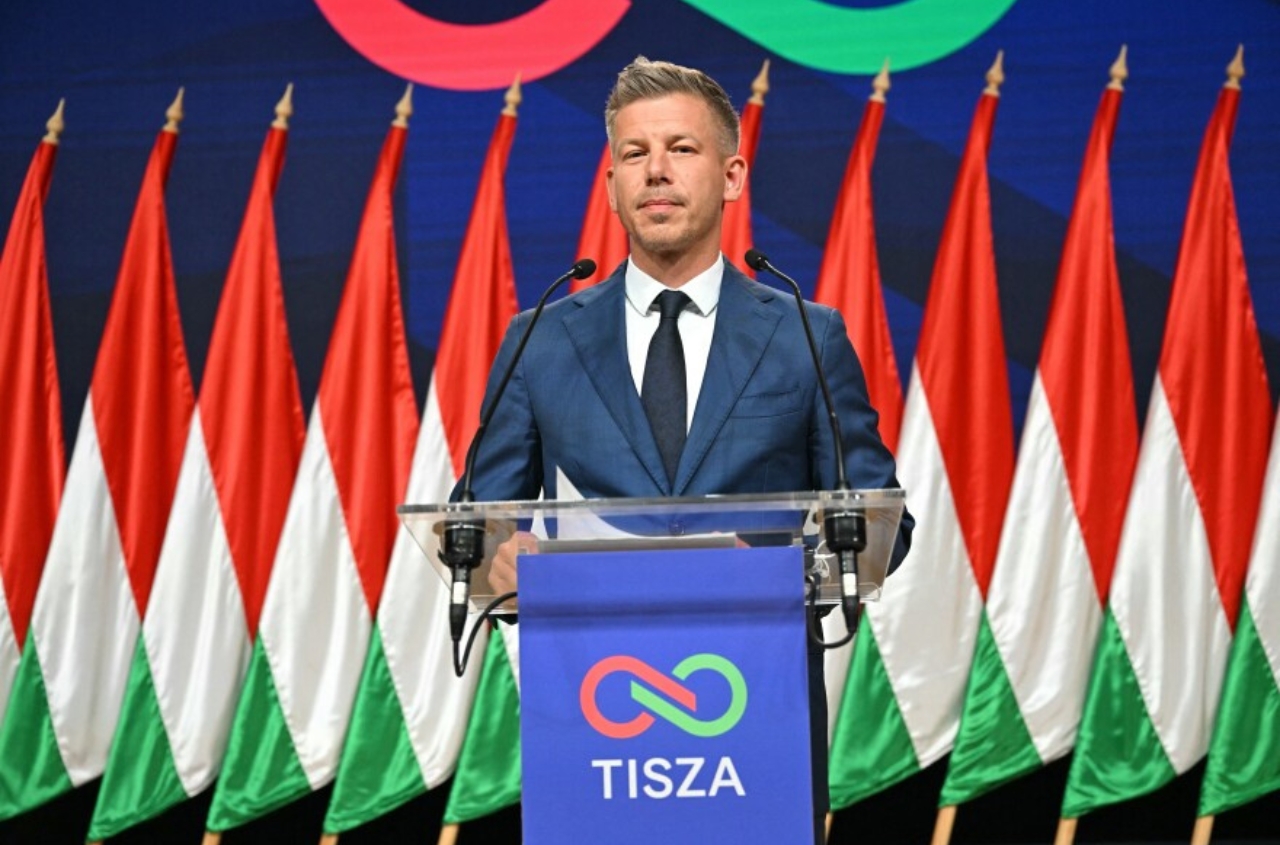
Peter Magyar, the leader of the “Tisza” party, which won the elections in Hungary, met with the mayor of the Ukrainian city of Berehove, Zoltán Babják. Magyar wrote about this on Facebook.
“In my office, I received the mayor of Berehove, Zoltán Babják, who informed me about the situation of Hungarians in Zakarpattia and about the horrors of the war. We agreed that it is in the interest of Hungarians living in Zakarpattia to put relations between Hungary and Ukraine on a new basis. In view of the above, I am initiating a meeting at the beginning of June with the President of Ukraine, Volodymyr Zelenskyy, symbolically in the city of Berehove, where a Hungarian majority lives,” Magyar wrote.
He noted that the purpose of the meeting is to help Hungarians in Zakarpattia and support their staying in their homeland.
“It is time for Ukraine to lift the restrictions on rights that have existed for more than a decade, and for the Hungarians of Zakarpattia to regain all their cultural, linguistic, administrative, and higher education rights and once again become equal, respected citizens of Ukraine. This would also help ensure that after the end of the war, as many Hungarians of Zakarpattia as possible could return to their homeland. If we manage to resolve these issues, it will undoubtedly allow us to open a new chapter in bilateral relations between Ukraine and Hungary,” Magyar stressed, adding that he considers the concessions announced by the Ukrainian government in 2025 in the field of education to be “promising but insufficient.”
According to Magyar, higher education in Ukraine remains monolingual, graduation exams are conducted in Ukrainian, and no significant changes have occurred in other official language use areas.
“As before, official communication in Ukraine is strictly based on one language. In public administration, courts, and official procedures, only Ukrainian can be used. The Hungarian minority cannot request official services in their native language even in settlements where Hungarians form the majority of the population. Restrictions also remain in public life and culture: Hungarian-language events and media can function, but under quotas, registration, and formal requirements. In public speeches, officials—such as school principals or mayors—still cannot freely use their native language. Therefore, I call on the Ukrainian leadership to take decisive steps in these areas on the path toward European values and true freedom and equality,” Magyar concluded.