

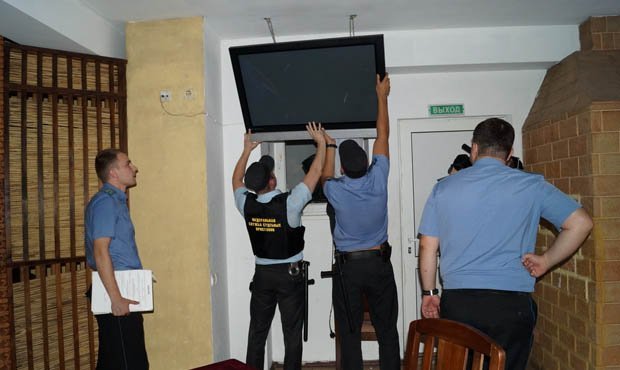

In Russia, the number of criminal cases resulting in asset confiscation increased from 11,000 to 31,000 between 2023 and 2025, according to Sergey Bazhutov, head of the Main Criminal and Judicial Department of the Russian Prosecutor General’s Office. Data from the Russian Supreme Court show that in 2022, verdicts involving confiscation were issued against 4,195 individuals, while in 2024, this number had risen to 24,078 — a 9.3-fold increase compared to 2020.
At the beginning of the year, Alexander Bastrykin, head of the Investigative Committee of Russia, emphasized the need to increase the number of confiscation cases. According to him, last year investigators seized Russian citizens’ property valued at approximately 24.5 billion rubles, 25% higher than the previous year. Individuals under investigation “voluntarily” transferred assets, money, and valuables totaling 4.7 billion rubles.
“Confiscation” was reintroduced as a special measure into the Russian Criminal Code in 2006. At that time, it was primarily applied in cases of corruption and economic crimes as a mechanism for compensating inflicted damages. With the start of the so-called “special military operation,” confiscation was extended to include new categories of crimes, such as collaboration with foreign organizations, sabotage, spreading fake information about the Russian army, and crimes against “state security.” At the end of last year, the Russian Constitutional Court allowed the confiscation of even sole residences legally purchased by relatives or third parties involved in a case.
This drive by Russia’s repressive apparatus to expand the use of confiscation, often tied to specific events, is explained solely by the Kremlin’s attempts to patch holes in the state budget, which is under pressure from the war against Ukraine.