

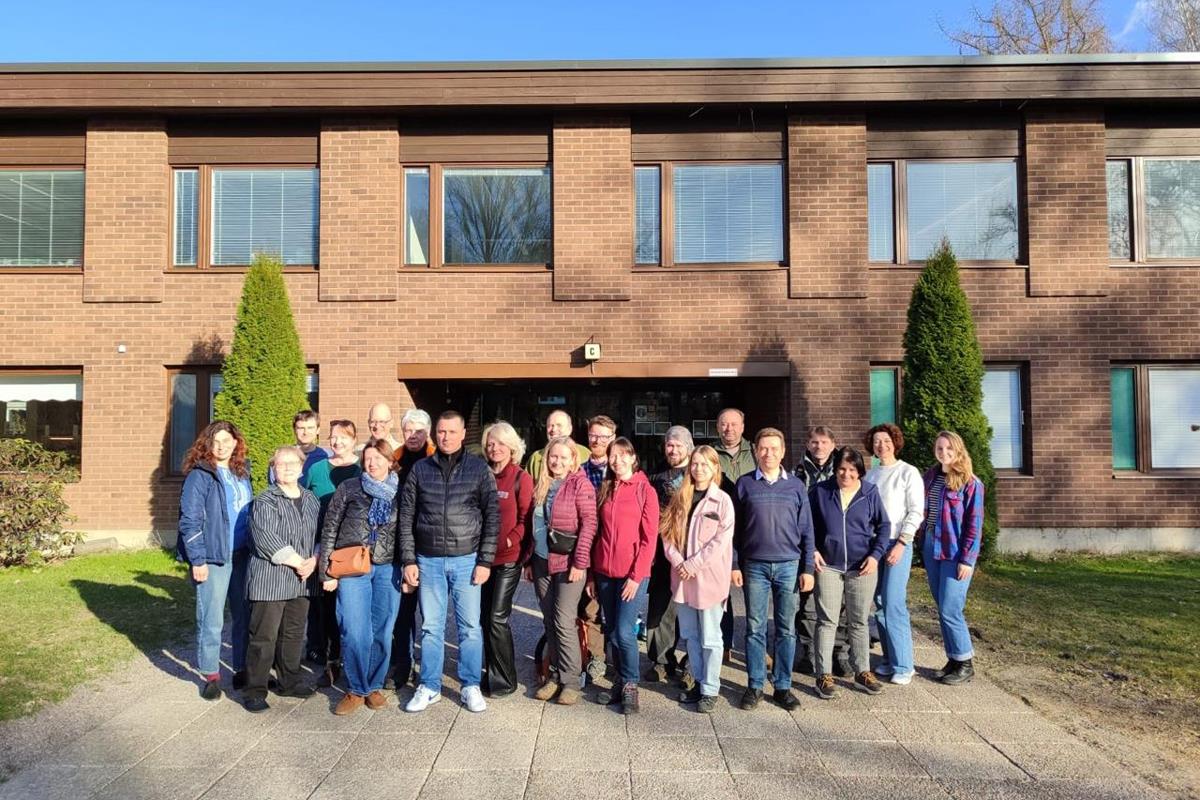
Experts from the Finnish Environment Institute (SYKE) and the Finnish Museum of Natural History (LUOMUS) presented practical experience in organizing biodiversity monitoring, data collection and analysis, assessing the conservation status of flora, fauna, and habitats, as well as preparing reporting in accordance with European legislation requirements.
This was discussed during a field training on organizing biodiversity monitoring and reporting in line with the requirements of the EU Habitats and Birds Directives, held on April 14–16, 2026 at the Lammi Biological Station of the University of Helsinki in Finland, within the UFEM project.
The event was attended by specialists from Ukraine’s Ministry of Economy, Environment and Agriculture, representatives of scientific institutions and environmental organizations, including the Schmalhausen Institute of Zoology, the M.G. Kholodny Institute of Botany, the Institute of Ecology of the Carpathians of the National Academy of Sciences of Ukraine, higher education institutions, the “Slobozhanskyi” and “Podilski Tovtry” national nature parks, as well as representatives of the civil sector.
During the training, particular attention was paid to data collection methods and the specifics of filling in reporting forms for different taxonomic groups. Systematic biodiversity monitoring, including species under special protection under the EU Habitats and Birds Directives, makes it possible to assess the condition of individual species and ecosystems as a whole, as well as to shape public policy and make informed management decisions.
The UFEM project “Support to Ukraine in Environmental Damage Assessment and Development of Monitoring of Surface Water Quality and Biodiversity” is a Ukrainian-Finnish initiative aimed at strengthening Ukraine’s capacity in environmental monitoring and supporting European integration processes. The project is funded by the Ministry for Foreign Affairs of the Republic of Finland.