

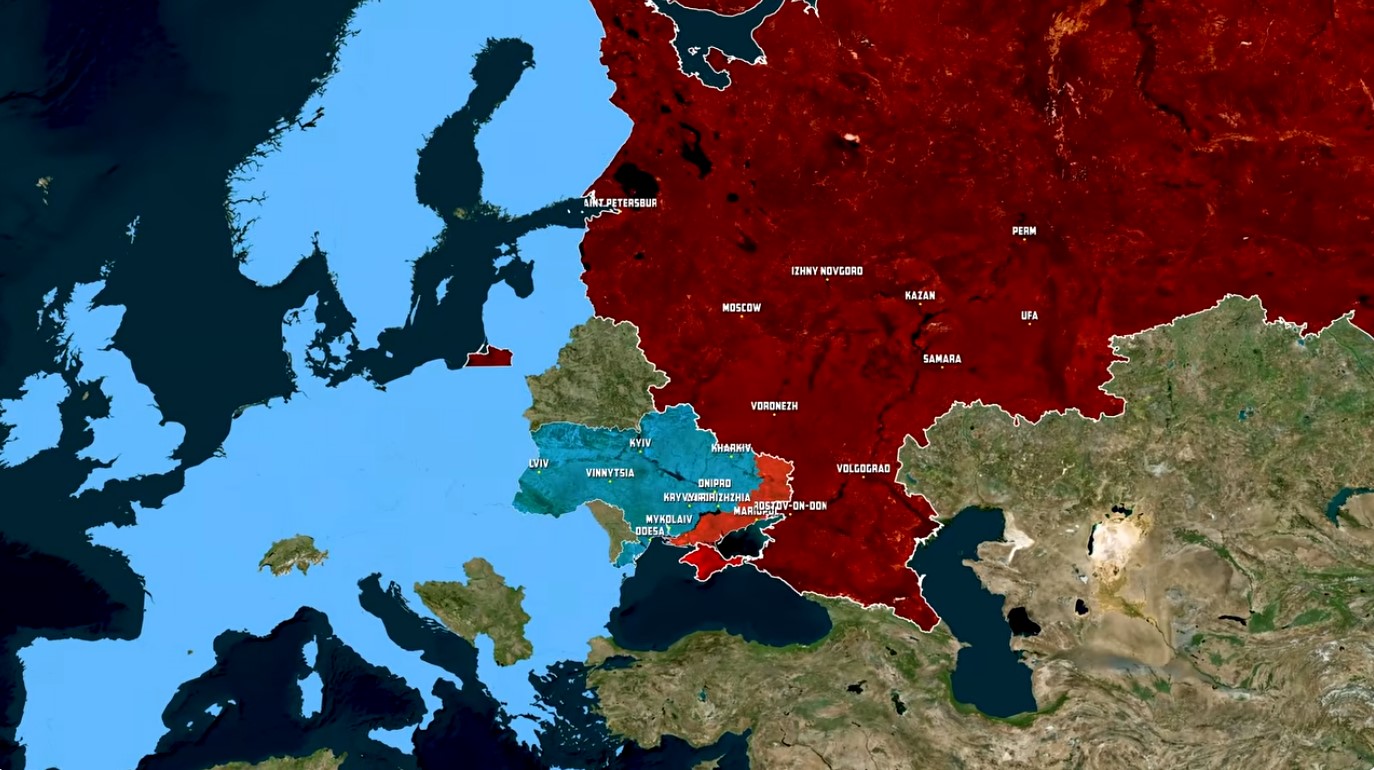
Military analyst Anders Nielsen of the Danish Royal Defence College has outlined what to expect in the fifth year of the full-scale Russian-Ukrainian war, highlighting the evolving military, economic, and social dynamics on both sides.
A War of Attrition Continues
According to Nielsen, the conflict remains a war of attrition. Such wars take time, with each side striving to wear down the opponent while maintaining their own capacity to fight.
“We are gradually approaching the end of this phase,” Nielsen said. “The decisive factor in the war’s outcome will ultimately be economic endurance—whose economy holds out longer.”
Following the failure of Russia’s initial 2022 invasion plan, President Vladimir Putin faced two options: declare victory and end combat operations or continue the war. He chose the latter, seeking to win through a contest of will, betting that Western nations would gradually lose interest in supporting Ukraine.
Russia’s Economic Strain
Nielsen noted that Russia’s economy, which initially received a temporary boost from massive financial injections into the military-industrial complex, is now showing signs of strain. The country cannot sustain its current level of military production indefinitely.
“The ongoing economic crisis will inevitably affect Russian military output, giving Ukraine an advantage,” he said.
Observers should watch for specific indicators this year that may signal Russian exhaustion.
While it is conceivable that Russia might negotiate with more realistic demands to preserve its economy, Nielsen added,
“It is more likely that Moscow will continue the war regardless. However, any signal of compromise would clearly indicate that things are going badly for Russia.”
Manpower and Mobilization Challenges
Another wave of mass mobilization in Russia is expected. Until now, volunteers motivated by financial incentives have been the main source of replenishing losses. Their numbers, however, are limited, and the approach is costly for the state budget. Recent battlefield losses have outpaced recruitment. A new mobilization campaign could address both funding and manpower shortages.
Protests are also anticipated within Russia, Nielsen warned. While these are unlikely to directly call for an end to the war, they may target economic hardship, dissatisfaction with mobilization, or the conduct of Russian military operations. The government is expected to respond with repression, for which it is preparing.
Military Outlook
Russian advances are projected to slow as their operational capabilities degrade. Nielsen suggests that in some months, Ukrainian counterattacks could recapture more territory than Russia gains, challenging Moscow’s narrative of inevitable victories.
Long-range strikes by both sides are likely to intensify, potentially reaching new scales. Nielsen cautioned that while this past winter was particularly harsh for civilians, the next one could be even worse. Preparations for future winter conditions—including strengthening air defenses—should begin immediately.
Hybrid and Potential Escalation Threats
Nielsen emphasized that hybrid warfare against Europe may escalate as Russia seeks to weaken public support for Ukrainian aid. There is also a possibility that Russian leadership could cross the threshold from hybrid operations to overt military action against European states.
“Europe must be prepared for such a turn,” he warned.