


Summary of the night and morning:
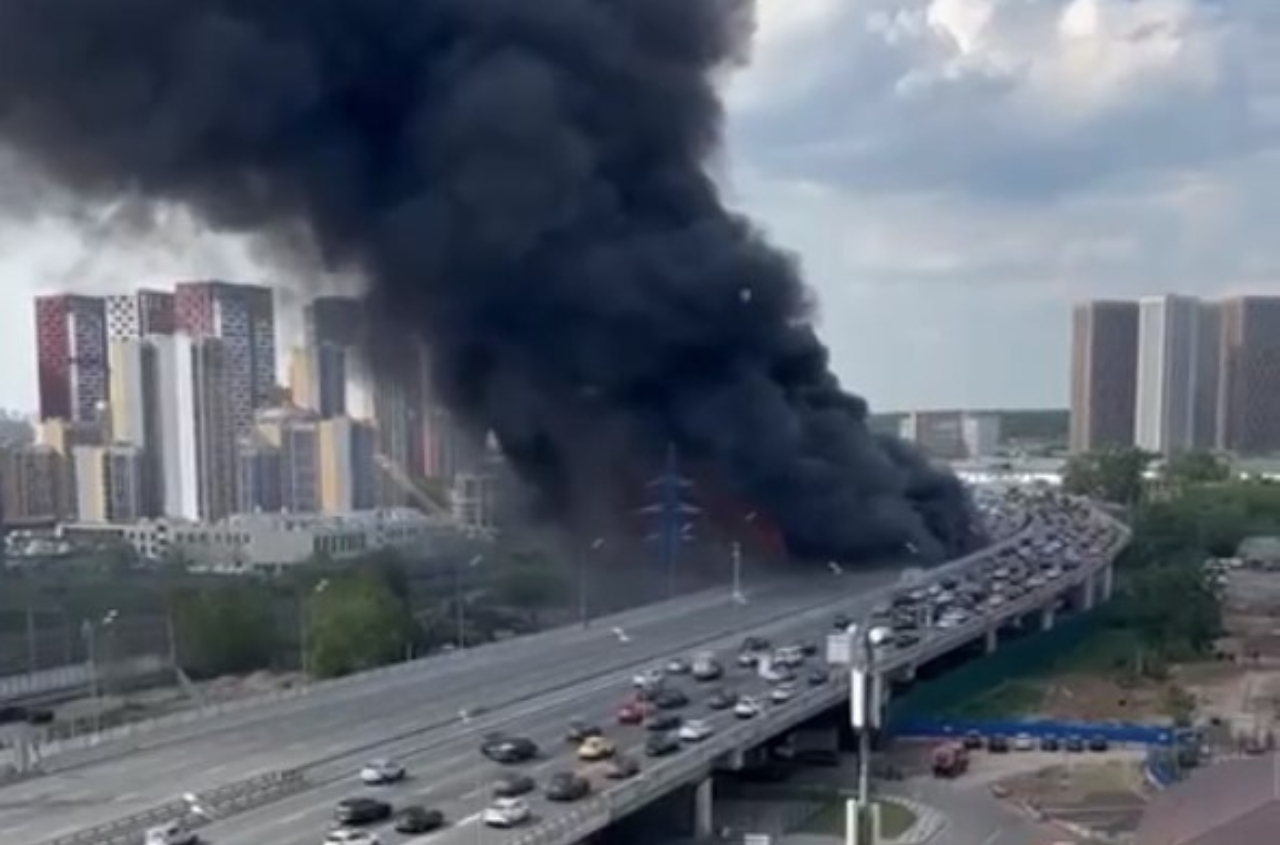
The SSU Special Operations Center “A” together with colleagues from other units of Ukraine’s Defense Forces successfully struck targets in several regions of Russia, as well as in temporarily occupied territories. The striking videos showing fires and Moscow residents in panic have already been widely circulated. A few key points stand out.
Even according to Russian statistics, this was not the most massive attack. Nevertheless, it caused significant difficulties in two heavily fortified areas of Russia with strong air defense systems: the Moscow agglomeration and temporarily occupied Sevastopol.
In the Moscow direction, reported targets included:
- Moscow Oil Refinery (a precise strike, the first since September 1, 2024);
- Solnechnogorskaya pumping station (visibly burning; at least one of ten storage tanks destroyed, and at least one more disabled);
- Volodarskaya oil pumping and storage station (damage unclear);
- Sanctioned enterprise JSC Angstrem (Zelenograd; semiconductors).
Russians officially confirmed damage in seven settlements in the Moscow region around the capital. This is significant in itself, as it will likely force the Kremlin to concentrate even more air defense systems around Moscow.
Regarding direct damage: destruction of fuel tanks is clearly significant, as replacements take a long time. The oil refinery is likely more disrupted psychologically than critically damaged. However, UAVs maneuvering freely before the strike highlight problems in Russian air defense operations.
The Volodarskaya pumping station is located between the “Domodedovo” and “Zhukovsky” airports, which could affect guaranteed fuel supply logistics.
In Sevastopol, the Belbek airfield was attacked. A Pantsir-S1 air defense system, a radar linked to an S-400 system, UAV control stations for “Orion” and “Forpost,” a control tower, and a hangar were reportedly hit. The demilitarization of Sevastopol is ongoing.
The strike was combined in nature. Video evidence shows different types of aerial objects were used.
This highlights that Ukraine is expanding the range of means capable of penetrating defenses and reaching Moscow.
Overall, the situation reflects a broader trend: the balance is shifting in favor of Ukrainian strike capabilities, while Russian air defenses — despite being strong and highly experienced — are increasingly struggling. If this continues for another six months, the estimated damage would be substantial. The outlook appears unfavorable for Russia.