

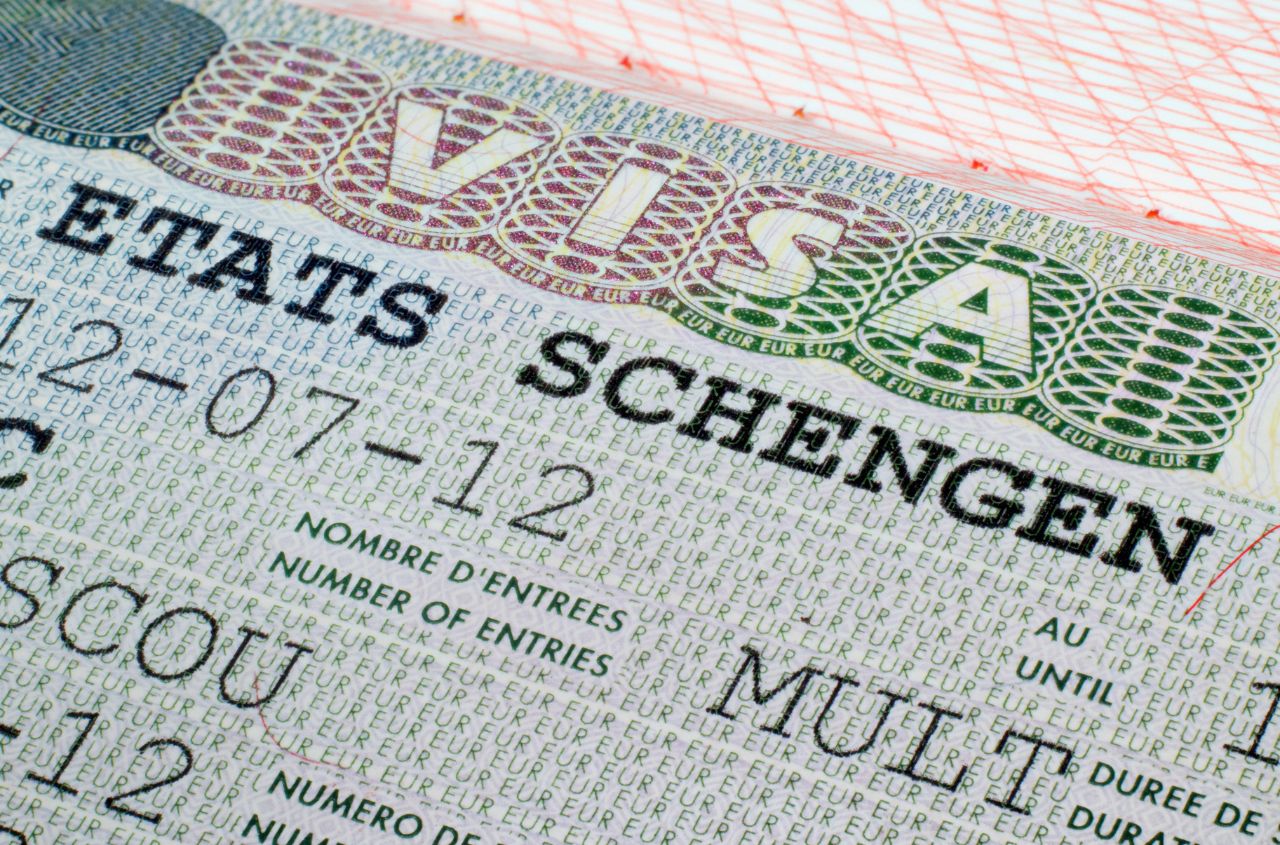
Poland, Sweden, the Czech Republic, Denmark, Estonia, Finland, Latvia, Lithuania, the Netherlands, as well as Norway and Iceland, which are not EU members, are demanding that the European Commission urgently suspend the issuance of Schengen visas to Russian citizens.
According to the Polish radio station RMF FM, which obtained a copy of the letter, the document was signed by the countries' interior and foreign ministers.
The ministers openly stated that they consider it unacceptable for citizens of the aggressor state to vacation on EU beaches while Ukraine continues to suffer from attacks on civilians and the forced deportation of children.
"We are deeply concerned by the growing number of Russian tourists spending their holidays on European beaches and at European resorts while missiles and drones continue to strike civilians and civilian infrastructure in Ukraine," the ministers wrote.
They also expressed frustration and disappointment over the rising number of visas being issued to Russian citizens. According to data cited from the Schengen Barometer, Russian nationals received 477,878 Schengen tourist visas in 2025 alone.
Importantly, a significant share of these were multiple-entry visas.
"This contradicts the Commission's recommendations, which call for a strict approach toward Russian applicants traveling for non-essential reasons, and represents a serious flaw in our common policy toward the aggressor state. We find this extremely concerning," the letter states.
The signatories argue that fragmented visa policies have led to the phenomenon of "visa shopping," whereby Russians bypass consulates in Central and Eastern Europe by applying for visas in other parts of the continent. While no countries are named directly, the Schengen Barometer indicates that France, Italy, Spain, and Greece currently issue the largest number of tourist visas to Russian citizens, while Poland and the Baltic states issue very few.
A diplomat from one of the signatory countries told RMF FM that the issue also concerns the "fair distribution of costs." For example, after Finland completely halted visa issuance to Russians, businesses near the Finnish border suffered major losses, while countries such as Italy and Greece continue to benefit economically from Russian tourism. As a result, frontline EU states are losing patience.
The letter argues that the inconsistent implementation of visa restrictions has created a significant imbalance: countries bordering Russia bear the costs and security risks of protecting the EU's external frontier, while other member states continue to profit from Russian visitors.
Poland is proposing the creation of a rapid defense mechanism for visa sanctions. The proposal is based on a tool already used by the EU for countries that enjoy visa-free travel. Warsaw wants a similar instrument that could be applied to visa issuance.
"Just as the EU can already suspend visa-free travel in response to deteriorating relations or threats from a third country, we should have visa instruments available to restrict visa issuance in response to such threats, while preserving proportional exceptions, such as for humanitarian reasons. We expect work on amending the Visa Code in this direction to be treated as a priority," the Polish diplomat said.
The letter concludes with specific legislative demands directed at the European Commission. The ministers are calling for amendments to the EU Visa Code and the introduction of "new restrictive and mandatory visa measures" that would allow the bloc to respond more effectively to hostile actions by third countries.
They are also urging the EU to tighten the system so that restrictions on multiple-entry visas apply to all Russian citizens, regardless of where they reside. In addition, the letter calls for immediate action in response to Estonia's March 11, 2026 initiative aimed at identifying former and current Russian military personnel and banning them from entering the Schengen Area.