


Russia may eventually be forced to use the Crimean Bridge for transporting military cargo if it exhausts its reserves of equipment and fuel supplies, according to Ukrainian Navy spokesperson Dmytro Pletenchuk.
Speaking in a televised interview, Pletenchuk said Moscow’s logistics in and around occupied Crimea are becoming increasingly strained, particularly due to damage to ferry infrastructure and ongoing risks to transport routes.
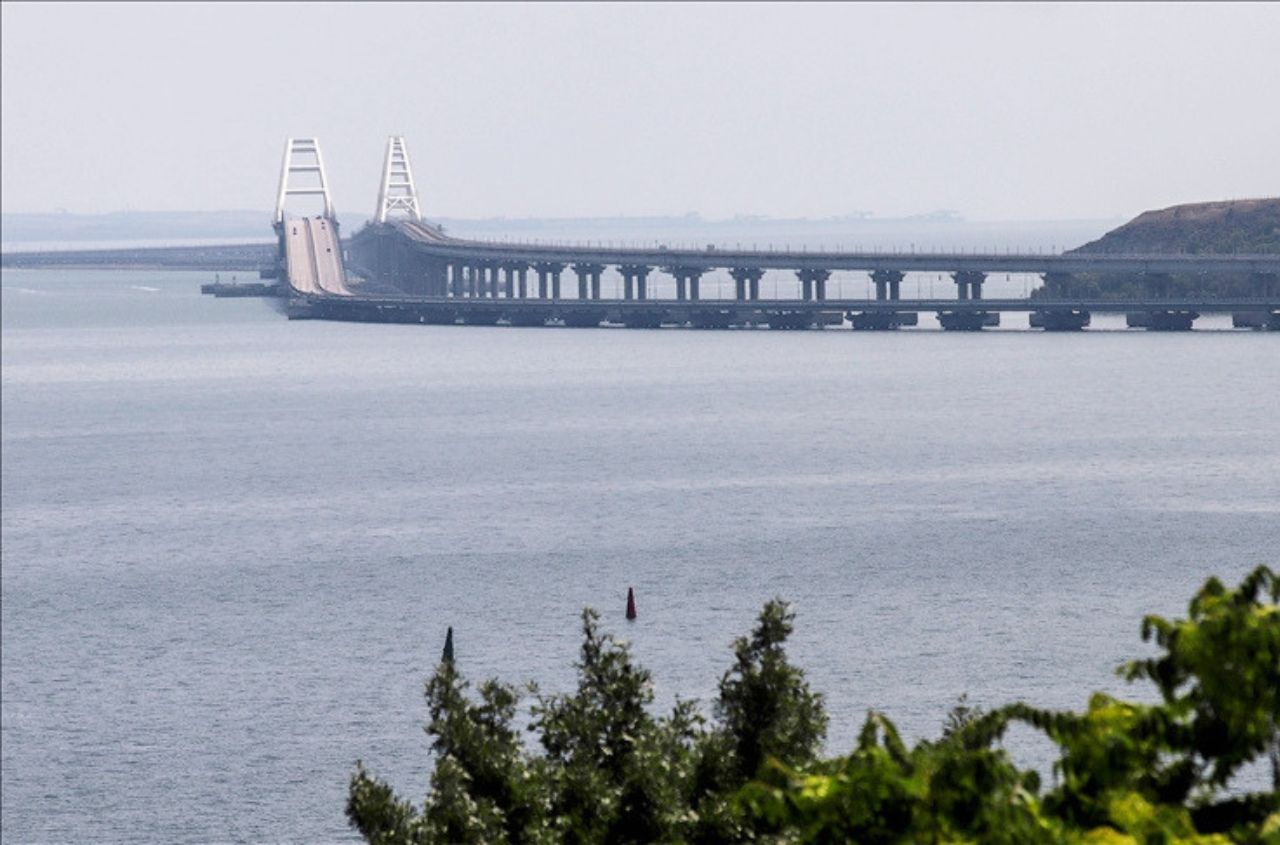
He suggested that, under pressure, Russia could be compelled to rely more heavily on the Crimean (Kerch) Bridge despite existing restrictions on transporting hazardous cargo and fuel.
According to him, ferry crossings are currently unable to compensate for logistical needs because key rail ferries have been damaged or destroyed, while remaining civilian ferries cannot handle large-scale military shipments.
“If they are truly pressed, they will eventually be forced to transport dangerous cargo via the bridge,” he said, noting that both safety constraints and previous damage to the structure limit its capacity.
Pletenchuk also commented on Russia’s reliance on the so-called land corridor through occupied southern Ukraine, which connects Russia with Crimea via occupied territories in Kherson and Zaporizhzhia regions.
He said this route, which also supports Russian forces in southern Ukraine, is increasingly vulnerable due to its proximity to active combat zones and Ukrainian drone activity.
According to him, Ukrainian strikes and surveillance along these routes are likely to cause growing disruption, particularly for fuel transport convoys, where losses may begin to outweigh successful deliveries.
“This will be more of a problem for ordinary Russians than for the military,” he said, referring to disruptions affecting movement into Crimea and travel through the peninsula.
Pletenchuk added that Russian forces will likely continue using existing supply routes despite losses, a pattern he described as consistent with their wartime logistics approach.
However, he argued that sustained pressure on transport infrastructure could gradually reduce the efficiency of Russian supply chains.
He also noted that Russia would require time to adapt to new threats, particularly as Ukrainian capabilities targeting logistics corridors in occupied Crimea and toward Dzhankoi continue to evolve.
“In any war, when you create such pressure points, the enemy needs time to respond,” he said, adding that Russia is unlikely to significantly mitigate these challenges in the near term.